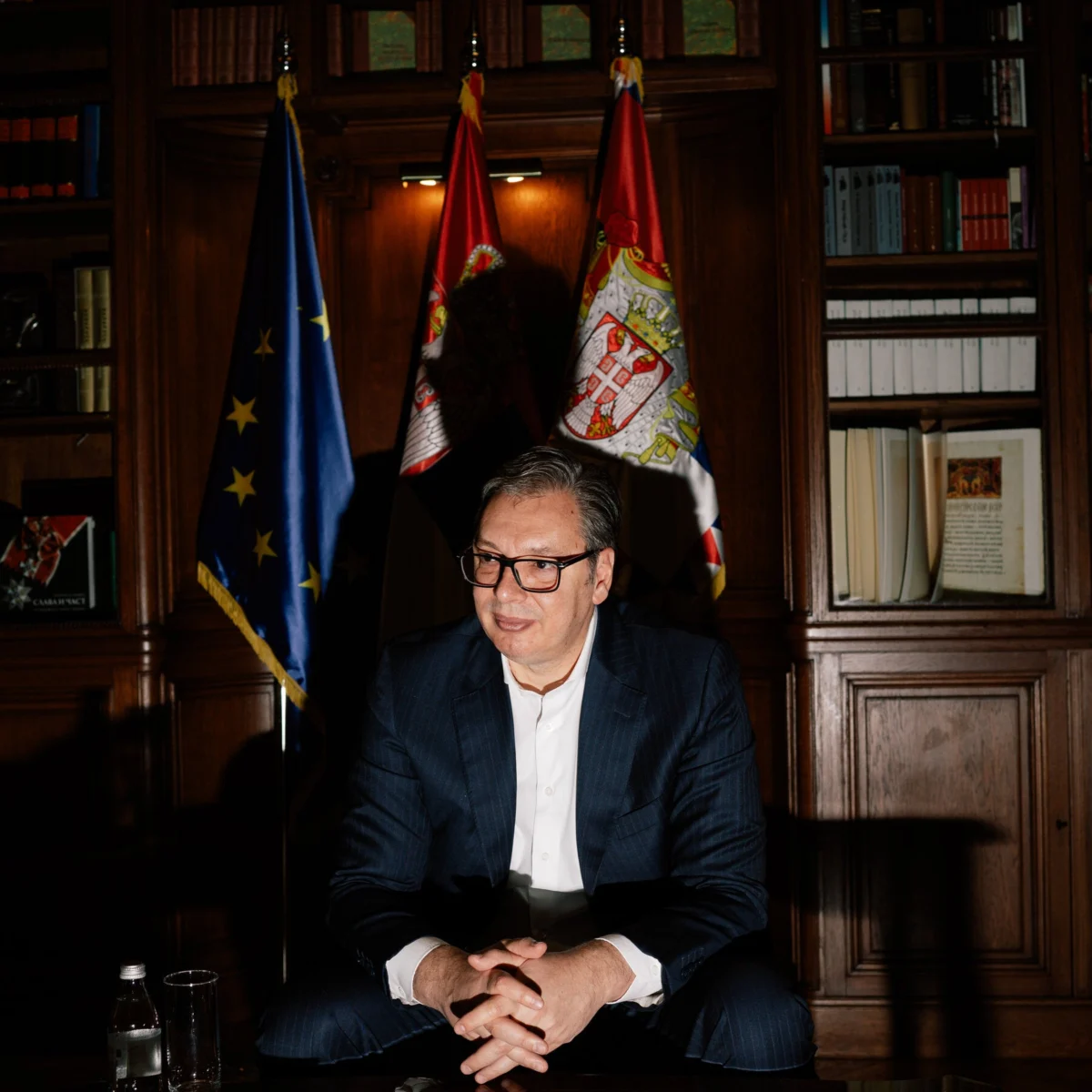
Serbia’s longtime president Aleksandar Vucic resigned, a move that clears the path for him to run for prime minister in elections scheduled next month. The resignation was announced by the New York Times and reflects a strategic political transition rather than a sudden exit.
Vucic, one of Europe’s longest-serving leaders, has held power in various forms since 2012. His resignation as president does not remove him from politics; instead, it aligns with a plan to reposition himself ahead of the next electoral cycle, where Serbia’s parliamentary system grants significant authority to the prime minister.
Key Facts
- Vucic resigns: Serbia’s longtime president steps down from the presidency.
- Role shift:
- Elections: Voting is expected next month.
- Leader tenure: Vucic is among Europe’s longest-serving leaders.
- Institution:
Resignation paves the way for Vucic to become prime minister.
Source cites NYT > World News as the reporting outlet.
What Happens Next?
Serbia is set to hold elections next month, and Vucic’s resignation positions him to campaign as a prime ministerial candidate rather than a sitting president. In Serbia’s parliamentary system, the prime minister typically holds more executive authority than the president, making this potential shift significant for governance and policy direction. The transition also opens space for coalition negotiations, as no single party usually wins an outright majority in the Serbian Parliament.
This move follows a broader pattern of Vucic consolidating influence by switching roles when politically advantageous. His previous tenure as prime minister (2012-2017) and presidency (2017-2026) has seen him dominate Serbian politics through both institutions. Analysts often note that such transitions allow leaders to reset public perception while maintaining behind-the-scenes control over state apparatus and party structures.
How Did We Get Here?
Vucic rose to prominence under the Serbian Progressive Party (SNS), which has governed since 2012 with a platform combining pro-European rhetoric with nationalist policies. Over time, critics have accused his administration of centralizing power, restricting media freedom, and weakening judicial independence. Despite these concerns, Vucic has remained a dominant electoral figure, benefiting from a fragmented opposition.
His resignation as president appears timed to avoid constitutional limits and public scrutiny tied to ongoing investigations and protests. While the New York Times reports the resignation, it does not elaborate on specific pressures prompting the decision. However, such strategic exits are common among regional leaders seeking to maintain relevance amid shifting coalitions and public discontent.
What We Know — and What We Don’t
Verified by the source:
- Vucic resigned from the presidency of Serbia.
- The resignation enables a potential run for prime minister.
- Elections are expected next month.
- Vucic is described as one of Europe’s longest-serving leaders.
Still unconfirmed:
- Exact date and format of the upcoming elections.
- Whether Vucic will officially register as a prime ministerial candidate.
- Motivations behind the resignation beyond electoral strategy.
- Opposition response or preparedness for the transition.
Vucic’s resignation could reshape Serbia’s leadership at a time of rising inflation, emigration, and geopolitical tension between the West and Russia. With elections looming, voters will decide whether continuity under Vucic or a new path better serves national interests. For now, the resignation marks another chapter in his enduring dominance over Serbian politics, leaving citizens to weigh stability against democratic renewal.
Why It Matters
Serbia’s political direction affects regional stability, EU integration efforts, and energy partnerships between Russia and the West. A Vucic transition from president to prime minister could signal either renewed reform momentum or deeper entrenchment of authoritarian tendencies. More on geopolitics and domestic shifts are tracked under politics.
What to Watch
Official campaign announcements and candidate registrations will clarify whether Vucic seeks the premiership, while public turnout and coalition talks may indicate broader shifts in Serbian democracy.