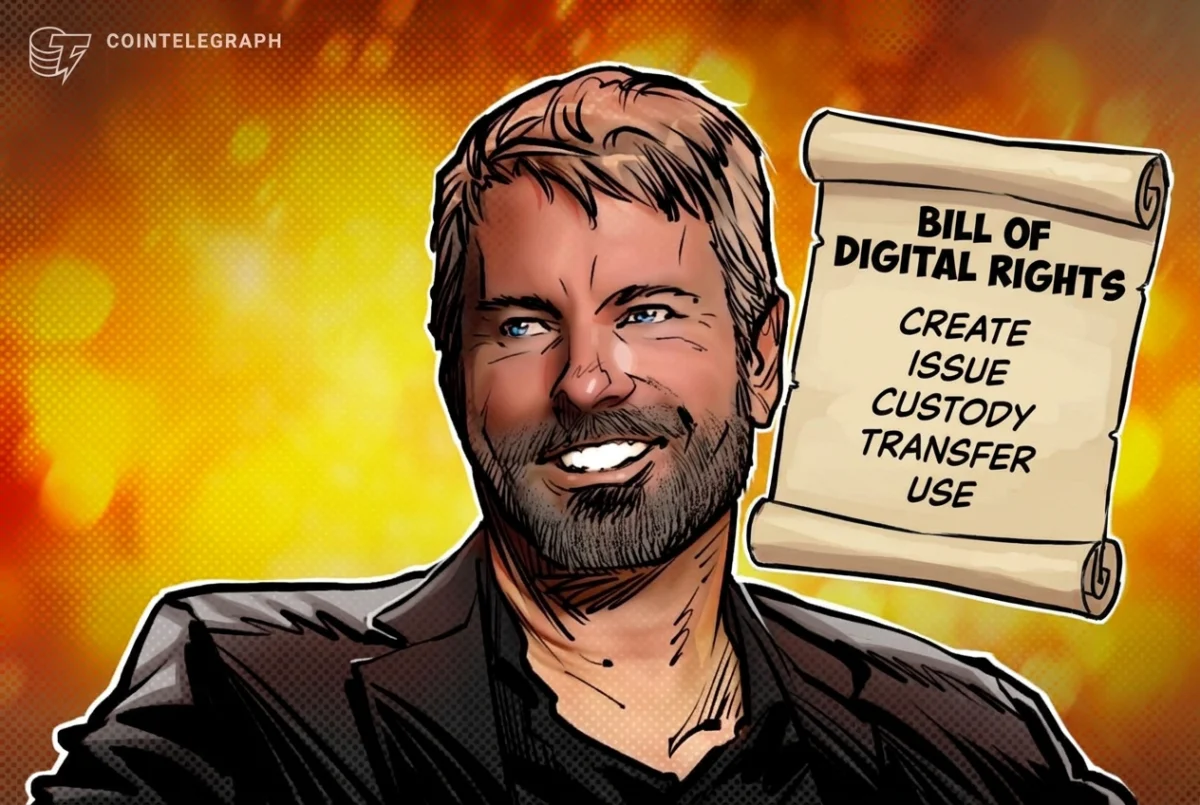
Lede: Strategy executive chairman Michael Saylor proposed a ‘bill of digital rights’ designed to support economic growth by helping enable 10 million new companies to raise capital. The framework was outlined in a recent essay published by Cointelegraph.com News, where Saylor emphasized digital infrastructure as a catalyst for financial inclusion and innovation.
The proposal focuses on establishing foundational rights that could reshape how businesses, especially startups, participate in capital markets. By lowering barriers to capital formation, digital rights may accelerate entrepreneurship across industries tied to emerging technologies.
Key Facts
- Michael Saylor outlined a ‘bill of digital rights’ to aid future economic growth.
- His goal includes enabling 10 million new companies to raise capital.
- The initiative was detailed in an essay published by Cointelegraph.com News.
The Story
What happens next?
Saylor’s call for digital rights reflects a growing interest among tech leaders in standardizing access to financial tools through decentralized systems. These rights might include transparent ownership records, secure identity verification, and open protocols for fundraising—all enabled via blockchain-based infrastructure.
Regulatory responses remain unclear. While some jurisdictions have embraced crypto-friendly policies, others maintain strict oversight. Without formal adoption of such a framework, its real-world impact remains uncertain.
Still, entrepreneurs worldwide rely heavily on access to funding channels. A standardized digital rights model might streamline compliance processes, reduce costs, and open opportunities beyond traditional banking networks—a shift many believe is overdue given rising demand for global capital mobility.
Who is affected?
If implemented broadly, Saylor’s vision could influence millions of early-stage ventures seeking investment. Small teams often struggle with legal complexity and high entry costs when launching token-based fundraises or issuing equity equivalents online.
Broader society benefits too: increased competition drives innovation while giving more people a stake in emerging markets. However, not all stakeholders agree on what constitutes fair access or whether government-backed support should favor certain platforms over others.
Larger institutions also watch closely. Banks, venture firms, and public agencies must balance risk management against competitive pressures as younger generations gravitate toward digital finance alternatives.
What We Know — and What We Don’t
Verified by the source:
- The essay proposing digital rights was authored by Michael Saylor.
- It calls for enabling 10 million new companies to raise capital.
- Cointelegraph.com News reported on the proposal.
Still unconfirmed:
- No specific policy recommendations were cited in the summary.
- There is no timeline provided for implementation.
- Public reaction or regulatory response has not been disclosed.
Why It Matters
This idea taps into broader conversations around democratizing economic participation. As digital assets mature, defining clear participant rights becomes critical—not only for startups chasing growth but for building trust across global markets that increasingly depend on shared digital ledgers.
See Also: Economy and Markets | Trading Crypto
What To Watch
Officials have yet to comment publicly on Saylor’s proposal. Future essays or follow-up statements from his team may clarify intended steps—or invite broader stakeholder input.