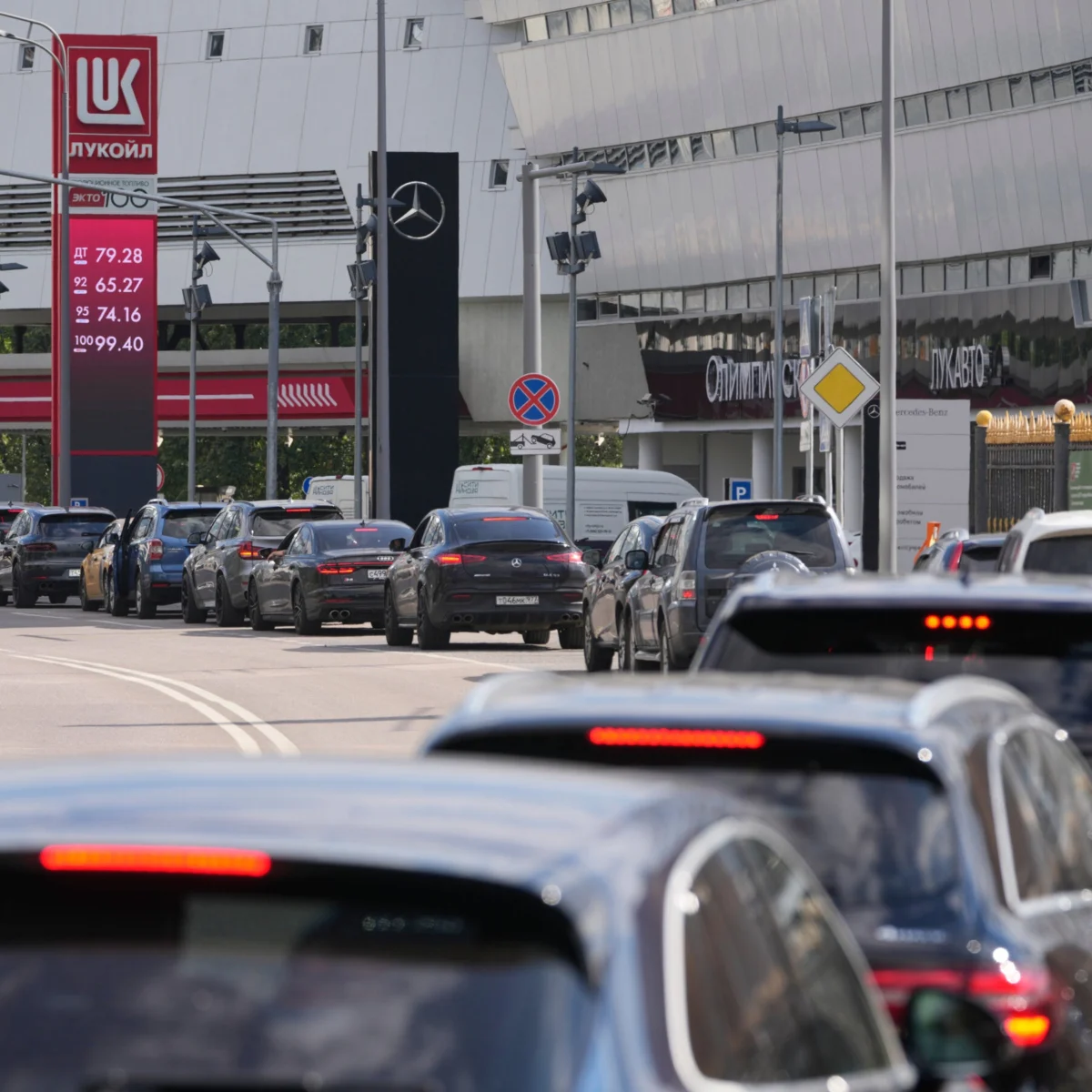
Russians are increasingly purchasing Chinese EVs as Ukrainian attacks make fuel scarcer on Russian roads. NYT > Business reports that the shift reflects growing difficulties in obtaining gasoline and diesel amid intensified cross-border strikes.
The change in consumer behavior highlights how the war’s economic reach now shapes everyday choices, from commute plans to car purchases. With fuel stations facing shortages and prices rising, buyers are favoring electric alternatives, and Chinese automakers have moved quickly to fill the gap.
KEY FACTS:
- Russians are buying more Chinese EVs, per NYT > Business.
- Ukrainian strikes are reducing fuel availability in Russia.
- Chinese electric vehicles are becoming a practical substitute for gasoline cars.
- Fuel scarcity is altering everyday transportation choices for Russian drivers.
- The war’s economic impact is visible on Russian roads, NYT > Business says.
THE STORY
What happens next?
As Ukrainian attacks continue to disrupt fuel distribution, demand for alternative vehicles is likely to grow. Chinese EVs, already competitive in price and range, may capture a larger share of Russia’s auto market. Analysts caution that logistics bottlenecks, charging infrastructure limits, and import regulations could slow adoption, but early sales data suggests momentum is already building.
Russia’s government has previously discussed subsidies for local EV production, and Chinese brands such as Geely and Chery have expanded service networks across the country. Still, most models rely on imported batteries and components, leaving them vulnerable to supply-chain friction. For now, buyers appear focused on avoiding fuel shortages rather than long-term ownership costs.
How did we get here?
Months of Ukrainian drone and missile strikes have targeted Russian refining capacity and fuel storage sites, NYT > Business reports. Each attack tightens the supply chain for gasoline and diesel, pushing station operators to ration deliveries. Drivers respond by extending trips to stocked stations or switching to vehicles that require no fuel at all.
Chinese automakers entered the Russian market years ago with budget-friendly compact EVs. Those models gained traction as prices for internal-combustion cars rose alongside insurance costs and import tariffs. The convergence of energy disruption and affordable electric options created the conditions behind the current sales surge.
Who is affected?
Ordinary Russian drivers feel the immediate effects of fuel rationing, NYT > Business notes. Commuters in cities such as Moscow and Kazan report longer waits at gas stations and sudden route changes when stations close unexpectedly.
Auto dealers have adapted by emphasizing electric test drives and financing deals tied to Chinese brands. Fleet operators, including ride-hailing services, are adding EVs to reduce exposure to volatile fuel costs. Manufacturers watch closely as policy shifts—from import duties to charging-infrastructure pledges—could reshape demand before year-end sales close.
WHAT WE KNOW — AND WHAT WE DON’T
Verified by the source:
- Russians are increasing purchases of Chinese EVs.
- Ukrainian attacks are making fuel scarce in parts of Russia.
- The war’s impact extends beyond battlefields to consumer behavior.
- Fuel shortages are influencing transportation decisions for drivers.
Still unconfirmed:
- Total sales figures or percentage growth for Chinese EVs in Russia.
- Exact number and location of fuel sites targeted by Ukrainian strikes.
- Russia’s official response, subsidy plans, or import-policy changes.
- Potential timeline for EV infrastructure expansion or market saturation.
WHY IT MATTERS
Energy disruptions linked to conflict ripple through daily life, shaping spending, mobility, and manufacturing plans. Russian drivers turning to Chinese EVs illustrate how global wars influence local economies and consumer choices far from front lines. [Meta description] Russians buy Chinese EVs as Ukrainian attacks curtail fuel supply, NYT > Business reports.
WHAT TO WATCH
Future reporting may clarify whether subsidies or charging-network investments accelerate the EV shift. [Internal links: economy-markets, war-geopolitics].