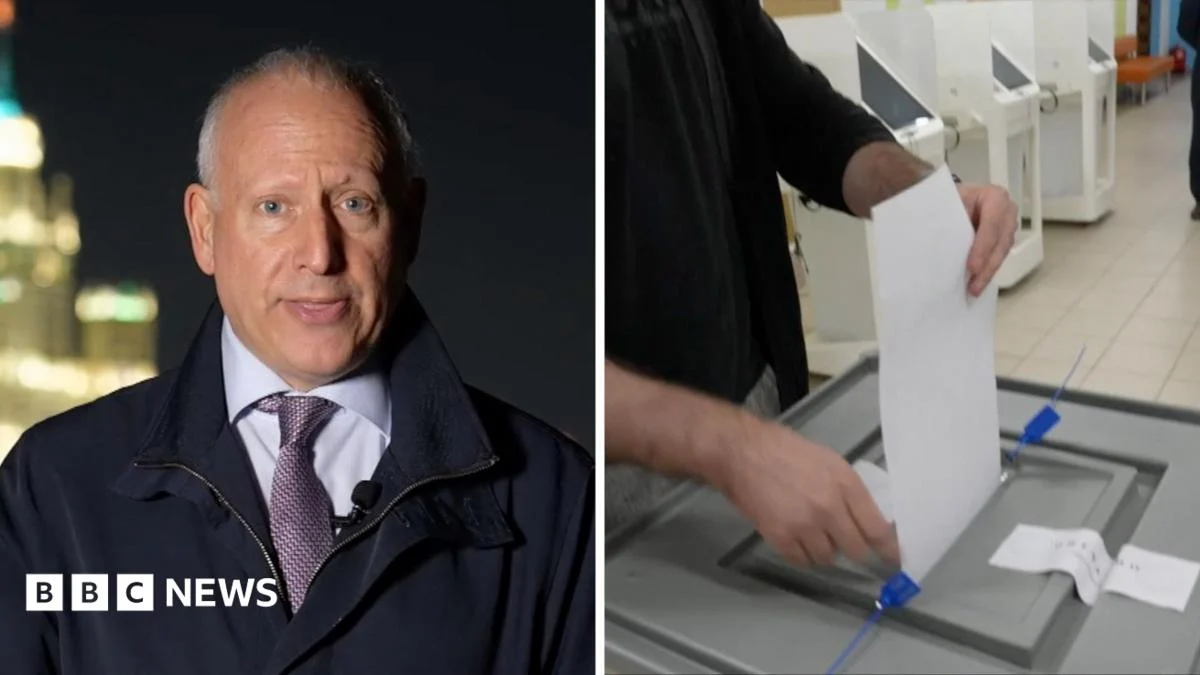
Preliminary results from the Russian parliamentary election suggest that Kremlin-backed United Russia is on course to retain its constitutional majority, according to BBC News. The outcome signals continuity in Russia’s legislative landscape, with the ruling party holding its position despite ongoing geopolitical tensions and domestic challenges. Analysts note that the result aligns with expectations given the structure of the electoral system and the current political climate.
The election proceeded across multiple regions, with voters casting ballots for representatives to the State Duma. United Russia has long held a dominant position in Russian politics, and the preliminary data points to another term with a constitutional majority, which allows the party to pass legislation without forming coalitions.
Key Facts
- Preliminary results suggest United Russia will retain its constitutional majority.
- The election was described as having ‘no surprises✓ in initial outcomes.
- Results are being reported by BBC News.
What the Results Mean
A constitutional majority means that United Russia can unilaterally pass laws and constitutional amendments, shaping Russia’s legislative agenda without needing support from opposing parties. This concentration of power has been a defining feature of Russian politics for over a decade. The Russian parliamentary election thus serves as a key indicator of political stability from the Kremlin’s perspective, though critics argue it reflects limited pluralism within the system.
While the full official tally is still pending, the trend suggests that smaller parties and independent candidates faced significant barriers to entry. The electoral framework, including registration requirements and media access, often favors established players like United Russia, reinforcing their dominance in the Russian parliamentary election process.
Why This Matters
The outcome of the Russian parliamentary election has implications beyond domestic governance. A continued constitutional majority for United Russia enables sustained alignment with Kremlin policies, particularly amid ongoing conflicts and international sanctions. For foreign observers and policymakers, the result underscores the centralized nature of Russian decision-making and the limited role of opposition voices in shaping national direction. It also signals that the state’s control over legislative outcomes remains intact, affecting everything from budget priorities to defense strategy.
What We Know — and What We Don’
Verified by the source:
- Preliminary results favor United Russia.
- The race was described as having ‘no surprises.⌢
- BBC News reported the trends.
Still unconfirmed:
- Exact vote percentages or total turnout figures.
- Final seat allocation in the State Duma.
- Level of contestation or reported irregularities.
- Timelines for official certification of results.
Why It Matters
The result of the Russian parliamentary election reinforces the centralization of political power in Russia, with United Russia maintaining a firm legislative grip. This stability, as framed by state-aligned narratives, supports continuity in governance. However, for international stakeholders, the dominance of a single party raises questions about democratic representation and the space for dissent within the Russian parliamentary election framework. The broader implications touch on Russia’s global posture, domestic resilience, and how institutional structures adapt to evolving pressures both inside and outside the country.
What to Watch Next
Official results are expected to be certified in the coming weeks, with potential adjustments based on final counts. The international community will be watching for whether the final composition of the State Duma matches the preliminary projections reported by BBC News.