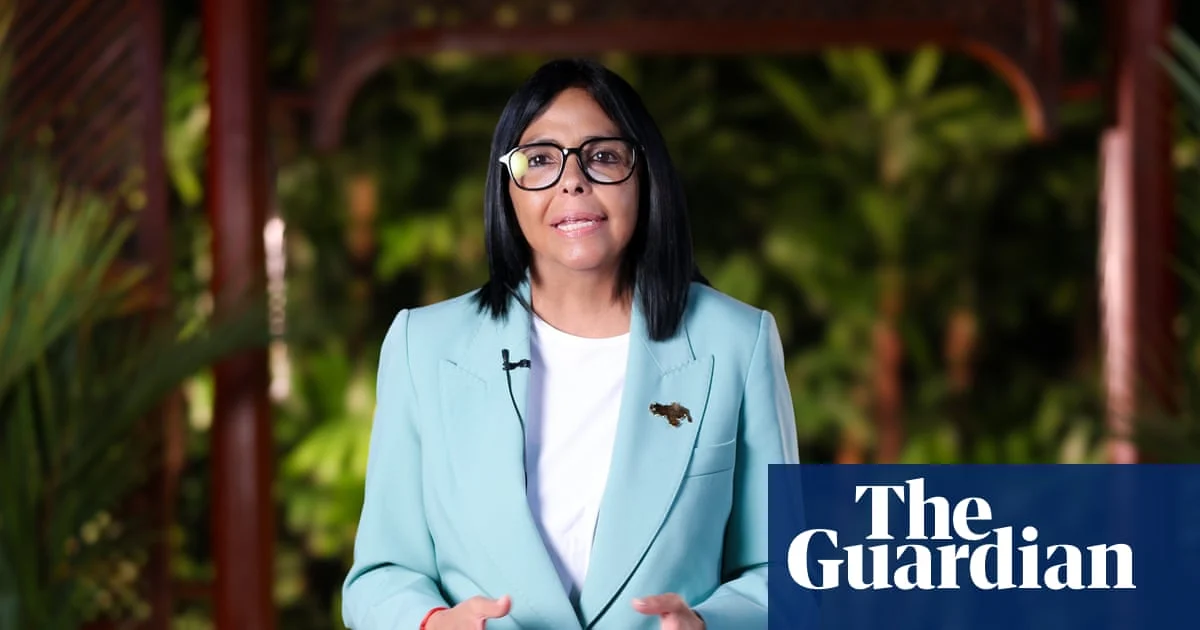
Venezuela’s interim president, Delcy Rodríguez, has publicly defended a contentious energy agreement with Donald Trump, asserting the nation will maintain ownership and sovereignty over its significant oil reserves. This defense comes amid considerable public outrage within Venezuela regarding the deal’s reported implications.
Rodríguez’s statements were made on Saturday, addressing criticism of what the US president has referred to as “the biggest oil deal in world history.” She assumed her current role in January, following an order from Trump for the abduction of President Nicolás Maduro.
KEY FACTS
- Delcy Rodríguez defended a controversial oil deal with Donald Trump.
- The deal has reportedly caused outrage in Venezuela.
- Rodríguez insists Venezuela will retain ownership and sovereignty of its oil reserves.
- Rodríguez became interim president in January after Trump ordered Maduro’s abduction.
What Are the Reported Terms of the Deal?
The energy agreement between Venezuela and the United States has generated significant controversy, particularly within Venezuela, due to its reported terms. According to initial reports, the deal would result in the U.S. taking control of an estimated 65 billion barrels of Venezuelan oil. This specific detail has fueled public outrage, prompting interim President Rodríguez to address concerns directly.
Rodríguez’s defense centers on the claim that, despite these reports, Venezuela will ultimately maintain full ownership and sovereignty over its vast oil resources. The reported scope of the deal, described by Donald Trump as “the biggest oil deal in world history,” underscores the magnitude of the agreement and the stakes involved for both nations, especially for Venezuela’s national assets.
How Did This Agreement Evolve?
The circumstances surrounding this agreement are tied to recent political shifts in Venezuela. Delcy Rodríguez assumed the interim presidency in January, following a direct order from Donald Trump for the abduction of President Nicolás Maduro. This change in leadership set the stage for the controversial energy negotiations that have now come under scrutiny.
The deal itself has been a point of contention, leading Rodríguez to utilize public airwaves to counter the wave of criticism it has received domestically. Her arguments aim to reassure the Venezuelan public that the nation’s interests, particularly its control over its oil reserves, will be preserved despite the perceived concessions in the agreement.
WHAT WE KNOW — AND WHAT WE DON’T
Verified by the source:
- Delcy Rodríguez is Venezuela’s interim president.
- She defended an oil deal with Donald Trump.
- The deal has reportedly caused outrage in Venezuela.
- Rodríguez maintains Venezuela will keep ownership of its oil.
- Trump called it “the biggest oil deal in world history.”
Still unconfirmed:
- The precise terms of the oil deal beyond the reported 65 billion barrels.
- The specific details of the “abduction” order for President Nicolás Maduro.
- The full extent of public outrage or its organized form.
- The timeline for implementation or finalization of the deal.
- The direct benefits or drawbacks for Venezuela as claimed by Rodríguez.
WHY IT MATTERS
This oil deal carries significant implications for Venezuela’s economic future and national sovereignty, potentially reshaping its relationship with the United States. The controversy highlights the complexities of international energy agreements, particularly when they involve nations undergoing political transitions and resource-rich economies. For the average Venezuelan, the deal could dictate the availability and control of national resources and influence the country’s broader economic stability and autonomy.
WHAT TO WATCH
Future developments will likely focus on additional details of the agreement and how Venezuela’s government proceeds with its implementation or modification, particularly in response to domestic opposition.