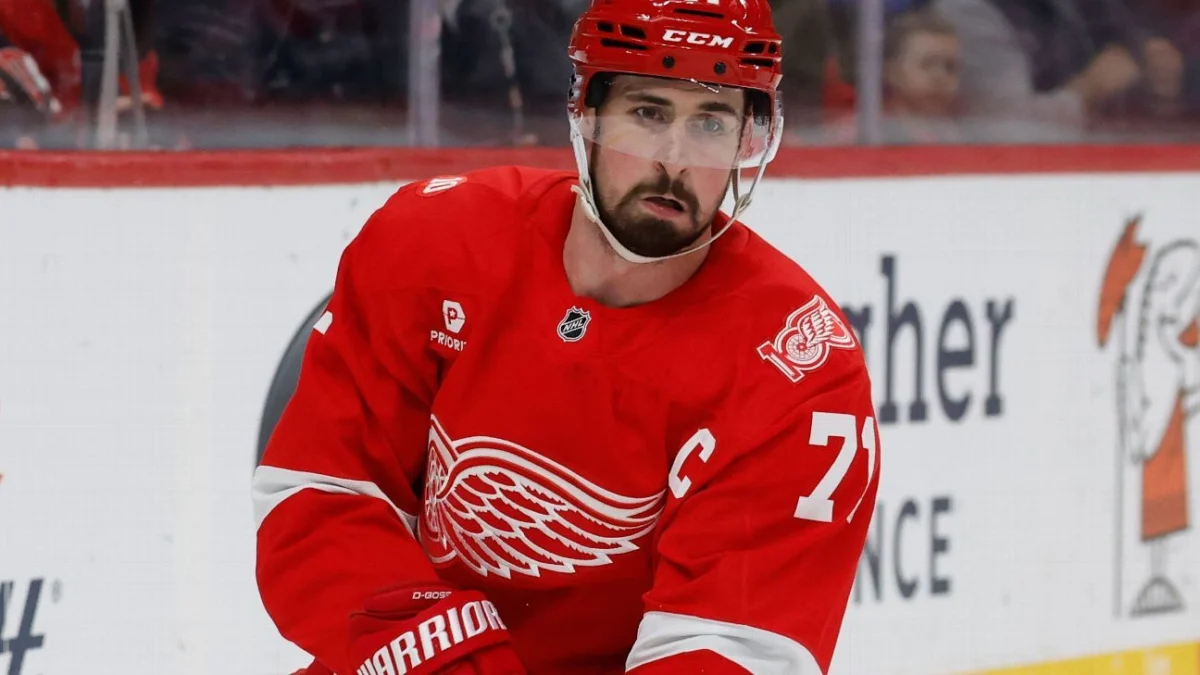
Late Friday, the Detroit Red Wings placed former captain Dylan Larkin on a non-roster injured reserve list, a day after confirming the team is actively considering offers amid his ongoing trade request. The move came immediately before Detroit’s 2-0 loss to the New York Rangers, and Larkin—shown on the video board during the game—was met with loud boos from the home crowd.
The Red Wings confirmed earlier this week that Larkin has formally requested a trade, ending months of speculation about his future with the organization. While the team holds his NHL rights through next season, sources indicate Detroit is fielding interest from multiple clubs. Placing Larkin on injured reserve does not end trade discussions, but it removes the forward from lineup eligibility for at least seven days under league rules. The 28-year-old center has not played since January.
Key Facts
- The Detroit Red Wings moved Dylan Larkin to a non-roster injured reserve spot before their game against the New York Rangers.
- Larkin has formally requested a trade, and the team is weighing offers.
- The former Red Wings captain was booed loudly when shown on the video board during the game.
- Detroit lost Friday’s game 2-0 to the New York Rangers.
- Larkin, 28, has not played since January.
What happens next?
The immediate impact of Larkin’s placement on injured reserve is procedural rather than punitive. Under NHL collective bargaining agreements, non-roster injured reserve typically delays a player’s return by at least one week pending medical clearance. That timeline aligns with ongoing trade negotiations, giving interested clubs additional time to evaluate the center’s status while protecting Detroit from rushing him back too soon. Should medical clearance occur within seven days, Larkin could theoretically return to lineup action even if no deal materializes—though most analysts expect a trade before then given mutual interest in resolving the situation.
Several teams are believed to be monitoring potential interest in acquiring Larkin, including traditional contenders seeking veteran leadership up the middle. Any deal would likely involve salary retention discussions, as Larkin carries a $6.7 million cap hit through 2026. The Rangers, who defeated Detroit on Friday night, have been named publicly as one suitor though neither party confirmed formal talks occurred beyond routine league channels.
How did we get here?
Larkin captained the Red Wings beginning in 2022 after signing an eight-year extension worth $80 million. That contract now stands as both his greatest asset and biggest obstacle: it guarantees him substantial income but limits flexibility for rebuilding Detroit, whose rebuild entered its third year following playoff elimination in 2023.
The booing incident during Friday’s game reflects growing tension among fans who supported Larkin throughout his nine-year tenure. Once celebrated for leading Detroit back toward relevance, he became symbolic of stalled aspirations when requesting a trade mid-season—an unprecedented move for a homegrown talent of his caliber.
Larkin’s absence leaves a void in Detroit’s top-six forward group, compounding offensive struggles already evident during their recent slide. Backup center Joe Veleno started in Larkin’s stead, combining for just two points over four contests prior to Friday’s game.
What We Know — and What We Don‗t
Verified by the source:
- Larkin has submitted an official trade request to the Detroit Red Wings organization.
- The team placed him on non-roster injured reserve prior to Friday’s game versus the New York Rangers.
- Larkin was booed loudly when shown on the video board during that contest.
- Detroit suffered a 2-0 defeat to the New York Rangers in said matchup.
Still unconfirmed:
- Which specific teams are actively negotiating for Larkin’s services.
- Whether the Red Wings plan to retain salary in any final agreement.
- If or when Larkin might return absent a completed trade.
- The severity of whatever injury prompted the IR placement.
Why It Matters
This development signals a pivotal shift in Detroit’s post-lockout rebuild strategy. Trading a beloved captain and homegrown star like Larkin—especially without another franchise center ready to assume that role—represents either a calculated pivot toward accelerated contention elsewhere or another step back toward sustained rebuilding. For fans tracking player movement across the NHL, this saga illustrates how modern roster construction often conflicts with loyalty narratives, particularly around players approaching free agency eligibility. Teams facing salary cap constraints increasingly treat expiring or high-value contracts as trade chips rather than long-term commitments, making situations like Larkin’s more common than exceptional despite emotional stakes involved.
What To Watch
All eyes turn next week to whether Detroit completes a deal before the March trade deadline, or activates Larkin from injured reserve pending medical clearance.