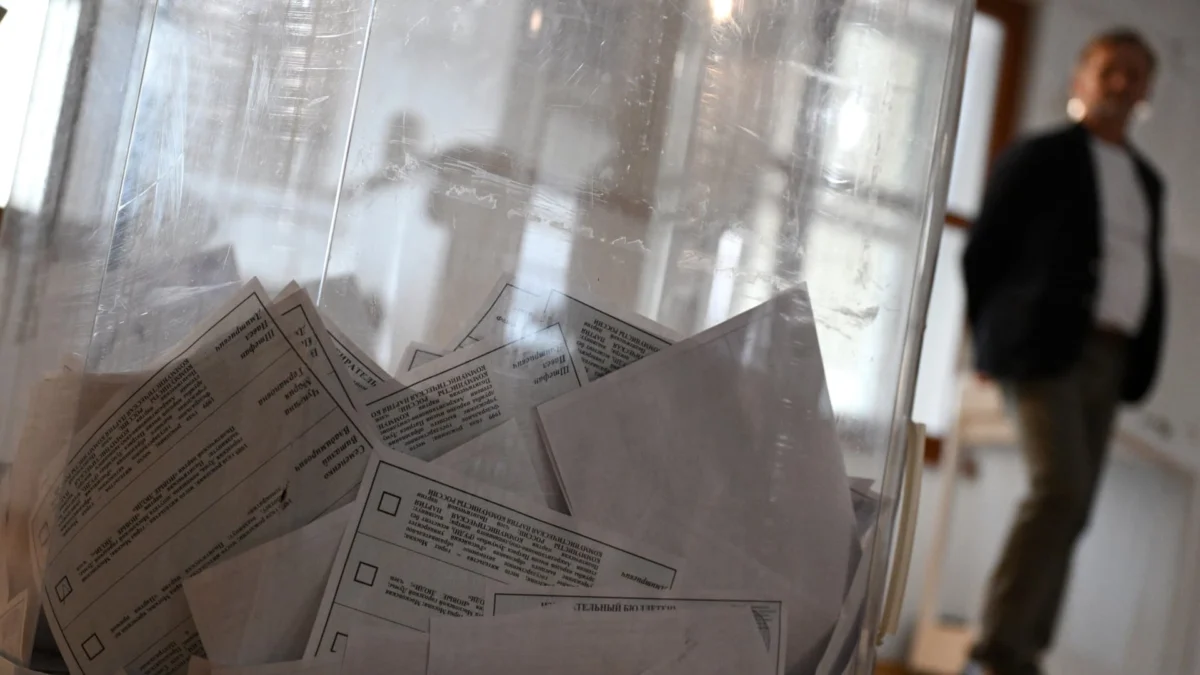
Russia’s ruling pro-Putin party was on track to win a parliamentary wartime election, according to partial results cited by US Top News and Analysis.
The vote has been framed by President Vladimir Putin as a test of public backing for the war in Ukraine. A drone strike on Moscow was reported around the time of the election, adding urgency to a contest already marked by security concerns.
Key Facts
- Russia’s ruling party leads in partial parliamentary wartime election results.
- Partial results were reported by US Top News and Analysis.
- Putin has cast the vote as a test of support for the war in Ukraine.
- A drone strike on Moscow was reported during the election period.
The Story
How did we get here?
In Russia, parliamentary elections are intended to choose the lower house of parliament. This cycle, the governing United Russia party holds a structural advantage through control of state media, administrative resources, and restrictions on opposition candidates. Because of this imbalance, the outcome is widely seen as predetermined, even as officials describe each election as a measure of legitimacy for the leadership’s broader agenda.
The framing of the vote as a referendum on the war in Ukraine reflects how domestic politics have increasingly merged with military messaging. State television and pro-government outlets have repeatedly linked electoral participation with patriotic duty, while critics argue the war itself suppresses debate and limits meaningful competition among parties.
A drone strike on Moscow was reported during the election period, though the source does not identify responsibility or casualties. Such incidents have occurred sporadically in the capital and are usually attributed to cross-border activity, but no independent confirmation is offered here.
What happens next?
Final vote tallies are expected once all precincts report. International observers were largely restricted from this wartime election, so external assessment of irregularities will be limited. The official turnout and seat distribution will determine whether the ruling party retains the supermajority needed to pass constitutional changes without opposition consent.
In past cycles, protests have followed disputed results. However, current Russian law and security posture make large-scale demonstrations unlikely, especially amid wartime conditions. The government has framed the conflict in Ukraine as essential to national defense, which analysts say reduces public appetite for political challenges.
Economic conditions also influence perception. Sanctions tied to the war continue to affect household budgets, yet state media emphasize resilience. Voters interviewed abroad reported logistical obstacles, raising questions about transparency even if the overall result holds little doubt.
What We Know — and What We Don’t
Verified by the source:
- Partial results showed the ruling party leading.
- Putin described the election as a test of support for the war in Ukraine.
- A drone strike struck Moscow during the election period.
Still unconfirmed:
- The total number of seats at stake or projected margin of victory.
- Details about casualties or damage from the drone strike on Moscow.
- Official turnout figures or timing of final result announcements.
Why It Matters
Russian elections matter less for their unpredictability than for how they reinforce legitimacy claims at home and signal stability—or instability—to foreign investors and policymakers tracking the ongoing war economy.
What To Watch
All precincts have yet to report, meaning final seat counts could shift margins slightly, though not the overall outcome. The Kremlin may also release additional statements linking turnout to support for the war in Ukraine.