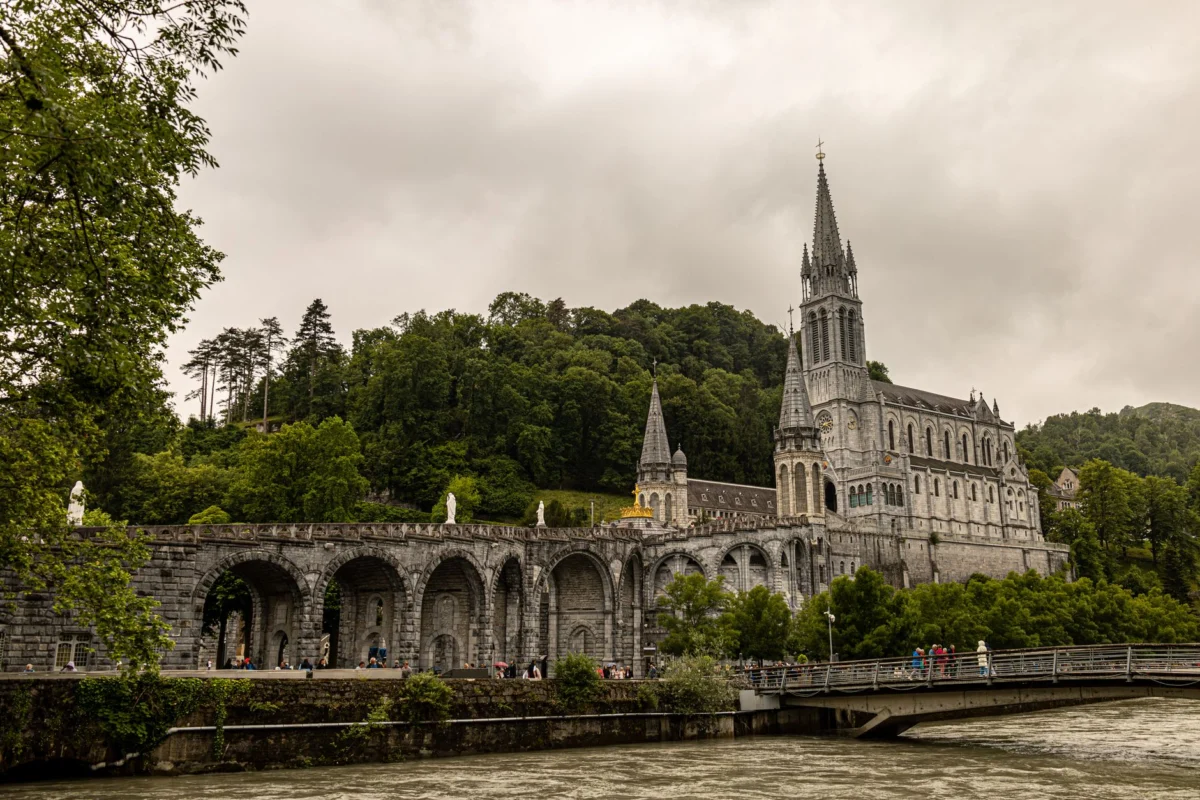
At the Lourdes sanctuary in France, Pope Leo encountered covered mosaics connected to a priest-artist now standing trial on abuse charges, underscoring the Catholic Church’s ongoing reckoning with clergy misconduct.
The mosaics, created by a Slovenian priest-artist, had been removed from public view after multiple women accused him of sexual and psychological abuse. The artist is currently on trial, reflecting the Church’s efforts to confront allegations while maintaining its spiritual missions.
KEY FACTS
- Pope Leo visited Lourdes, where mosaics by Marko Rupnik were covered up.
- At least 20 women accused Rupnik of sexual and psychological abuse.
- Rupnik is now on trial in connection with those allegations.
WHY IS THIS TRIAL SIGNIFICANT?
The trial involves a former Jesuit priest who gained international recognition for religious artworks installed in sacred spaces worldwide, including Lourdes — a major Catholic pilgrimage site visited by millions annually. His case highlights how institutions balance artistic legacy against survivor testimony. The covering of his mosaics during the papal visit signals institutional acknowledgment of public concerns without formal conviction. For survivors, concealment may represent partial progress toward accountability, while others question whether removing symbols addresses deeper structural issues within the Church.
HOW DID THIS SITUATION EMERGE?
Allegations against the priest-artist surfaced through private disclosures, leading to formal ecclesiastical and criminal investigations. These processes often begin quietly before becoming public knowledge. In this instance, accusations multiplied after initial reports appeared, prompting church authorities to reconsider exhibitions tied to him. The artist’s canonical trial proceeded alongside civil proceedings, demonstrating overlapping systems of justice—one religious, one secular—used when crimes involve clergy members.
WHAT WE KNOW — AND WHAT WE DON’T
Verified by the source:
- The mosaics at Lourdes were covered after abuse accusations
- At least 20 women made accusations
- A tribunal is underway regarding those claims
Still unconfirmed:
- The exact timeline of events leading to concealment
- Specific charges listed in official court documents
- Outcomes expected from the ongoing legal process
- Details about how many works remain hidden elsewhere
WHY IT MATTERS
Religious institutions increasingly face scrutiny over handling past abuse cases. Actions taken—even symbolic ones like covering art—can signal moral accountability or institutional damage control. Broader discussions continue globally about transparency, reparations, and reforms needed to protect future generations.
WHAT TO WATCH
The outcome of the current trial will likely shape policies governing artwork attribution and display within Catholic churches. Observers also await any additional disclosures linked to similar allegations involving other artists or clergy.