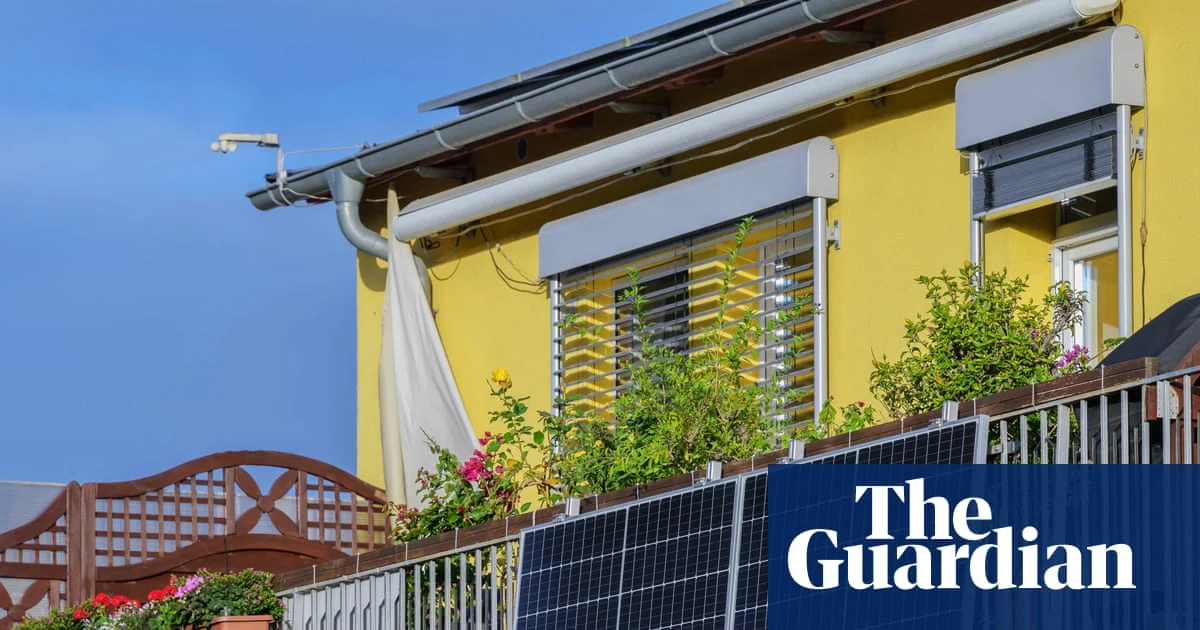
Plug-in solar panels could save Australian households up to $370 annually on energy bills if the government legalized them, as the UK has done, according to an advocacy group. These small, standalone solar units can be attached to balconies or placed in backyards and plugged into power points to offset household energy use.
An expert estimates that a plug-in solar kit costing around $1,000 would pay for itself within three years. The technology offers a more accessible and affordable way for millions of Australians to reduce their energy expenses and contribute to climate change mitigation.
KEY FACTS
- Plug-in solar panels could save households up to $370 a year in Australia.
- A $1,000 plug-in solar kit may pay for itself in three years.
- Millions of Australians could benefit from this technology if legalized.
- Plug-in solar panels are already legal in the UK.
HOW DO PLUG-IN SOLAR PANELS WORK?
Plug-in solar panels are small, standalone units that can be easily installed on balconies or in backyards. Unlike traditional solar systems, they don’t require extensive rooftop installations or complex wiring. Instead, they plug directly into a household power point, feeding energy into the home’s electrical system and offsetting overall consumption. This makes them an accessible option for renters or homeowners who lack suitable roof space.
WHY IS AUSTRALIA LAGGING BEHIND?
While the UK has embraced plug-in solar as a legal and viable energy solution, Australia has yet to follow suit. Regulatory barriers prevent households from adopting this cost-saving technology. Advocacy groups argue that legalizing plug-in solar would accelerate the country’s transition to renewable energy while easing financial burdens on consumers. The comparison to the UK suggests that policy changes, not technical challenges, are the primary obstacle.
WHAT WE KNOW — AND WHAT WE DON’T
Verified by the source:
- Plug-in solar kits could reduce annual energy bills by up to $370.
- The UK has already legalized plug-in solar panels.
- A $1,000 system may pay for itself in three years.
Still unconfirmed:
- Whether Australian policymakers are actively considering legalizing plug-in solar.
- The exact regulatory hurdles preventing adoption in Australia.
- Potential safety concerns or technical limitations associated with plug-in solar systems.
WHY IT MATTERS
With rising energy costs and growing climate concerns, accessible renewable energy solutions like plug-in solar could play a crucial role in helping households reduce expenses and carbon footprints. Legalizing this technology in Australia could democratize solar energy access, particularly for those unable to invest in traditional rooftop installations.
WHAT TO WATCH
Advocates are pushing for policy changes, but it remains unclear whether Australian lawmakers will take action soon. The UK’s successful adoption of plug-in solar could serve as a model for reform.