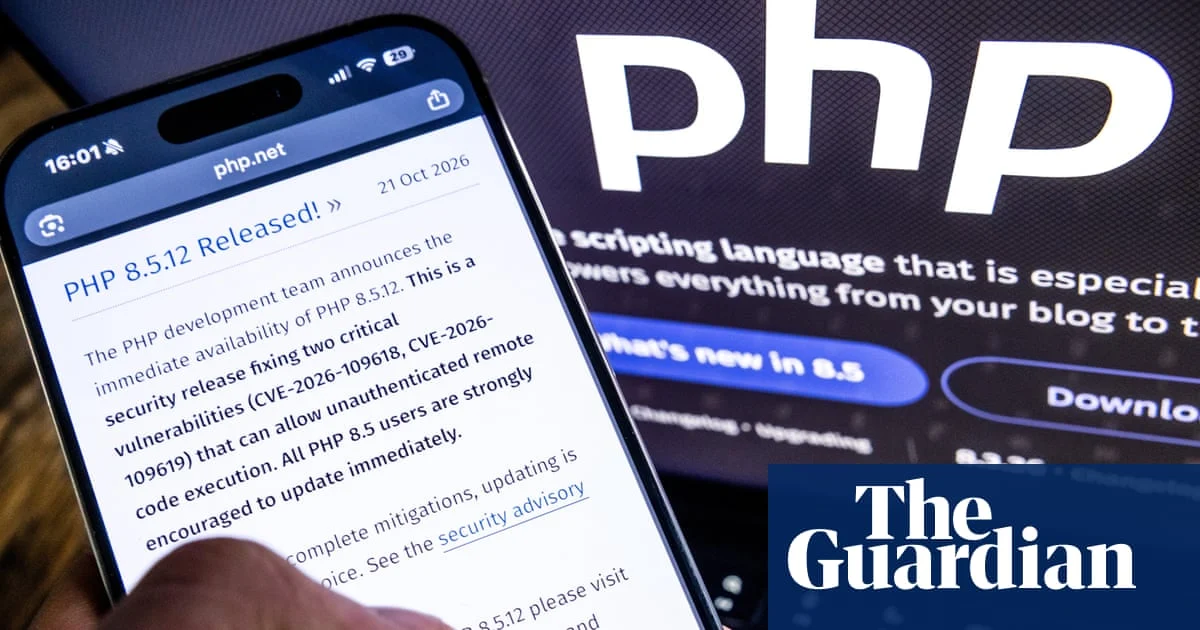
A critical PHP vulnerability has triggered precautionary website takedowns around the globe, with governments acting swiftly to patch the weakness before potential exploitation.
Websites in Belgium, the Netherlands, Finland, France, and Germany were temporarily taken offline as authorities worked to address the flaw in the widely used web development language.
KEY FACTS
- A PHP vulnerability led to global website shutdowns.
- Precautionary takedowns occurred due to a critical language flaw.
- PHP is used by nearly 70% of websites.
- Governments in five countries temporarily removed sites.
- Experts warned bad actors could exploit the weakness.
The Scope of Disruption
The PHP vulnerability affected a broad range of public-facing websites, prompting emergency responses from national and local governments. Authorities in several countries moved quickly to disable vulnerable sites rather than risk exposure.
PHP powers a vast portion of the modern web, making this incident particularly significant. The language underpins content management systems, e-commerce platforms, and internal government portals, meaning disruptions ripple across sectors.
While no active exploitation has been confirmed, security experts emphasized that the flaw is easily accessible and could allow remote code execution. This raised alarm among both private developers and public administrators reliant on PHP infrastructure.
Who Is Affected?
Governments in Belgium, the Netherlands, Finland, France, and Germany confirmed temporary shutdowns of affected websites. These actions reflect a growing trend of proactive cybersecurity measures amid rising digital threats.
Beyond governmental sites, an estimated 70% of all websites use PHP in some form, including major content platforms and commercial services. The widespread reliance on PHP means that any vulnerability poses systemic risk to internet operations.
The precautionary removals highlight how a single weak point in foundational software can trigger cascading disruptions. Organizations with limited resources may struggle to apply emergency patches, increasing exposure across smaller networks.
What Happens Next?
In the immediate term, affected governments are applying security patches released by the PHP development community. These updates aim to close the exploited pathways and restore safe functionality to impacted websites.
Meanwhile, cybersecurity agencies are monitoring for signs of attempted exploitation. Although no breaches have been publicly reported, officials are urging organizations to audit their systems and update PHP installations without delay.
Long-term implications include renewed focus on software maintenance protocols and dependency tracking. The incident underscores the fragility of shared digital infrastructure and the need for coordinated vulnerability disclosure practices across the industry.
What We Know — and What We Don’t
Verified by the source:
- The flaw resides in PHP, a language used by nearly 70% of websites.
- Governments took down websites as a precaution.
- Countries involved include Belgium, the Netherlands, Finland, France, and Germany.
Still unconfirmed:
- Exact technical details of the PHP vulnerability.
- Timeline for full restoration of affected sites.
- Whether any malicious activity has already occurred.
Why It Matters
This event illustrates how deeply interconnected digital infrastructure has become. A flaw in one foundational programming language can rapidly escalate into a global disruption, affecting millions of users and critical services.
For businesses and citizens alike, the PHP vulnerability serves as a reminder of how quickly online systems can falter. It also highlights the importance of timely updates and transparent communication during cybersecurity incidents.
What To Watch
Further takedowns or breach reports would signal active exploitation. Ongoing patch deployment rates will indicate how prepared organizations are for future PHP vulnerabilities.