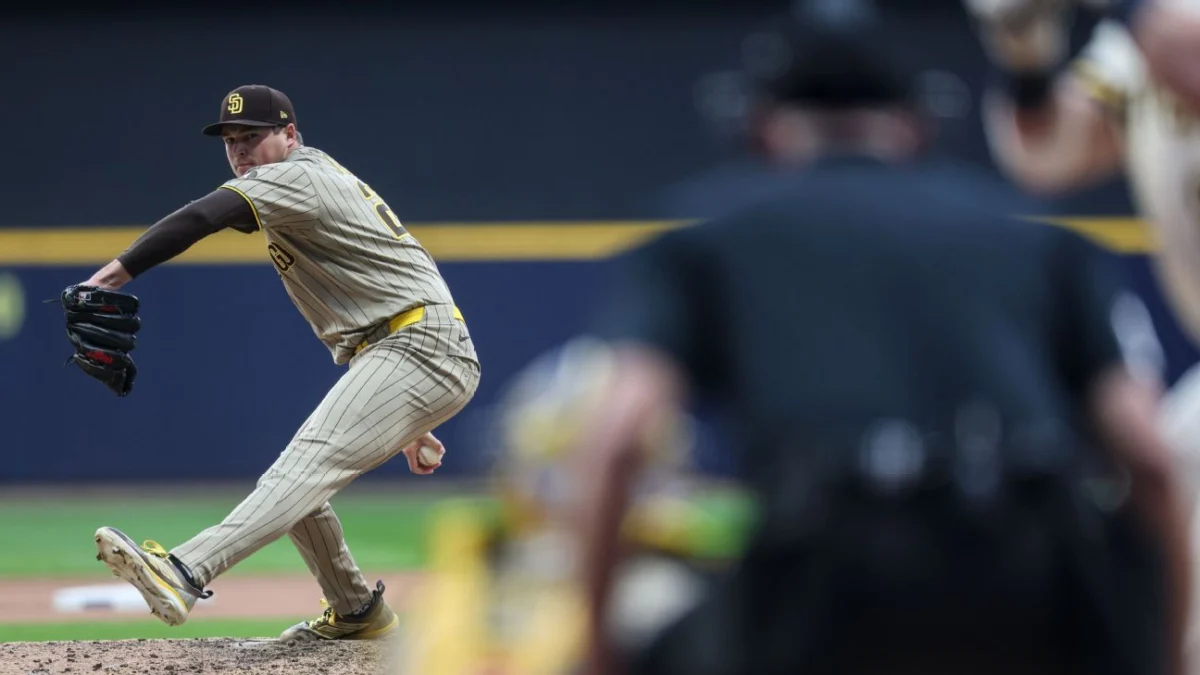
Padres manager Craig Sammen denied speculation that Mason Miller struggled in the ninth inning of Sunday’s loss due to pitch-tipping, but indicated the reliever could be restricted to one inning for the remainder of the postseason. Sammen addressed the notion directly, dismissing concerns that opposing teams identified Miller’s delivery as he took the mound during a critical moment in the game. While no specific evidence was cited for the original claim, the manager emphasized that the team would evaluate how best to deploy Miller moving forward, prioritizing effectiveness over extended appearances.
KEY FACTS
- Craig Sammen rejected the idea that Mason Miller struggled because of pitch-tipping.
- Sammen acknowledged the possibility of limiting Miller to one inning this postseason.
- The Padres played an away game on Sunday, resulting in a loss where Miller pitched in the ninth.
- Sammen spoke publicly after the game, addressing media speculation surrounding Miller’s performance.
- No additional details were offered regarding the cause of Miller’s difficulty in the ninth inning.
THE STORY
What did Sammen say about Miller’s struggles?
Sammen’s comments came in response to growing speculation across media outlets suggesting that opposing teams may have picked up on Miller’s pitch sequence or delivery style, allowing hitters to anticipate incoming pitches. Such accusations typically stem from observations of slight variations in arm angle, timing, or release point—details that can subtly reveal what type of pitch is coming. Sammen firmly denied any such issue, stating that Miller’s mechanics remained sound and consistent throughout his outing. However, he also recognized that the situation warranted caution as the postseason continued to unfold. Rather than rule out future multi-inning appearances entirely, Sammen noted that decisions around bullpen usage would depend heavily on context, matchups, and Miller’s overall workload. The emphasis shifted from mechanical fixes to strategic deployment within high-pressure situations.
How did we get here?
Miller had previously established himself as a dominant force late in games, particularly during earlier rounds of the playoffs. His fastball velocity and sharp slider made him a reliable option in save situations, often tasked with closing out tight contests. During Sunday’s contest, however, his command appeared off, leading to baserunners reaching base safely before ultimately contributing to the team’s defeat. Though no concrete signs pointed toward pitch-tipping specifically, the timing raised eyebrows among analysts who questioned whether fatigue or mechanical inconsistencies played a larger role. Sammen’s stance served dual purposes—protecting his pitcher publicly while signaling internal adjustments might already be underway behind the scenes. By framing the decision as tactical rather than corrective, the organization maintained confidence in Miller’s abilities without admitting fault.
What happens next?
With the series continuing, the Padres now face difficult choices about how frequently they turn to Miller in crucial moments. If used exclusively for single-inning saves, other relievers must step into higher-leverage roles, increasing pressure on the entire bullpen staff. Meanwhile, further scrutiny from opposing scouts could intensify speculation unless Miller delivers dominant outings moving forward. Should he return to form quickly, Sammen’s comments will likely fade into routine postgame analysis. But continued struggles might renew questions about his readiness—or durability—under playoff stress. For now, the team maintains unity in deflecting blame while focusing solely on execution adjustments needed for upcoming games.
WHAT WE KNOW — AND WHAT WE DON’T
Verified by the source:
- Craig Sammen publicly denied that pitch-tipping contributed to Miller’s poor outing.
- Sammen said Miller may only be used for one inning at a time during the rest of the postseason.
- Miller pitched during the ninth inning of Sunday’s loss.
Still unconfirmed:
- Specific details explaining why Miller struggled in the ninth inning remain unknown.
- No official statement confirms whether Miller’s mechanics were reviewed internally post-game.
- It remains unclear which specific relievers might absorb additional innings if Miller is limited.
WHY IT MATTERS
This clarification matters because bullpen management often separates successful teams from those eliminated early in the postseason. Protecting key relievers while maximizing impact requires precise sequencing—a challenge magnified when star arms show vulnerability unexpectedly. Whether rooted in perception or reality, limiting appearances could affect momentum swings vital to advancing through playoff rounds.
WHAT TO WATCH
Future lineups will reveal whether Miller returns to action under similar constraints or if alternative strategies emerge based on evolving game dynamics.