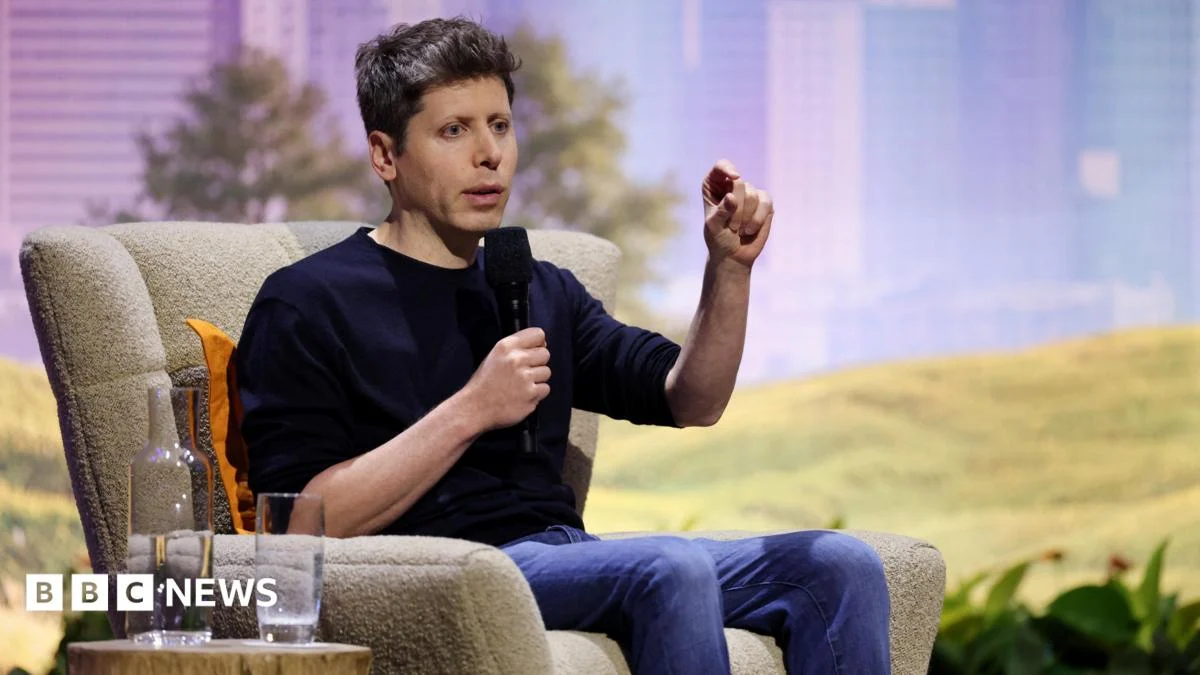
OpenAI chief Sam Altman acknowledged public concerns about artificial intelligence, saying people are “right to be afraid” of its rapid development, but argued they should “trust” AI companies to manage risks responsibly. Speaking alongside other technology leaders, Altman highlighted tensions between advancing AI capabilities and addressing potential threats to humanity.
Altman’s remarks came as fears intensify over unchecked AI progress, with tech executives discussing whether incentives exist to deliberately slow innovation for safety purposes. The debate reflects wider uncertainty about how to balance breakthrough potential with long-term societal risks.
Key Facts:
- OpenAI CEO Sam Altman said the public is “right to be afraid” of AI advancements.
- He also stated people “should trust” AI firms to regulate themselves responsibly.
- Tech CEOs including Altman noted incentives to limit AI advancements due to safety concerns.
- Fears persist over AI’s potential threats to humanity.
What happens next?
As artificial intelligence evolves at an unprecedented pace, leaders like Altman face mounting pressure from governments, advocacy groups, and even internal employees demanding stricter controls. Discussions among top executives suggest a growing recognition within the industry that self-regulation may play a role in shaping AI’s future trajectory.
These conversations occur against a backdrop of global scrutiny toward powerful technologies like generative AI models, which have sparked debates ranging from copyright issues to national security implications. While no concrete regulatory framework has emerged yet, calls for oversight continue gaining momentum across international forums.
Altman himself has previously advocated for robust governance structures without stifling innovation—a stance reflected in recent policy proposals he’s floated publicly. Whether such voluntary commitments gain traction remains uncertain, especially if lawmakers opt for binding legislation instead.
Who is affected?
Millions worldwide interact daily with applications powered by AI—from search engines to streaming services—making any regulatory shift impactful beyond Silicon Valley boardrooms. Researchers, developers, and startups alike are watching closely as decisions made by major players influence market dynamics and ethical standards globally.
Broader society bears stakes too; concerns range from misinformation risks to job displacement, underscoring why debates around AI regulation extend far beyond academic circles. Experts warn that delayed action could lead to irreversible consequences, adding urgency to ongoing dialogues about responsible development practices.
Governments from the U.S. to China are weighing options—from licensing requirements to transparency mandates—as they attempt to strike a balance between fostering innovation and safeguarding public welfare. Stakeholders across sectors now await further signals from policymakers and corporate leaders alike.
What We Know — and What We Don’t
Verified by the source:
- Sam Altman serves as CEO of OpenAI.
- He acknowledged public fears regarding AI development.
- He encouraged trust in AI firms concerning responsible management.
- Other unnamed tech CEOs echoed similar sentiments about limiting advances.
Still unconfirmed:
- Specific timeline for new AI regulations or guidelines.
- Names of other participating tech executives besides Altman.
- Details about where these discussions took place or were published.
Why it matters
The tension between progress and prudence in AI isn’t just a tech industry issue—it touches every facet of modern life, from healthcare diagnostics to financial transactions. As societies grapple with emerging capabilities, establishing clear norms becomes essential to ensure benefits outweigh harms.
This moment mirrors past technological crossroads, where early decisions shaped decades of growth and societal adaptation. Navigating this responsibly requires input from diverse voices—not only innovators but educators, ethicists, and citizens too.
What to watch
Future statements or actions from leading AI organizations may offer clues into whether voluntary measures will suffice or prompt more formal legislative responses globally.