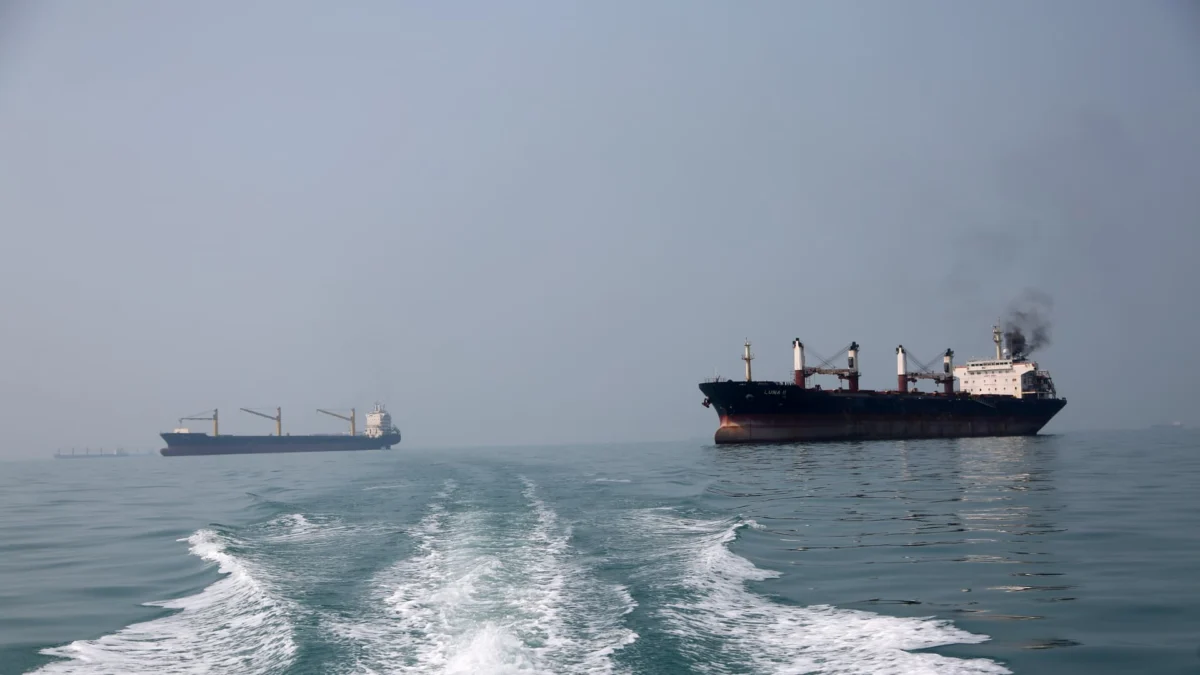
Oil prices climbed as traders weighed new developments in the Middle East, specifically Iran’s claim that naval mines forced three tankers to turn back from the Strait of Hormuz. According to US Top News and Analysis, this assertion added upward pressure to both Brent and WTI crude benchmarks, underscoring how geopolitical tensions continue to shape global energy markets. The Strait of Hormuz remains one of the world’s most critical oil transit chokepoints, making any potential disruption a focal point for market participants.
KEY FACTS
- Oil prices climbed as traders assessed Middle East developments.
- Iran’s Revolutionary Guards said naval mines prevented three tankers from passing through the Strait of Hormuz.
- The statement was made on Tuesday, according to US Top News and Analysis.
The Story
What Happens Next?
Market watchers are now gauging whether Iran will elaborate further on its claims regarding the tankers and the alleged use of naval mines. Additional commentary from Tehran or responses from international maritime authorities could reinforce or temper current price movements. So far, no independent confirmation of the tanker incident has emerged, leaving traders to navigate a landscape driven largely by headlines rather than verified data.
Crude futures gained momentum early in the trading day following the report, with benchmark grades reflecting cautious optimism that supply disruptions might persist. Analysts note that even unconfirmed threats near key waterways often suffice to lift prices temporarily, especially when combined with existing output cuts or inventory constraints. As a result, energy markets are likely to remain volatile until clarity returns to the region.
Energy Markets React
The immediate impact on pricing was visible across major exchanges, where both Brent and WTI contracts saw notable intraday gains. Traders frequently react swiftly to any sign of tension near strategic shipping lanes, and the Strait of Hormuz accounts for roughly 20% of global petroleum liquids consumption. Any perceived threat to safe passage through such corridors tends to trigger pre-emptive buying among hedge funds and commodity speculators alike.
Beyond spot price changes, some energy companies may begin adjusting logistics plans or rerouting vessels as a precautionary measure. Insurance premiums for tankers navigating high-risk zones can spike quickly under these conditions, adding indirect costs throughout the supply chain. These secondary effects help explain why oil price swings triggered by political news often extend beyond the initial reaction window.
Historical Context
Incidents in the Strait of Hormuz have historically served as flashpoints capable of sending ripples through global finance. Past episodes—including mine discoveries, harassing maneuvers, and accidental collisions—have each contributed to brief but sharp increases in crude valuations. In many cases, the mere suggestion of interference has been enough to justify short-term repricing by institutional investors tracking geopolitical risk indices.
While Iran’s Revolutionary Guards operate independently of the regular armed forces, their influence extends into naval operations affecting regional security. Their ability to project power within the Persian Gulf gives outsiders reason to monitor statements closely, particularly those implying readiness to disrupt commercial traffic. Whether this latest declaration reflects operational reality or rhetoric aimed at domestic audiences remains unclear, though traders appear inclined to err on the side of caution.
WHAT WE KNOW — AND WHAT WE DON’T
Verified by the source:
- Iran’s Revolutionary Guards claimed naval mines prevented three tankers from transiting the Strait of Hormuz.
- This claim contributed to rising oil prices at the time of reporting.
- The event occurred on Tuesday, per US Top News and Analysis.
Still unconfirmed:
- Whether mines were actually deployed or detected.
- Identity or flag state of the three tankers involved.
- Independent verification of the incident from third-party sources.
- Potential response from affected nations or maritime coalitions.
Why It Matters
Because so much of the planet’s oil flows through narrow maritime passages, rumors or unverified incidents tied to those routes carry outsized weight. For consumers worldwide, fluctuations rooted in geopolitical uncertainty can translate into higher fuel costs and inflationary pressures. Investors, policymakers, and industry executives all track developments like these closely, knowing that perception alone can alter investment flows, currency valuations, and fiscal forecasts across multiple economies.
What To Watch
Follow-up statements from Iran, updates from maritime safety agencies, and renewed commentary from central banks monitoring inflation risks will determine whether oil prices climb holds true. Officials have yet to provide corroborating evidence beyond the initial claim.