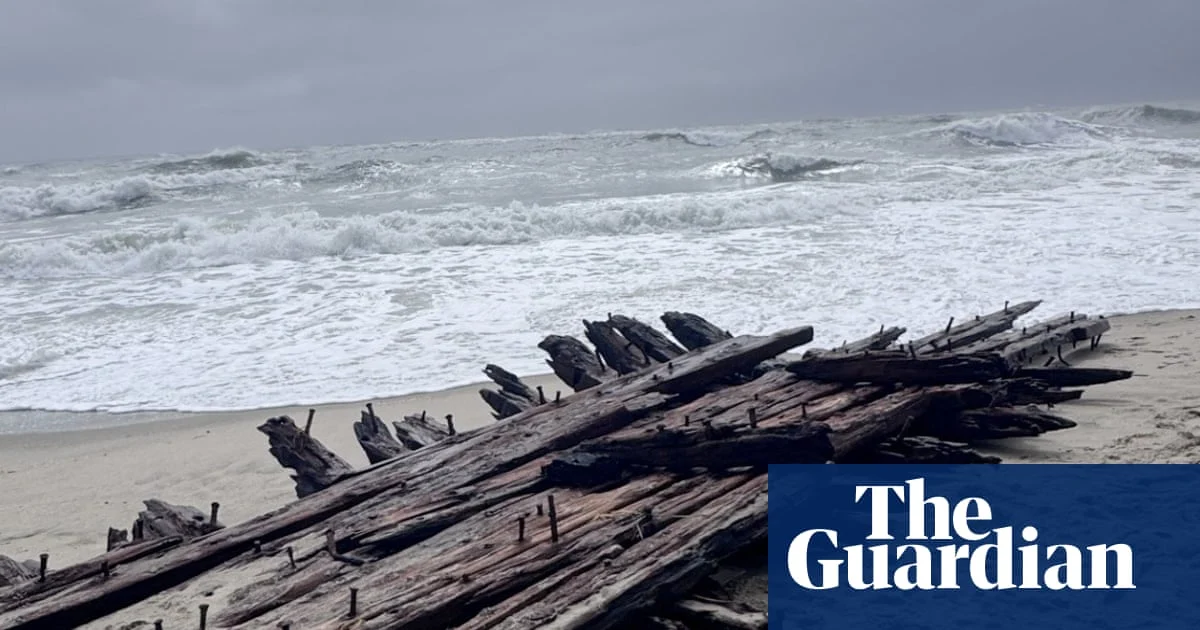
A powerful nor’easter that struck New England over the weekend has exposed large segments of a long-submerged shipwreck along the Massachusetts coastline. The remnants belong to the Warren Sawyer, a three-masted wooden schooner that ran aground near Nantucket in December 1884.
The vessel was carrying cotton and scrap iron when it struck shore, and historical accounts note that the crew of eight — including the captain — were safely rescued. The ship gradually broke apart over the following weeks, and its remains had largely been buried beneath sand and sediment until now.
Key Facts
- The nor’easter exposed segments of the Warren Sawyer shipwreck in Massachusetts.
- The ship ran aground on 22 December 1884 near Nantucket.
- The Warren Sawyer was a three-masted wooden schooner.
- The crew was rescued; the ship later broke up after weeks on shore.
- The vessel was headed from New Orleans to Boston.
How Did the Shipwreck Stay Hidden for So Long?
The Warren Sawyer’s remains lay undisturbed for decades beneath layers of coastal sediment. Storms, tides, and shifting sands periodically altered what was visible above ground, but most of its wooden hull and structural elements remained buried or eroded away. The recent nor’easter brought stronger wave action and coastal surge than typical seasonal weather, which likely loosened and displaced sediment that had long covered the wreck site.
This type of exposure is not unusual during intense coastal storms, especially in areas known for maritime hazards. Nantucket lies within what mariners historically referred to as the ‘ Graveyard of the Atlantic ‘ — a stretch of coast notorious for its unpredictable waters and frequent shipwrecks due to hidden shoals and sudden weather changes.
What Happens Next?
With parts of the shipwreck now exposed, local authorities and maritime historians may assess the site for preservation efforts. Wooden shipwrecks can degrade quickly once uncovered, particularly if left exposed to tidal cycles and atmospheric conditions.
Depending on the location and visibility, officials might also consider public access controls to prevent damage or looting. Archaeological documentation could follow, aiming to record structural details before further natural deterioration occurs.
Why It Matters
Shipwrecks like the Warren Sawyer offer rare glimpses into 19th-century maritime commerce and travel routes between major ports such as New Orleans and Boston. Their sudden reappearance due to extreme weather underscores how climate-related events — including stronger storms and rising sea levels — can unexpectedly unearth buried history along vulnerable coastlines.
These discoveries often spark interest among researchers, students, and tourists alike, contributing both cultural insight and economic activity. However, they also raise urgent questions about protecting underwater and intertidal heritage sites that face growing threats from erosion and ocean change.
What To Watch
Local authorities have yet to comment on whether protective measures will be taken for the exposed wreck site. Further storms could either reveal additional sections or accelerate decay of the newly visible timbers.