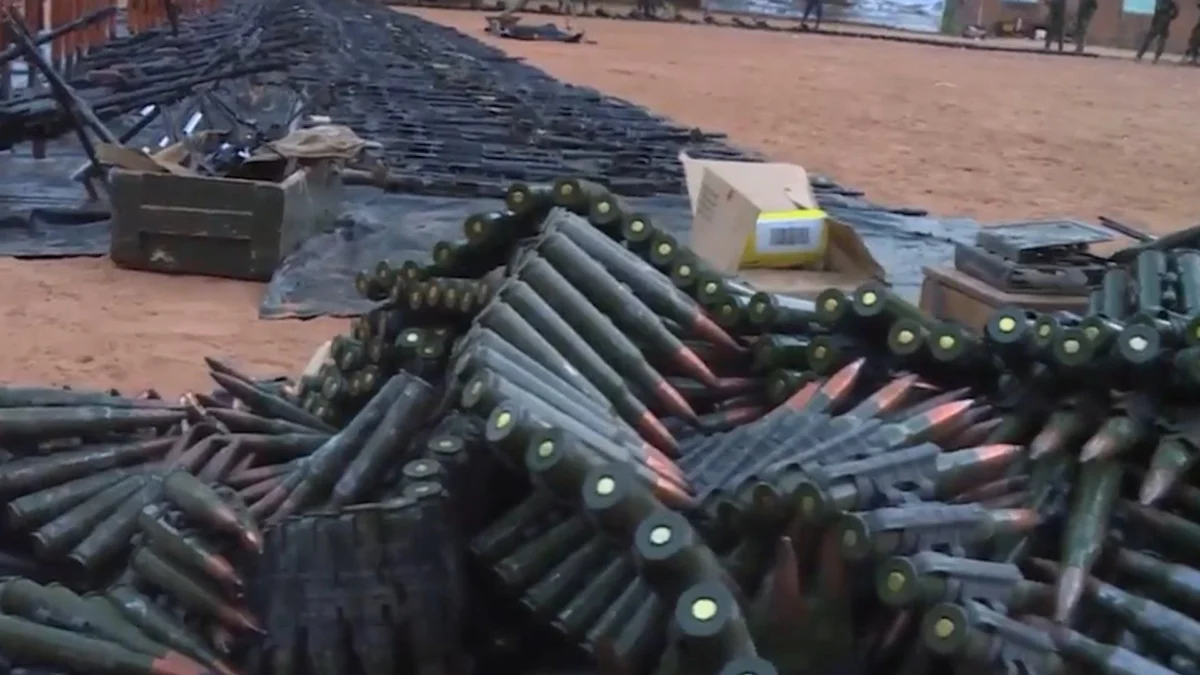
Niger’s government has displayed an arsenal of weapons seized during clashes to suppress a military mutiny, underscoring efforts to maintain stability after an attempted revolt against the authorities. The exhibition serves as a public demonstration of the state’s ability to quash dissent and secure its military assets.
The failed uprising marks another episode in Niger’s turbulent political landscape, where internal security threats occasionally challenge governance. Authorities used the display to signal resolve against potential unrest.
KEY FACTS
- Niger’s authorities showcased weapons seized during a failed military mutiny.
- The arsenal was captured during fighting to suppress the revolt.
- The display followed clashes between mutineers and government forces.
- The mutiny was an attempt to challenge Niger’s leadership.
WHAT HAPPENED DURING THE MUTINY?
The mutiny represents another flashpoint in Niger’s recent history of internal military dissent. While details on the scale and timeline remain unspecified, such events are not uncommon in regions facing political instability. Military uprisings often stem from grievances within the armed forces, such as dissatisfaction with leadership or conditions.
The government’s decision to exhibit the confiscated weaponry suggests an intent to deter further challenges to its authority. Similar displays have been used by other states to project strength after internal conflicts.
WHAT DOES THE ARSENAL REVEAL?
The weapons seized likely include firearms and possibly heavier munitions, though the exact inventory remains undisclosed. Such caches often indicate the extent of military hardware accessible to those involved in rebellions. The government’s ability to recover these assets points to its operational control over security forces.
The event also raises questions about how mutineers obtained the weaponry—whether through military stockpiles or external sources—though no specifics have been confirmed.
WHAT WE KNOW — AND WHAT WE DON’T
Verified by the source:
- Niger’s government displayed weapons seized during the mutiny.
- The arsenal was captured in clashes between mutineers and state forces.
- The mutiny sought to challenge Niger’s leadership.
Still unconfirmed:
- The number of participants or casualties in the mutiny.
- The exact types and quantities of weapons recovered.
- Whether external factions supported the mutineers.
WHY IT MATTERS
Military rebellions in Niger and similar regions threaten governance and regional stability, often exacerbating existing tensions. The government’s response can influence perceptions of its strength, which is critical in deterring future challenges. Additionally, the weapons exhibited could hint at broader security risks if military dissent persists.
WHAT TO WATCH
Future statements from Niger’s leadership may clarify whether additional measures will be taken to prevent further mutinies. Observers will monitor for signs of continued unrest within military ranks.