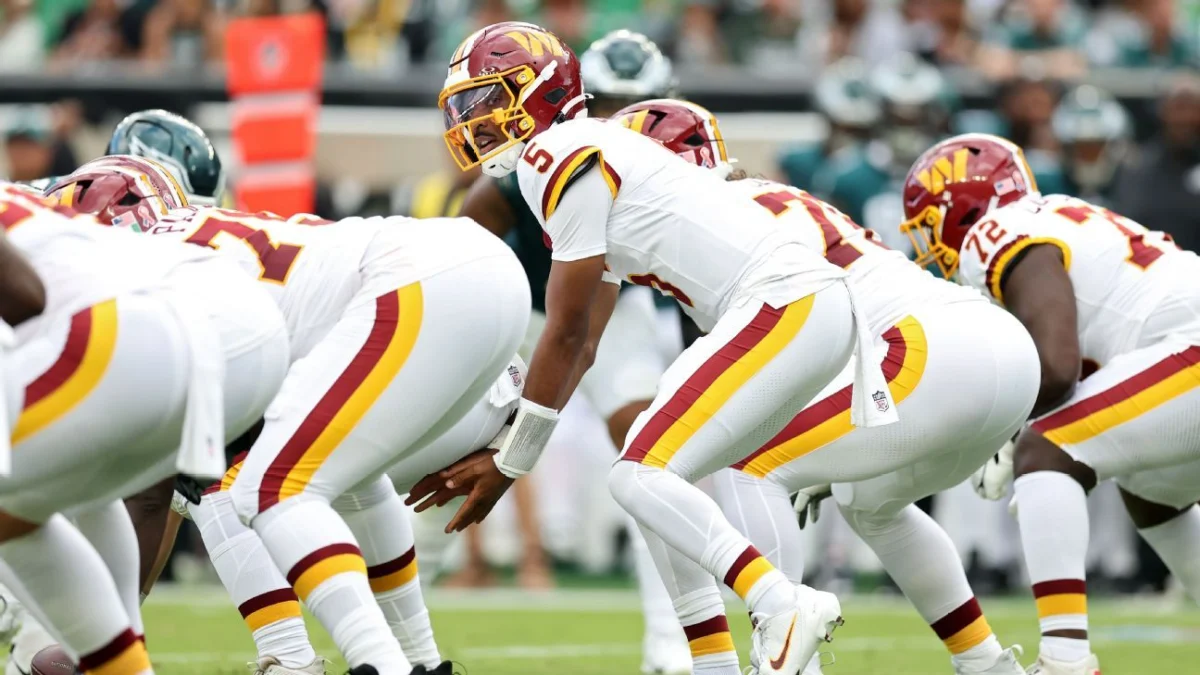
Under center more often, out of the shotgun less — the NFL is quietly changing how offenses line up. Several teams are reducing their reliance on the shotgun formation in favor of taking more snaps directly under center, reversing a long-standing trend in the league.
This shift is not universal, but its visibility among competitive teams has drawn attention. The change suggests a potential evolution in how modern NFL offenses approach play design and tempo.
KEY FACTS
- Some NFL teams are going under center more frequently.
- Those same teams are using the shotgun formation less often.
- The Commanders, Eagles, Ravens, Chiefs, Giants, and Raiders are among the teams making this shift.
- There is ongoing speculation about whether this trend will stick.
What Is Changing in NFL Formations
The shotgun formation, in which the quarterback lines up several yards behind the center, became dominant in the NFL over the past two decades due to its advantages in passing efficiency and quick snaps. However, recent data shows select teams are bucking this trend by increasing their use of under-center snaps.
Under-center formations are traditionally associated with run-heavy schemes or play-action concepts. They require a quarterback to take the snap directly from the center, which can influence timing, protection schemes, and overall tempo. This tactical move may signal renewed emphasis on ground game or structured passing plays designed after the snap.
Not all teams are following this pattern, but those that are include high-profile franchises like the Kansas City Chiefs and Baltimore Ravens. These teams have historically embraced innovation, so their participation in this shift adds significance to what was once considered an outdated approach.
How This Could Affect Future Play
If more teams adopt under-center alignments, defenses may need to adjust their preparation accordingly. Slower-paced games or revised pre-snap reads could become more common, especially against teams known for aggressive defensive postures.
Moreover, younger quarterbacks entering the league might be coached differently than previous generations, emphasizing traditional footwork and pocket presence rather than shotgun-first mechanics. Whether this reflects a broader philosophical reset or a temporary tactical experiment remains unclear.
Some analysts suggest the shift correlates with improved performance in short-yardage situations or red zone efficiency. Still, concrete evidence linking formation choice to win probability will likely require deeper statistical analysis over multiple seasons.
What We Know — and What We Don’t
Verified by the source:
- Several listed NFL teams are reportedly increasing under-center snaps.
- Same set of teams is also said to be reducing shotgun usage.
- Trend is being discussed publicly within ESPN coverage.
Still unconfirmed:
- No specific percentages or timeframes provided for the changes.
- No mention of coaching staffs or decision-makers behind the shift.
- No performance metrics or comparative outcomes included.
Why It Matters
Formation trends shape not only game outcomes but also how players develop and adapt. As rules continue favoring offense, any deviation toward older-style alignments deserves scrutiny for long-term impact on balance between run and pass strategies across the NFL.
This trend intersects with wider discussions around pace-of-play reforms and fan engagement. A move away from the fast-strike model enabled by frequent shotgun use might align with league efforts to enhance competitive drama through varied rhythms and strategic unpredictability.
Focus keyword: shotgun formation
Understanding the evolving use of the shotgun formation offers insight into how NFL teams respond dynamically to rule environments and opponent adaptations. Teams experimenting with under-center snaps challenge assumptions about optimal offensive spacing and tempo control in today’s pass-heavy landscape.
What To Watch
Analysts expect further clarity during upcoming draft cycles and training camps, where new coaching philosophies may reinforce or reverse these early signs of change.
Statistical tracking services like Next Gen Stats may soon publish granular breakdowns comparing per-team formation frequencies, helping validate whether current shifts represent short-term adjustments or longer-term transformations.