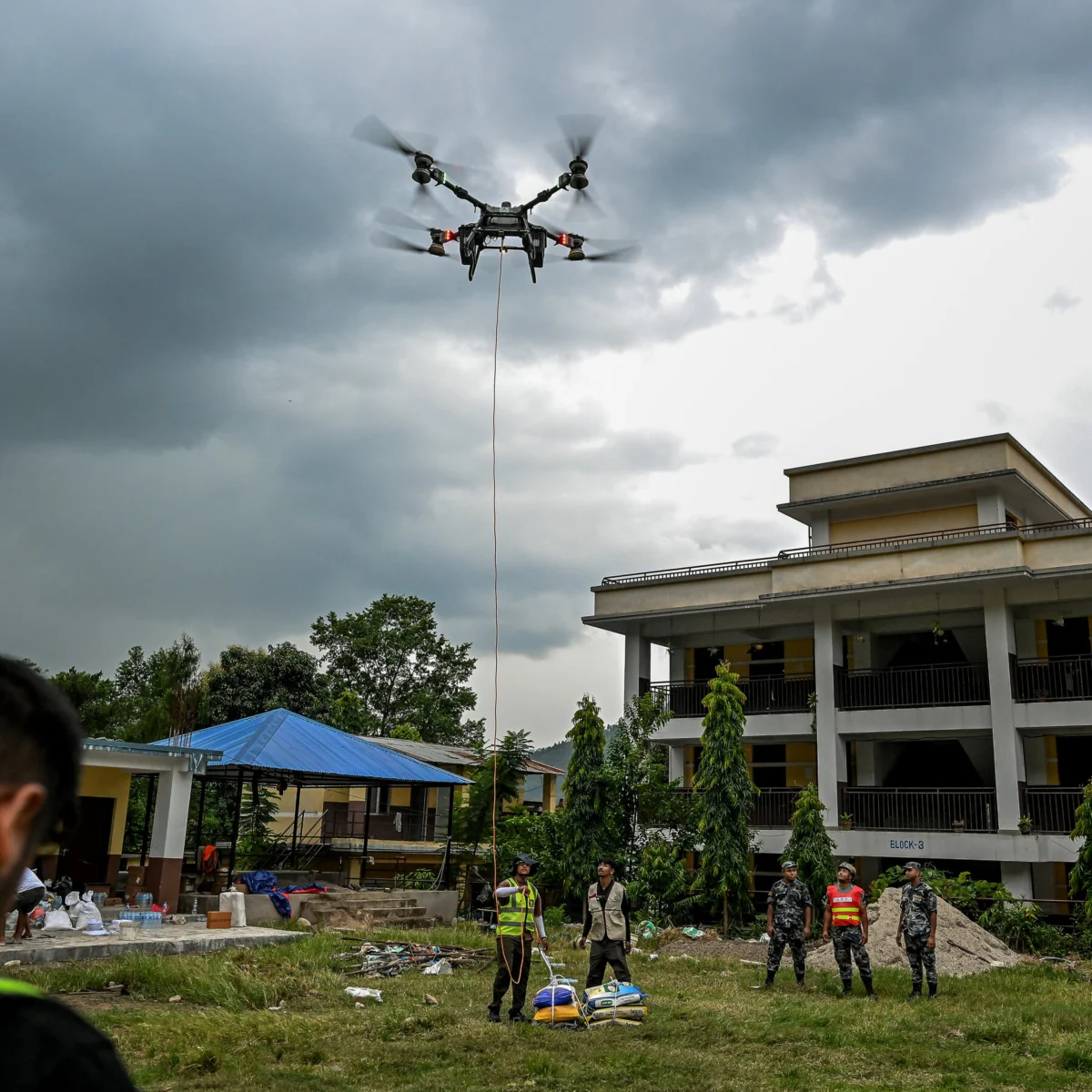
Rescue workers in Nepal are testing drones to deliver aid to survivors of deadly floods and landslides who have no access to food, according to NYT > World News. The initiative aims to overcome logistical challenges in hard-to-reach areas where traditional aid delivery methods have failed.
The effort involves coordination between officials and volunteers, who are evaluating the effectiveness of drone technology in emergency response scenarios. This comes as the country grapples with the aftermath of severe flooding that has isolated many communities.
Key Facts
- Some survivors of Nepal’s deadly flood and landslide have no access to food.
- Officials and volunteers are testing drone deliveries for aid distribution.
- The initiative responds to logistical challenges in remote flood-affected areas.
How Drones Could Change Disaster Response
Drones offer a potential solution for delivering essential supplies to areas where roads are destroyed or inaccessible due to natural disasters. Their ability to bypass damaged infrastructure could significantly reduce the time it takes to reach isolated survivors. This marks a shift toward incorporating technology in humanitarian efforts where traditional methods fall short.
While still in the testing phase, the use of drones in Nepal highlights a growing trend of leveraging innovation in crisis situations. Other regions facing similar challenges may look to this pilot as a model for future disaster response strategies.
What We Know — and What We Don’t
Verified by the source:
- Food scarcity is a critical issue for survivors in flood-hit Nepal.
- Officials and volunteers are actively testing drone aid delivery methods.
Still unconfirmed:
- The scale or success rate of current drone delivery tests.
- Plans for expanding drone use beyond this immediate crisis.
Why It Matters
Natural disasters often leave vulnerable populations without access to basic necessities. This pilot program demonstrates how technology could bridge gaps in humanitarian aid delivery, potentially saving lives in future crises worldwide. The lessons learned may influence global disaster response protocols for years to come.
What To Watch
The effectiveness of these drone deliveries will determine whether Nepal and other disaster-prone countries adopt this technology for future emergencies. Results could prompt investment in similar systems elsewhere facing comparable logistical challenges.