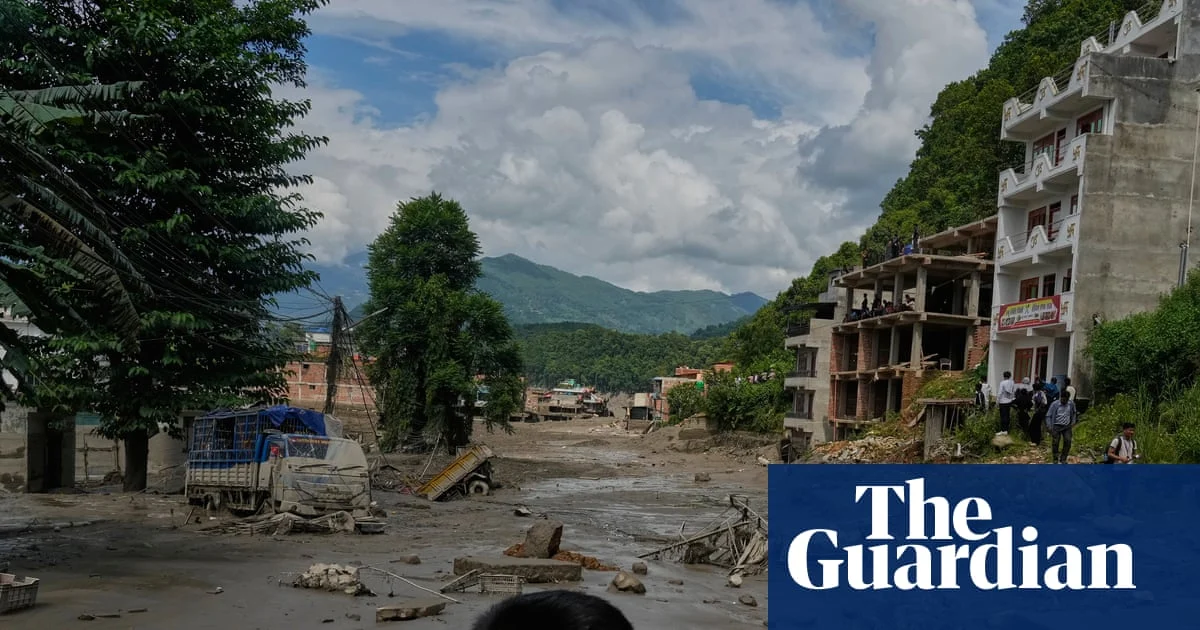
Flash floods in Nepal and Tibet have caused widespread devastation, leaving hundreds dead and thousands missing. Rescue workers are racing to find survivors trapped in villages engulfed by mud and debris.
The floods struck suddenly, snapping bridges and sweeping away homes. Survivors are stranded on rooftops or trapped in tunnels, with many uncertain about the fate of loved ones. The disaster underscores the growing climate risks facing the region.
KEY FACTS
- The death toll from the floods stands at 903.
- More than 4,000 people are missing.
- A headteacher in Nepal evacuated 900 children from a school moments before the flood hit.
- Rescue workers are struggling to reach survivors marooned on buildings or trapped underground.
- The floods are described as a stark warning about climate risks.
WHAT HAPPENED?
The flash floods in Nepal and Tibet occurred over the weekend, with rescue efforts ongoing. Entire villages were swallowed by mud and debris in minutes, leaving survivors stranded and infrastructure destroyed. The headteacher’s quick action saved hundreds of children, but many others were not as fortunate.
WHO IS AFFECTED?
Thousands of families across Nepal and Tibet are grappling with loss and displacement. Survivors are cut off from aid, with rescue teams unable to reach some areas. The psychological toll is immense, as many are left wondering about the fate of missing relatives.
WHAT WE KNOW — AND WHAT WE DON’T
Verified by the source:
- The death toll is at least 903.
- Over 4,000 people are missing.
- Rescue operations are underway but face significant challenges.
Still unconfirmed:
- The exact number of survivors still trapped.
- The full extent of infrastructure damage.
- Long-term climate impact on the region.
WHY IT MATTERS
This disaster highlights the increasing frequency and severity of climate-related events in vulnerable regions. The floods serve as a warning for other areas facing similar risks due to climate change.
WHAT TO WATCH
Rescue efforts will continue in the coming days, with updates expected on the missing and the death toll. The disaster may also prompt discussions on climate resilience in the region.