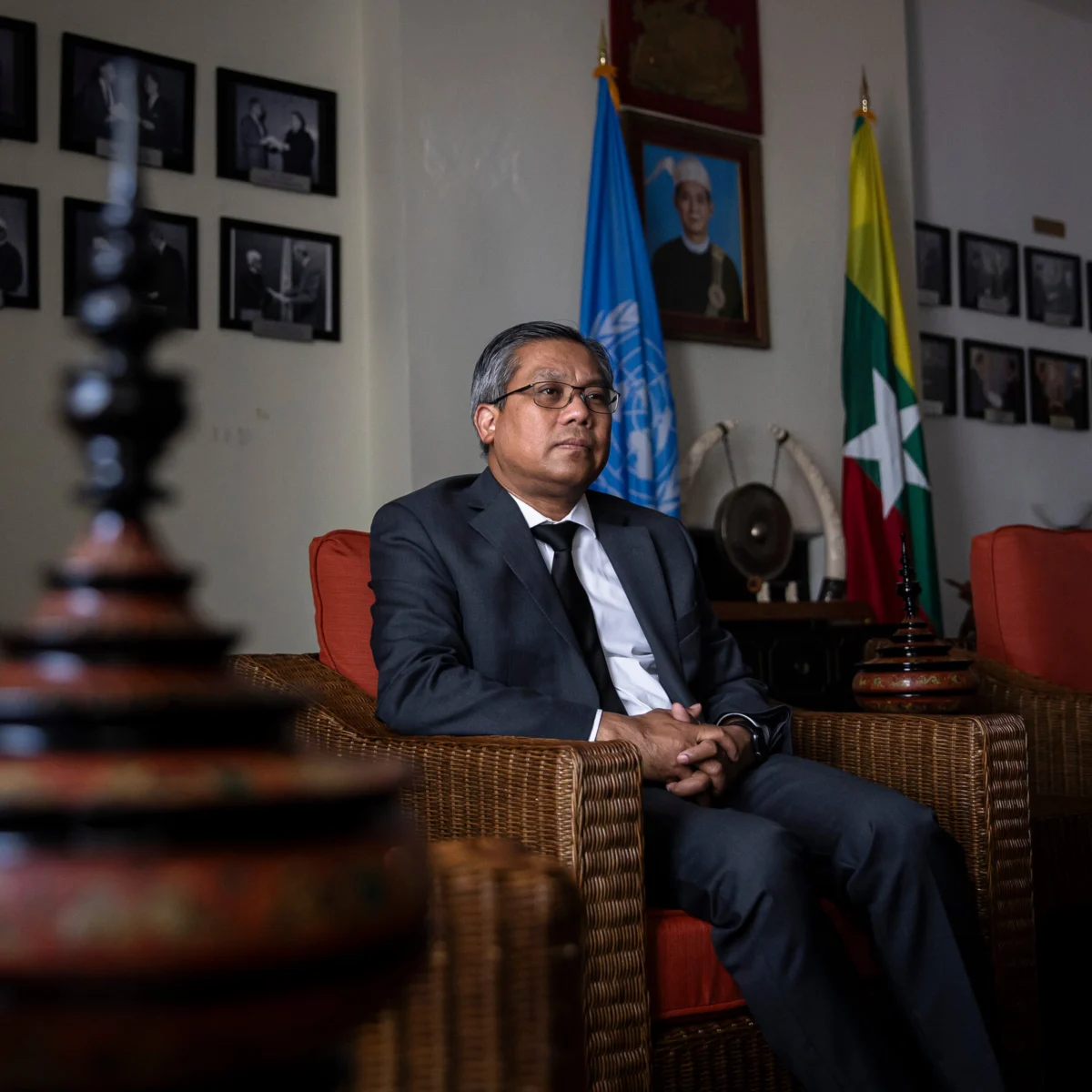
Lede
A Myanmar diplomat has refused to relinquish his United Nations post and residence, remaining stationed at the UN mission more than five years after the country’s military seized power in a 2021 coup. U Kyaw Moe Tun continues to occupy his role at the UN, including a sandstone townhouse on Manhattan’s Upper East Side, despite demands that he step aside.
His persistence highlights the lingering political instability in Myanmar and the difficulty of removing officials appointed under the deposed civilian government. The standoff underscores tensions between the military junta and the internationally recognized representative of Myanmar’s people.
The United Nations building in New York has become a symbolic stage where this dispute plays out, with the diplomat’s continued presence signaling resistance to the military takeover and its aftermath.
KEY FACTS
- U Kyaw Moe Tun refuses to leave NYC-based UN position.
- He retains a sandstone townhouse on Manhattan's Upper East Side.
- He has held the post for over five years following Myanmar's 2021 military takeover.
The Story
Who is affected?
The ongoing situation affects multiple parties: the diplomat himself, the Myanmar junta that seeks his removal, and the UN Secretariat caught between diplomatic protocol and political pressure.
Internationally, Myanmar's neighbors and allied nations watch closely, as the envoy's defiance symbolizes broader resistance to military rule. Civil society groups within Myanmar also view his stance as aligned with their struggle for democratic restoration.
Domestically, citizens may see his refusal as evidence that even overseas representatives reject the legitimacy of the current regime, reinforcing narratives about the coup's lack of popular support.
How did we get here?
In February 2021, the Myanmar military overthrew the elected government led by Aung San Suu Kyi's National League for Democracy party, citing fraud allegations later dismissed by independent observers.
The coup triggered mass protests, a brutal crackdown, and the formation of an shadow administration known as the National Unity Government (NUG), which many Western nations recognize as Myanmar's legitimate voice.
Ambassador U Kyaw Moe Tun, appointed before the coup, chose not to return home or acknowledge the junta. Instead, he remained at the UN, voicing opposition to the military regime and maintaining de facto control over Myanmar's diplomatic missions abroad.
What happens next?
Diplomatic observers expect continued deadlock unless either side concedes or external actors intervene through sanctions, resolutions, or backchannel negotiations.
Some analysts suggest the UN might revisit credentials procedures for representatives from regimes deemed illegitimate, though such steps require consensus among member states.
For now, the envoy's status remains unresolved, with no public timeline for resolution from the UN or major powers involved.
What We Know — and What We Don't
Verified by the source:
- U Kyaw Moe Tun holds a UN post in New York.
- He resides in a sandstone townhouse on the Upper East Side.
- He has occupied these roles for over five years.
Still unconfirmed:
- Exact dates of his appointment or entry into refusal.
- Identity of any officials pressuring him to leave.
- UN's internal response or legal framework applied.
- Future actions by the Myanmar junta or its allies.
Why It Matters
This prolonged standoff reflects how the UN can serve as a platform for dissent when home governments fall to authoritarian takeovers. It shows how diplomatic appointments made under ousted leaders carry symbolic weight long after regimes change.
For global audiences, it raises questions about the role of international institutions in recognizing contested authority—a recurring challenge in modern geopolitics where coups and contested elections blur lines between legitimacy and power.
What to Watch
Any formal move by the UN Credentials Committee or Security Council could shift momentum quickly. Meanwhile, shifting alliances among regional powers like China, India, Russia, and ASEAN may determine whether this issue fades or escalates further.
Analysts note that while the envoy's visibility raises awareness of Myanmar's crisis, concrete action depends largely on whether permanent members of the Security Council decide to prioritize this matter politically.