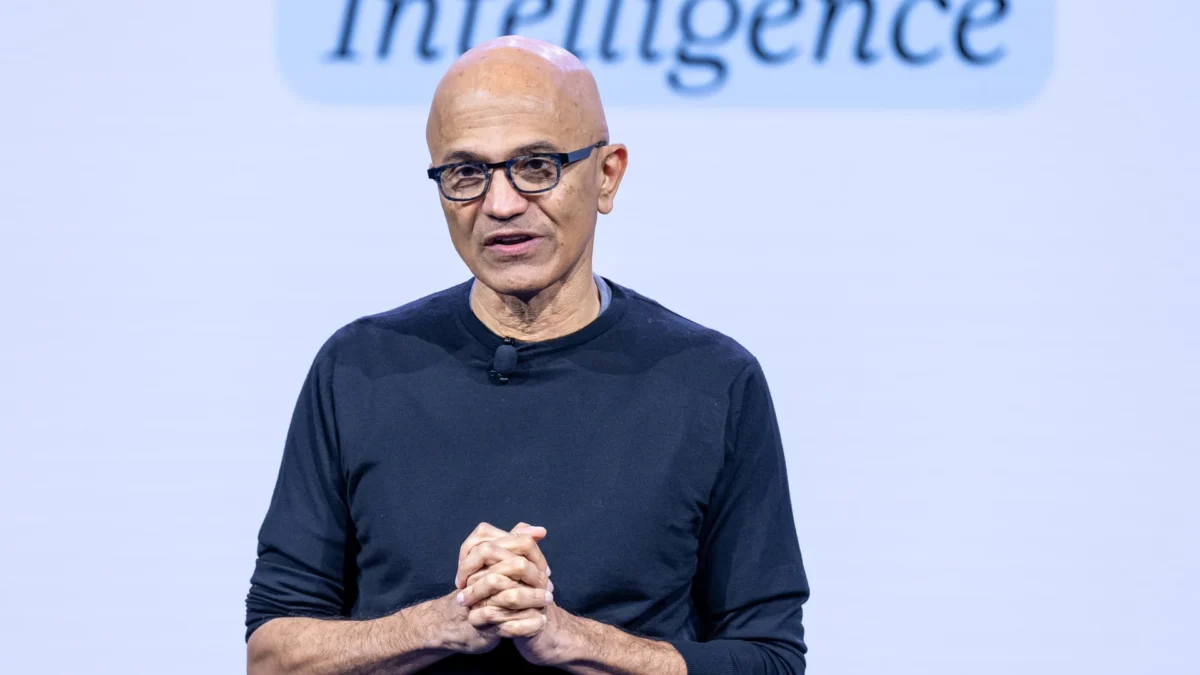
Microsoft CEO Satya Nadella has called for an ’emergency brake’ on artificial intelligence that remains under human control, joining other technology leaders and researchers advocating for enhanced safety measures and cautious progress in developing frontier AI systems.
The appeal reflects growing concern across the tech industry about the risks posed by increasingly powerful AI models and the need for guardrails that allow humans to intervene if necessary.
KEY FACTS
- Subject: Satya Nadella, Microsoft CEO.
- Proposal: AI systems need an ’emergency brake’ controlled by humans.
- Context: Part of a broader push by tech leaders for stronger AI safeguards.
- Development pace: Some callers urge slowing frontier AI development.
- Source: Statement attributed to US Top News and Analysis.
WHAT WAS PROPOSED
Nadella’s call for an ’emergency brake’ refers to mechanisms that allow people to halt or override AI systems when they behave unpredictably or dangerously. Such safeguards are particularly relevant as AI models grow more autonomous and capable of influencing critical domains like finance, healthcare, and defense. The idea aligns with ongoing discussions among researchers about ensuring that advanced AI remains aligned with human values and under meaningful human oversight.
Frontier AI development involves creating highly capable models that can perform tasks beyond current limitations. While these advancements promise significant benefits, they also raise concerns about control, misuse, and unintended consequences. Nadella’s stance places him among a growing group of executives and scientists urging policymakers and developers to prioritize safety alongside innovation.
WHO IS AFFECTED BY AI SAFETY SAFEGUARDS
Tech companies, researchers, and regulators are directly impacted by proposed AI safety measures. Firms investing in frontier AI must balance rapid advancement with risk mitigation strategies. Researchers working on AI alignment face pressure to design systems that are both powerful and controllable. Governments and international bodies may need to craft new frameworks governing AI development and deployment.
Beyond industry stakeholders, society at large has a vested interest in AI safety safeguards. As AI becomes embedded in daily life—from hiring algorithms to autonomous vehicles—the potential for harm increases if systems lack proper oversight. Public trust in technology depends partly on assurances that developers are actively managing risks rather than rushing untested capabilities into widespread use.
WHAT WE KNOW / WHAT WE DON’T
Verified by the source:
- Satya Nadella advocated for an ’emergency brake’ controllable by humans.
- His comments came amid broader calls from tech moguls and researchers for stronger AI safeguards.
- In some instances, advocates have recommended pacing the development of frontier AI systems.
- These viewpoints were reported by US Top News and Analysis.
Still unconfirmed:
- No specific policy proposals or timelines were provided in the summary.
- It is unclear which other tech leaders or researchers made similar statements.
- Details about what form the ’emergency brake’ should take remain unspecified.
- Whether any concrete actions will follow these recommendations is unknown.
WHY IT MATTERS
AI safety safeguards are crucial for maintaining public trust and preventing potential harm as artificial intelligence becomes more integrated into essential services and decision-making processes. Without appropriate controls, even well-designed systems could cause unintended damage. Establishing norms around human oversight helps ensure that benefits are realized while minimizing risks, shaping how future technologies are governed globally.
WHAT TO WATCH
Future developments may include formal proposals from Microsoft or regulatory responses from government agencies. Ongoing dialogue between industry leaders and policymakers could influence how AI safety measures are implemented moving forward.Read more on economy and markets or explore insights in technology and AI trends.
According to US Top News and Analysis, Nadella’s remarks reflect mounting calls within the tech sector for responsible development practices amid rapid advancements in generative AI and machine learning.