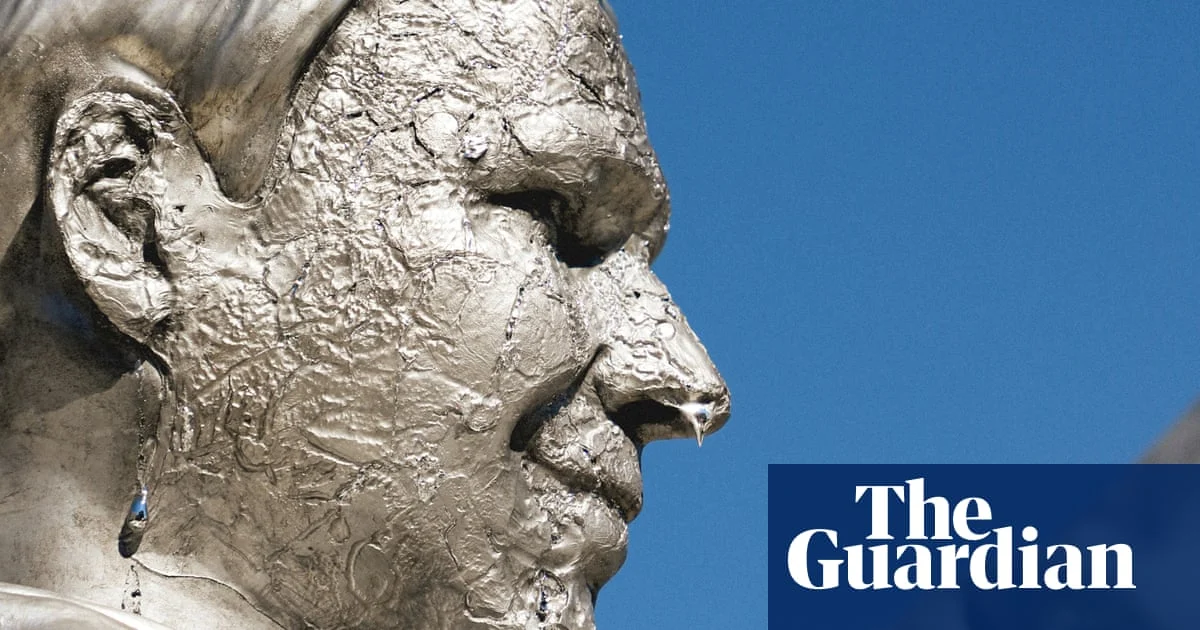
A life-sized statue of Ron DeSantis, the Florida governor, was unveiled and promptly began melting in front of an audience in Tallahassee in a symbolic protest at his rejection of action on the climate crisis. The silvery statue, revealed to an audience of onlookers last week, melted away to show a skull under DeSantis’s face. The structure was cast from solid gallium, a metal that melts at 85.6F (29.8C), which is below summertime high temperatures frequently reached in Tallahassee, Florida’s capital.
The protest reflects growing public pressure on political leaders to address the climate crisis through emissions-reducing legislation. DeSantis has consistently opposed any legislation to curb planet-heating emissions, calling it a ‘radical climate agenda.’
Key Facts
- A life-sized statue of Ron DeSantis was unveiled in front of an audience in Tallahassee.
- The statue began melting shortly after being revealed.
- The statue was made of gallium, which melts below summer temperatures common in Tallahassee.
- The melting display revealed a skull beneath DeSantis’s face.
- DeSantis has opposed climate crisis legislation, calling it a ‘radical climate agenda’.
The Story
What happens next?
The melting statue protest is part of a broader pattern of public demonstrations targeting politicians viewed as obstructing climate crisis action. Such events often aim to draw media attention and pressure lawmakers ahead of elections or legislative sessions. Organizers of the Tallahassee demonstration used the visual symbolism of the melting statue to communicate the urgency of climate change and the perceived consequences of inaction. Whether similar protests will occur in other state capitals remains uncertain. No further details about future demonstrations were provided in the source.
The use of gallium as a sculpting material was deliberate. At 85.6 degrees Fahrenheit, the metal transitions from solid to liquid at temperatures commonly reached during Florida summers. This choice ensured the statue would visibly degrade in real time, reinforcing the message about rising global temperatures. The skull revealed beneath the surface added a stark visual element, suggesting potential mortality or danger tied to unchecked warming. The demonstration was timed to coincide with ongoing debates over climate policy in the state legislature.
Who is affected?
Florida residents are directly affected by climate crisis impacts, including rising sea levels, intensifying hurricanes, and prolonged heat waves. DeSantis’s stance on emissions legislation influences state-level responses to these threats. Environmental advocates and activists organizing such protests represent a segment of the population pushing for stronger climate policies. Meanwhile, supporters of DeSantis may view the protest as politically motivated criticism. The broader national conversation around climate crisis legislation also extends beyond Florida, influencing public discourse across the country.
The governor’s opposition to curbing planet-heating emissions aligns with a segment of conservative policymakers who resist federal climate mandates. His public statements rejecting what he calls a ‘radical climate agenda’ reflect a political strategy that balances economic concerns with environmental advocacy. As climate-related disasters increase in frequency and severity, pressure mounts on leaders at all levels to adopt more aggressive emissions reduction targets.
What We Know — and What We Don’t
Verified by the source:
- The statue was life-sized and made of gallium.
- It was unveiled in Tallahassee and began melting.
- It revealed a skull beneath DeSantis’s face.
- Gallium melts at 85.6F, below typical summer temperatures in Tallahassee.
- DeSantis opposes legislation to curb emissions, calling it a ‘radical climate agenda’
Still unconfirmed:
- The specific organization or group that organized the protest
- The exact date or time of the statue unveiling
- Whether DeSantis responded publicly to the protest
- How long the statue took to fully melt
- Additional context about the onlookers or audience present
Why It Matters
Symbolic protests like the melting statue highlight the growing divide between public demand for aggressive climate action and political resistance. As extreme weather becomes more common, visual demonstrations can shape voter sentiment and hold leaders accountable. The climate crisis remains a defining issue for upcoming elections nationwide.
What To Watch
Further public demonstrations and potential legislative responses to climate crisis advocacy remain to be seen. Updates on additional actions targeting political leaders’ climate stances are expected.