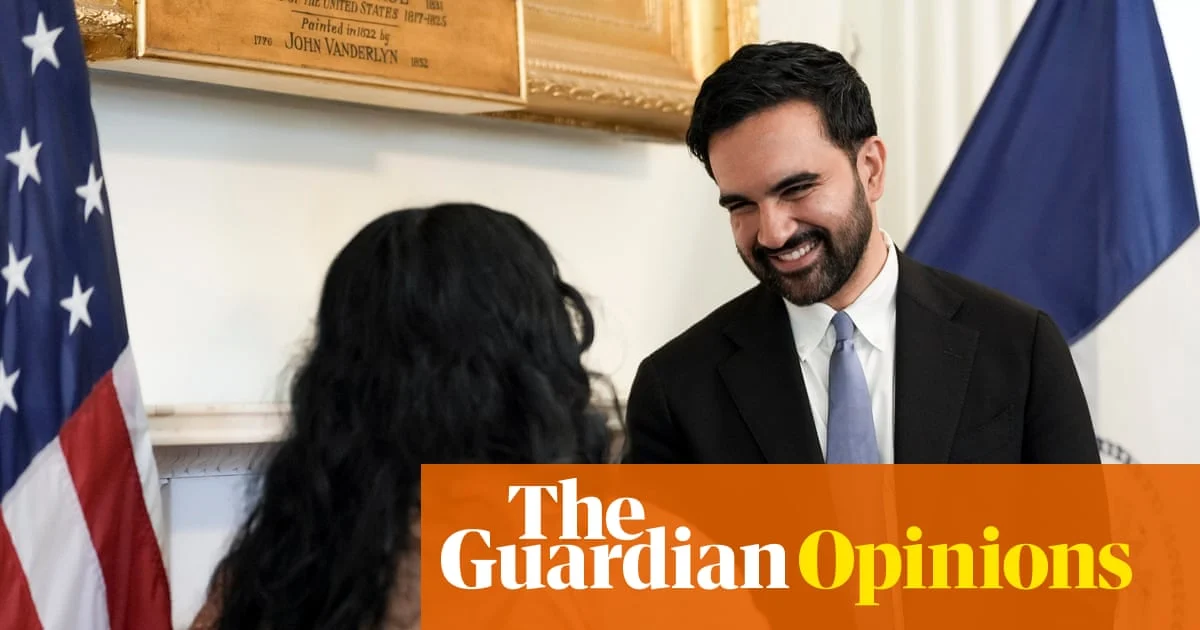
Zohran Mamdani, the mayor of New York City, used his July 3 speech to call for unity amid what he described as a “nation of contradictions,” while President Donald Trump delivered a 28‑minute address from Mount Rushmore on the same day.
Mamdani spoke while seated at George Washington’s desk, flanked by newly naturalized citizens, and highlighted the paradox of wealth and hunger in the United States. Trump’s speech, lasting over twice as long, offered a very different view of the nation’s history.
Key Facts
- Mamdani delivered a speech on July 3 at a desk associated with George Washington.
- The mayor’s remarks were roughly half the length of Trump’s address.
- President Trump’s speech lasted 28 minutes at Mount Rushmore.
- Mamdani referenced a “city of contradictions within a nation of contradictions.”
- Trump’s remarks were described as rewriting the past.
What did the speakers say?
How did Mamdani frame the nation’s challenges?
Mamdani said the United States is the wealthiest country in history yet children still go to sleep hungry while the world’s first trillionaire seeks more. He positioned his remarks as a call for unity.
What was the focus of Trump’s address?
Trump’s 28‑minute speech from Mount Rushmore was noted for presenting a revised narrative of American history, contrasting sharply with Mamdani’s message.
What We Know — and What We Don’t
Verified by the source:
- Both Mamdani and Trump gave speeches on July 3.
- Mamdani’s speech length was about half of Trump’s.
- Trump’s speech lasted 28 minutes and was delivered at Mount Rushmore.
Still unconfirmed:
- Exact content of Trump’s speech beyond the description of “rewriting the past.”
- Reactions from audiences or officials to either speech.
- Any follow‑up actions or policy proposals resulting from Mamdani’s call for unity.
Why it matters: The contrasting messages from a major city mayor and the president on the nation’s 250th anniversary underscore deep political and social divides in the United States.
What to watch: Future statements from both leaders and public response to their speeches will indicate how these divergent narratives influence the national conversation.