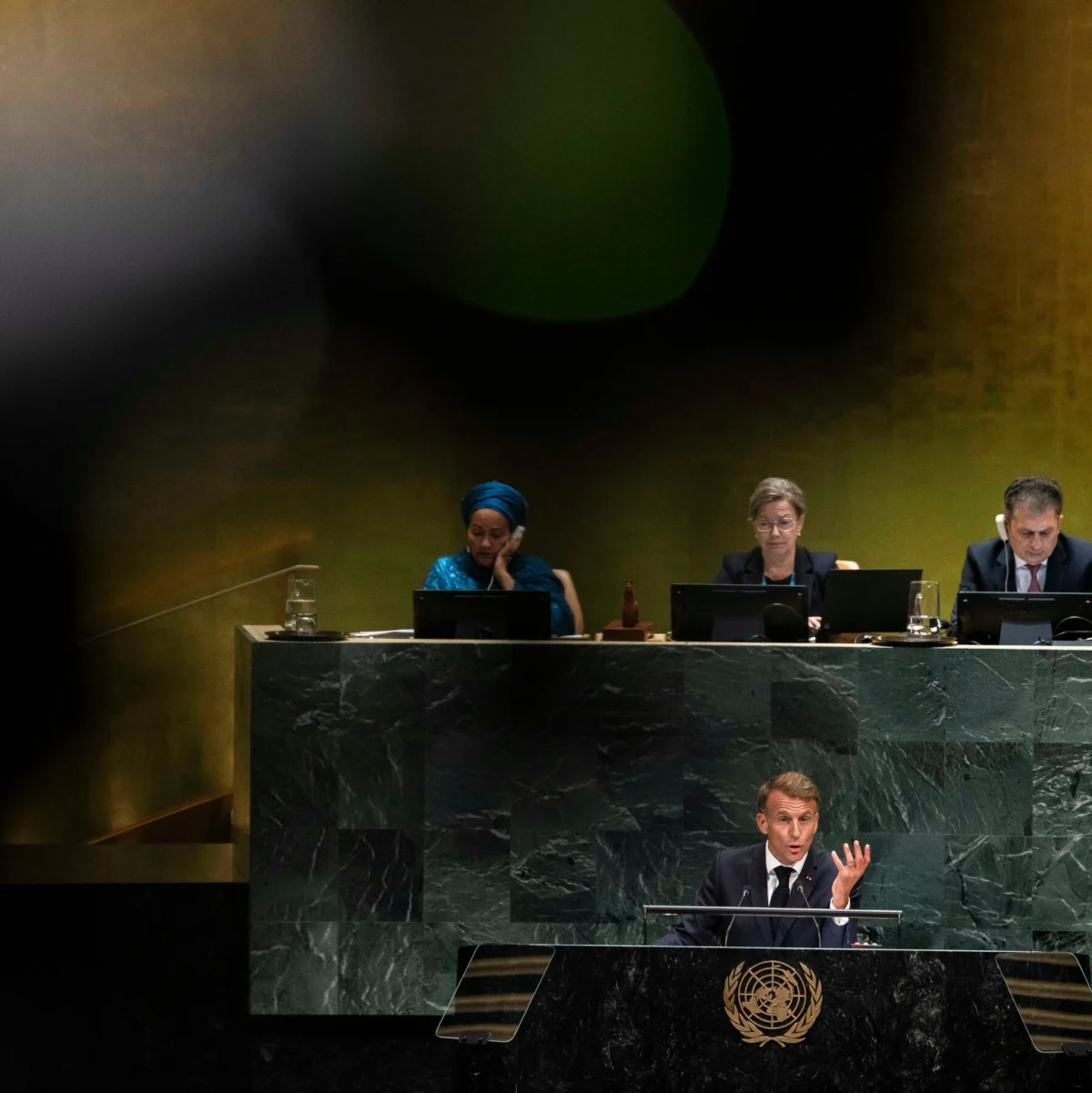
French President Emmanuel Macron used his final speech to the United Nations General Assembly to criticize Russia and Israel, while also delivering more indirect criticism toward the United States. The address marked the end of his tenure in a global forum where France often seeks to play a balancing role on international affairs.
The speech came during a regular session of the U.N. General Debate, an annual gathering where world leaders address pressing global concerns including conflicts, diplomacy, and international cooperation. Macron’s remarks were delivered in his capacity as France’s president and head of state, reflecting the official stance of the French government on foreign policy matters.
Key Facts
- Macron criticized Russia, Israel, and the United States in his final U.N. speech.
- The speech was given to the U.N. General Assembly.
- Criticism of Russia and Israel was direct; criticism of the United States was more veiled.
- The event was Macron’s farewell address as France’s president.
The Story
What happens next?
Macron’s farewell speech concludes his participation in the U.N. General Assembly as France’s sitting president. Future French leaders will determine whether France continues the same tone or adjusts its diplomatic approach toward Russia, Israel, and the United States. The speech may also influence ongoing negotiations or diplomatic discussions involving France at international forums.
Who is affected?
The criticism directed at Russia and Israel could impact bilateral relations with those countries, potentially affecting trade, diplomatic cooperation, or multilateral agreements. Veiled criticism of the United States may carry implications for transatlantic ties, particularly given shared security arrangements and diplomatic partnerships between France and the United States. Domestically, reactions may emerge from political allies and opponents within France.
How did we get here?
France has historically maintained an independent foreign policy stance, often distinguishing itself from allied Western positions on issues related to the Middle East and Eastern Europe. Macron’s tenure has included active engagement in diplomatic initiatives involving Russia, Israel, and transatlantic coordination with the United States. This speech aligns with France’s broader pattern of voicing critical perspectives in international forums, including the U.N.
What We Know — and What We Don’t
Verified by the source:
- French President Macron delivered a farewell speech at the U.N. General Assembly.
- He criticized Russia, Israel, and, in more veiled terms, the United States.
- The criticism of Russia and Israel was direct; that of the United States was more indirect.
Still unconfirmed:
- No specific quotes or exact wording from the speech were provided in the summary.
- The precise timing and full context of the remarks remain unverified beyond the summary.
- Reactions from Russia, Israel, or the United States were not included.
Why It Matters
Leaders’ addresses at the U.N. General Assembly often signal shifts in diplomatic tone and policy priorities. Macron’s critical remarks toward major global players reflect ongoing tensions in international relations and France’s role in shaping discourse within multilateral institutions. These statements may contribute to broader conversations about conflict resolution, alliance dynamics, and global governance.
What To Watch
Official responses from Russia, Israel, and the United States to Macron’s remarks may emerge in coming days. The incoming French leadership will determine whether France’s diplomatic tone toward these nations evolves beyond this speech.
French President Emmanuel Macron criticized Russia, Israel, and the United States in his final U.N. General Assembly address, according to a report by NYT > World News.