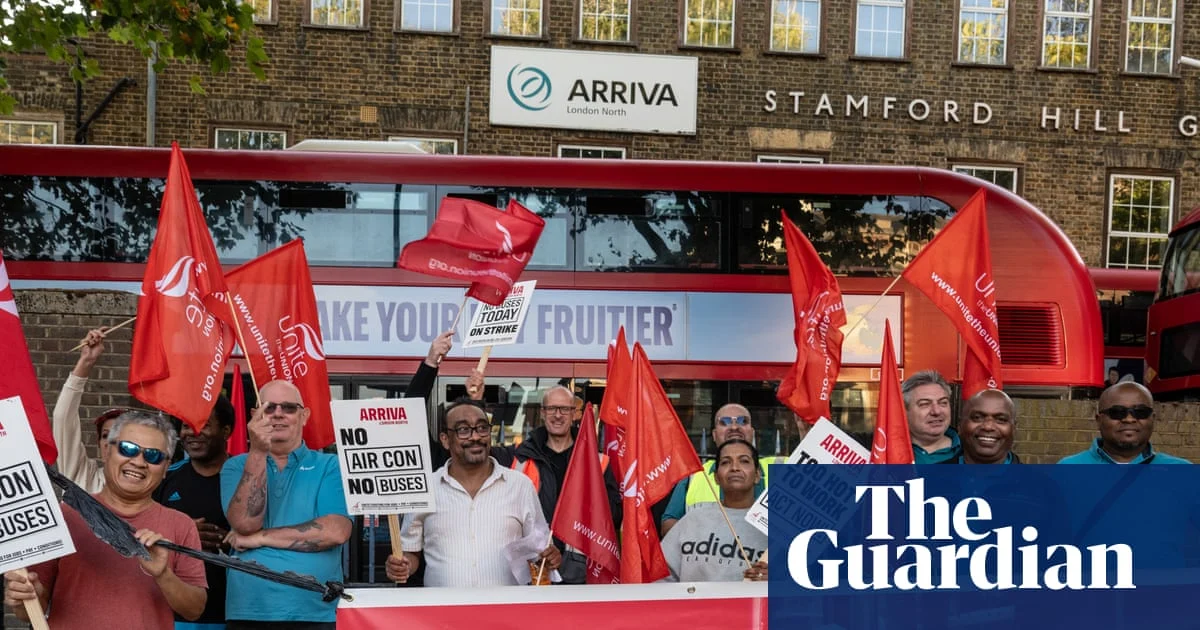
London bus drivers have resumed strike action over concerns about working in high temperatures and fears that proposed air conditioning improvements won’t be ready by next summer. About 1,500 Unite union members across north London and Essex began a four-day walkout on Tuesday, with further stoppages planned in coming weeks.
The dispute centers on bus operator plans to retrofit cabs on 730 buses with improved air conditioning. Drivers are concerned these upgrades may not be completed before next summer’s heatwaves. This follows similar industrial action earlier in August.
Key Facts
- About 1,500 Unite union members are participating in the strike
- Strike began Tuesday and will run through Friday
- Action affects bus services across north London and Essex
- Drivers concerned about 730 buses needing retrofitted air conditioning
- Further stoppages planned in coming weeks
What’s behind the strike?
The renewed industrial action comes as bus drivers face another summer of potentially dangerous working conditions. Without adequate air conditioning, bus cabs can become extremely hot during heatwaves, raising health and safety concerns. The union has rejected the bus operator’s current proposal, arguing the timeline for retrofitting vehicles is too slow.
Who is affected?
The strike impacts commuters across north London and Essex who rely on bus services operated by the affected drivers. While the exact routes aren’t specified, the participation of 1,500 union members suggests widespread disruption. Previous strikes in early August already demonstrated how such actions can paralyze parts of London’s transport network during peak travel times.
What We Know — and What We Don’t
Verified by the source:
- Strike involves 1,500 Unite union members
- Action runs Tuesday through Friday
- Concerns center on 730 buses needing air conditioning retrofits
Still unconfirmed:
- Specific bus routes affected
- Exact timeline for air conditioning upgrades
- Temperature thresholds that triggered the safety concerns
Why It Matters
This strike highlights growing concerns about workplace conditions during extreme weather events. As climate change increases the frequency of heatwaves, many outdoor and vehicle-based jobs are becoming more hazardous. The dispute also tests the balance between worker protections and maintaining essential public services.
What To Watch
The next development will be any response from bus operators to the union’s concerns, and whether the planned additional stoppages in coming weeks proceed. Negotiation outcomes could set precedents for how transport networks adapt to climate change impacts.