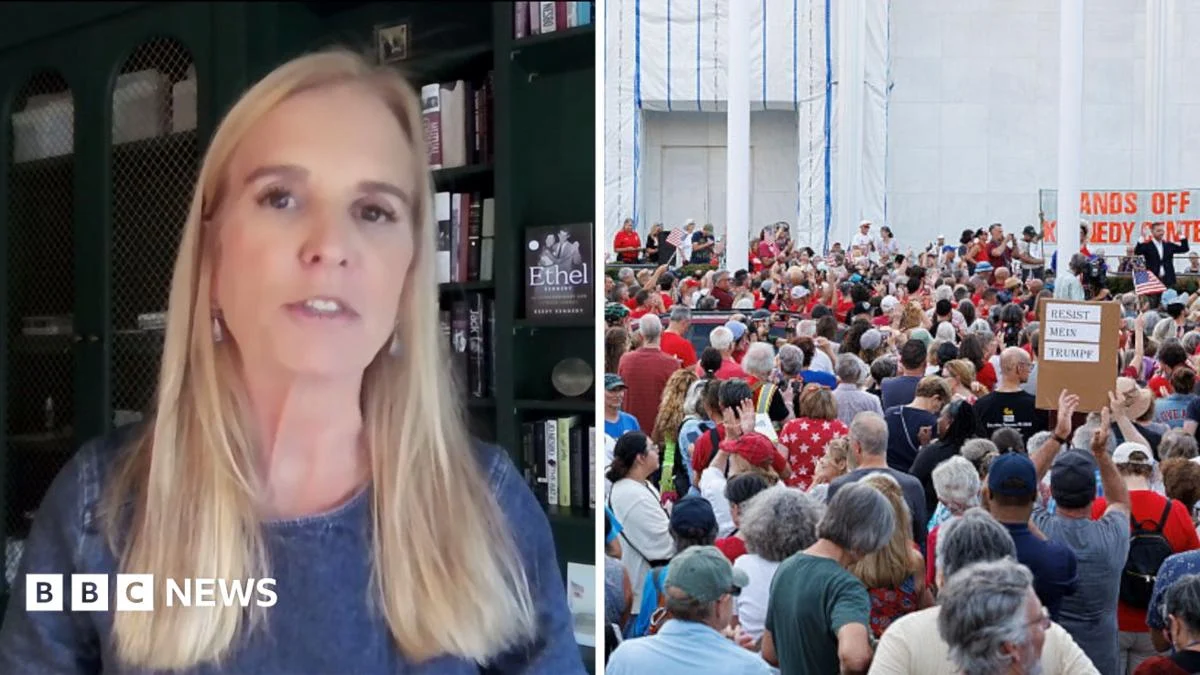
In a recent interview with the BBC, Kerry Kennedy—the niece of the late U.S. president John F. Kennedy—warned that the potential demolition of the Kennedy Center would constitute a profound tragedy. Her remarks came as demonstrators gathered outside the Washington, D.C., cultural landmark to express opposition to reported plans that could jeopardize the building’s future.
The Kennedy Center, named after the extended political family, has long served as a symbol of American arts and civic life. The convergence of public protest and high-profile commentary underscores growing concern over what some view as a threat to a beloved national institution.
Key Facts
- Kerry Kennedy told the BBC that Kennedy Center demolition would be a tragedy.
- Protesters gathered at the venue to condemn threats of demolition.
- The BBC’s Caitríona Perry interviewed Kennedy regarding the situation.
- The venue referenced is the Kennedy Center.
The Story
What Happens Next?
The fate of the Kennedy Center remains uncertain. While no official demolition order has been confirmed by BBC News, the presence of protesters suggests that rumors or proposals regarding the site’s future have gained enough traction to prompt public action. Cultural landmarks in the United States are typically protected by federal or local preservation laws, but exceptions can arise under specific political or development pressures.
Protests at culturally significant sites often reflect broader societal tensions. In this case, demonstrators appear to be rallying not only around architecture but also identity—honoring the legacy of the Kennedy family and preserving a space associated with artistic expression. The Kennedy Center hosts thousands of events annually and plays a central role in national ceremonies, making it a deeply embedded part of American civic tradition.
BBC News has not reported additional statements from government officials or the Kennedy Center itself, leaving many procedural questions unanswered. Still, the symbolic weight of the moment is clear: the building represents more than concrete and steel—it embodies memory, culture, and continuity.
Who Is Affected?
A range of groups may feel the impact if the Kennedy Center were to face demolition. Arts organizations, performers, educators, and visitors all rely on the center for programming and community engagement. Local businesses near the site also depend on foot traffic generated by events held within its walls. Beyond practical concerns, the loss of such a prominent landmark would resonate emotionally with Americans who associate it with moments of national unity, from presidential galas to youth orchestra performances.
For the Kennedy family, the center carries personal significance. Named in honor of JFK after his assassination, it stands as a living memorial. Kerry Kennedy’s warning reflects both familial pride and alarm—her voice lending urgency to fears that a historic site might vanish. Whether those fears are grounded in concrete policy or speculative rumor remains unclear based solely on current reporting.
How Did We Get Here?
Public discourse around major cultural institutions often flares when rumors circulate without formal clarification. In recent years, several iconic venues across the U.S. have faced scrutiny due to funding cuts, renovation debates, or shifting political priorities. Without explicit confirmation from the Kennedy Center or relevant authorities, it is difficult to trace how or why discussion turned toward demolition. What is known is that media coverage—including interviews like the one conducted by Caitríona Perry—can amplify concern and galvanize public response even amid ambiguity.
Media outlets play a key role in shaping narratives during periods of uncertainty. By featuring voices like Kerry Kennedy’s, journalists help frame conversations about heritage, policy, and public values. However, repeated emphasis on unverified claims risks fueling anxiety unless balanced with verifiable facts—an approach that responsible reporting demands.
What We Know — and What We Don’t
Verified by the source:
- Kerry Kennedy spoke with the BBC’s Caitríona Perry about the Kennedy Center.
- She described possible demolition as “a tragedy.”
- Protesters assembled at the Kennedy Center to oppose demolition threats.
Still unconfirmed:
- No official statement confirms active demolition plans.
- The identity and motives of those allegedly proposing demolition remain unknown.
- Timelines or next steps for resolution have not been disclosed.
Why It Matters
National landmarks like the Kennedy Center function as symbols of shared history and democratic ideals. Threats—real or perceived—to such spaces invite reflection on how societies choose to preserve or repurpose their past. Even absent concrete plans, public outcry signals enduring affection for institutions tied to collective memory.
What To Watch
Future statements from the Kennedy Center or federal agencies may clarify whether formal demolition proposals exist. Ongoing demonstrations could influence dialogue, though outcomes will depend on transparent communication moving forward.