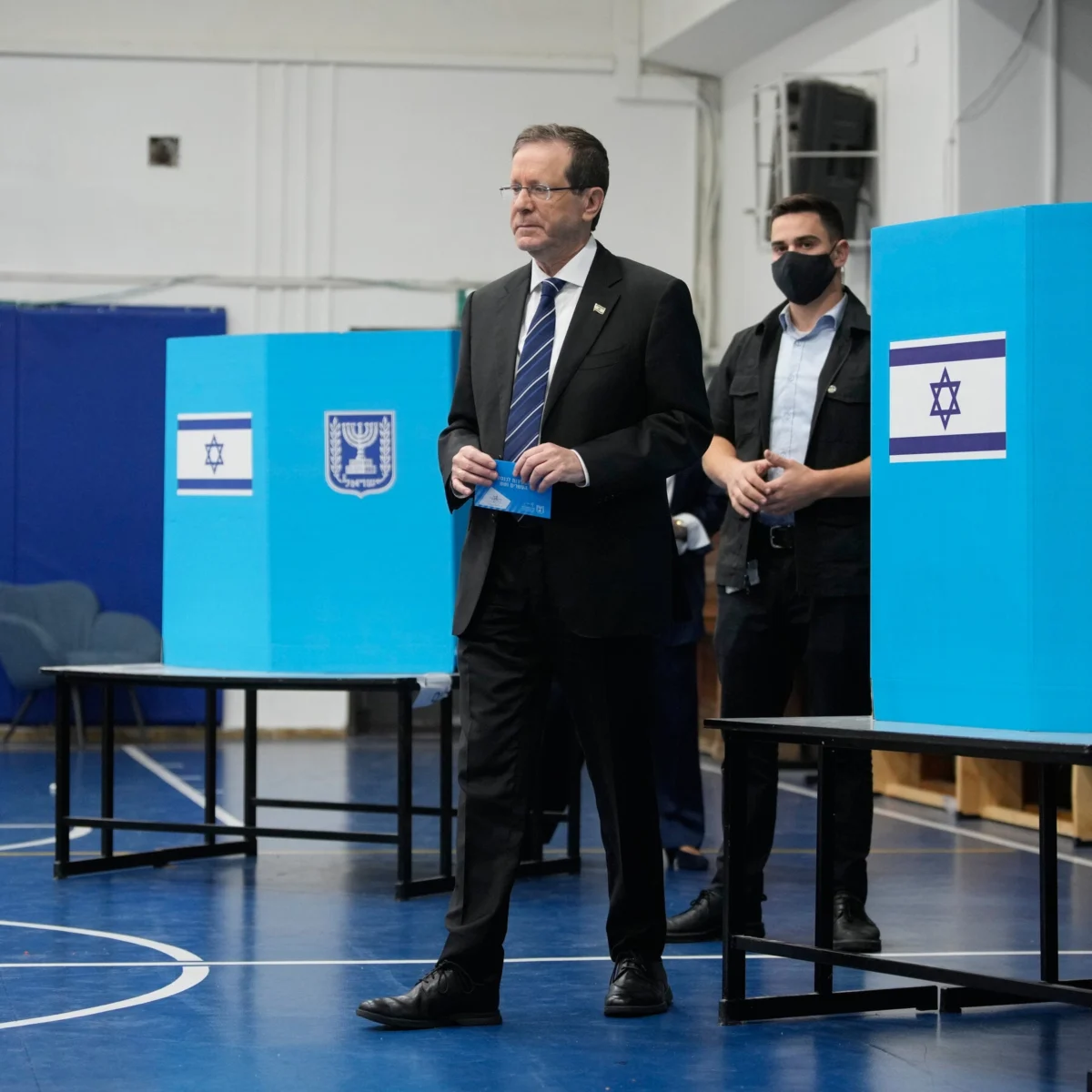
Israel’s President Isaac Herzog faces a difficult choice regarding the selection of a candidate for prime minister following elections. Though the presidency is largely ceremonial, the role carries decisive weight after votes are counted, when the president must pick a candidate to form a government. That task has grown more complex in Israel’s current political climate, where no single party typically wins an outright majority, requiring coalition negotiations that can extend for weeks or months.
The president’s decision comes at a moment of ongoing political uncertainty in Israel, where governments have frequently fallen and重新组阁 formed only after protracted talks. While the president does not personally govern, the choice of who gets the first chance to assemble a coalition can shape the direction of the country’s leadership and policy agenda.
Key Facts
- President Isaac Herzog holds a largely ceremonial role in Israel’s government system.
- After elections, the president is responsible for selecting a candidate for prime minister.
- The prime minister selection process follows national elections.
- The choice of candidate occurs when no party wins an outright majority.
What Happens Next?
Following elections, Israel’s president is expected to consult with party leaders before announcing which candidate for prime minister will receive the first opportunity to form a government. These consultations typically take place within days of the election results being finalized. Once a candidate is designated, that person has up to 28 days—or longer if extended by the president—to attempt to assemble a governing coalition.
If the designated candidate fails to secure enough support to form a coalition, the process may return to the president, who could then assign the task to another party leader. In some cases, if no clear path to government emerges, new elections may be called. The entire prime minister selection and coalition-building process reflects the reality that Israel’s proportional representation system rarely produces a single-party majority, making compromise and negotiation essential to governance.
How Did We Get Here?
Israel’s political system was established in 1948 with a parliamentary model based on proportional representation. Over time, this system has led to the emergence of numerous parties, none of which typically win enough seats to govern alone. As a result, the role of the president—often filled by a respected figure chosen for national unity—has included the responsibility of determining who gets the first attempt at forming a government after elections.
In recent decades, Israeli politics has become increasingly fragmented, with both right-wing and left-wing blocs unable to sustain long-term majorities. This has resulted in repeated cycles of elections and short-lived governments. The prime minister selection process has therefore become a critical juncture, as the designated candidate must navigate not only party politics but also the demands of smaller allies whose support is necessary to reach the 61-seat threshold required for a majority in the 120-seat Knesset.
Verified by the Source
- The article is based on reporting from NYT > Top Stories.
- The president of Israel holds a largely ceremonial role except after elections.
- The president is responsible for picking a candidate for prime minister after elections.
- The decision follows national elections and occurs when coalition negotiations are needed.
Still Unconfirmed
- No specific timeline or date for the president’s decision is provided by the source.
- No details about particular party leaders involved in the consultations.
- No information about which party or bloc currently leads in post-election positioning.
- No quotes or direct statements from President Herzog or other officials are included.
Why It Matters
The prime minister selection process matters because it sets the stage for who will lead Israel’s government during a time of regional tensions and domestic challenges. A leader unable to form a stable coalition risks political paralysis or another round of elections.
What To Watch
Observers are watching how quickly the president completes consultations and makes the prime minister selection. The designated candidate’s ability to build a coalition will determine whether Israel moves toward political stability or deeper uncertainty.
For more on regional developments, explore our war and geopolitics and politics categories.