Skip to content
LIVE
TOP STORIES Flavio Bolsonaro Declares Himself Rightful President-Elect of Brazil — 86% verified      WAR & GEOPOLITICS Spain Train Crash Kills At Least 68 Near Toledo — 80% verified      TRADING & CRYPTO Bitcoin Price Eyes $82K as Correction Seen Mostly Over — 64% verified      ECONOMY & MARKETS Budget Impact on Young People Explained by BBC — 80% verified      WAR & GEOPOLITICS Israeli Opposition May Lack Government But Could Control Parliament — 80% verified      ECONOMY & MARKETS Budget Measures to Affect Under-25s Across Housing and Wages — 80% verified      TRADING & CRYPTO Securitize Adds Stellar Blockchain as Institutional Tokenization Advances — 76% verified      ECONOMY & MARKETS Healey Orders 1% Department Spending Cuts to Fund Defence Plan — 80% verified      WAR & GEOPOLITICS Israel Election Deadlock Remains After 85% of Votes Counted — 81% verified      TOP STORIES Bank of Canada Raises Key Interest Rate by Quarter Point — 86% verified      TOP STORIES Flavio Bolsonaro Declares Himself Rightful President-Elect of Brazil — 86% verified      WAR & GEOPOLITICS Spain Train Crash Kills At Least 68 Near Toledo — 80% verified      TRADING & CRYPTO Bitcoin Price Eyes $82K as Correction Seen Mostly Over — 64% verified      ECONOMY & MARKETS Budget Impact on Young People Explained by BBC — 80% verified      WAR & GEOPOLITICS Israeli Opposition May Lack Government But Could Control Parliament — 80% verified      ECONOMY & MARKETS Budget Measures to Affect Under-25s Across Housing and Wages — 80% verified      TRADING & CRYPTO Securitize Adds Stellar Blockchain as Institutional Tokenization Advances — 76% verified      ECONOMY & MARKETS Healey Orders 1% Department Spending Cuts to Fund Defence Plan — 80% verified      WAR & GEOPOLITICS Israel Election Deadlock Remains After 85% of Votes Counted — 81% verified      TOP STORIES Bank of Canada Raises Key Interest Rate by Quarter Point — 86% verified     
Wednesday, October 28, 2026
Updated 11 minutes ago
AI-Verified Global News Intelligence
AI MONITORING ACTIVE
14,918 articles published
War & Geopolitics 80% VERIFIED

Israeli Opposition May Lack Government But Could Control Parliament

Even without forming a government, the Israeli opposition may retain significant influence over parliamentary decisions. Here's what the latest reporting indicates.
War & Geopolitics · October 28, 2026 · 60 minutes ago · 2 min read · AI Summary · NYT > World News
80 / 100
AI Credibility Assessment
High Credibility
AI VERIFIED 0/3 claims verified 1 sources cited
Source Corroboration 30%
Source Tier Quality 70%
Claim Verification 40%
Source Recency 90%

Single-source rewrite; limited independent verification possible

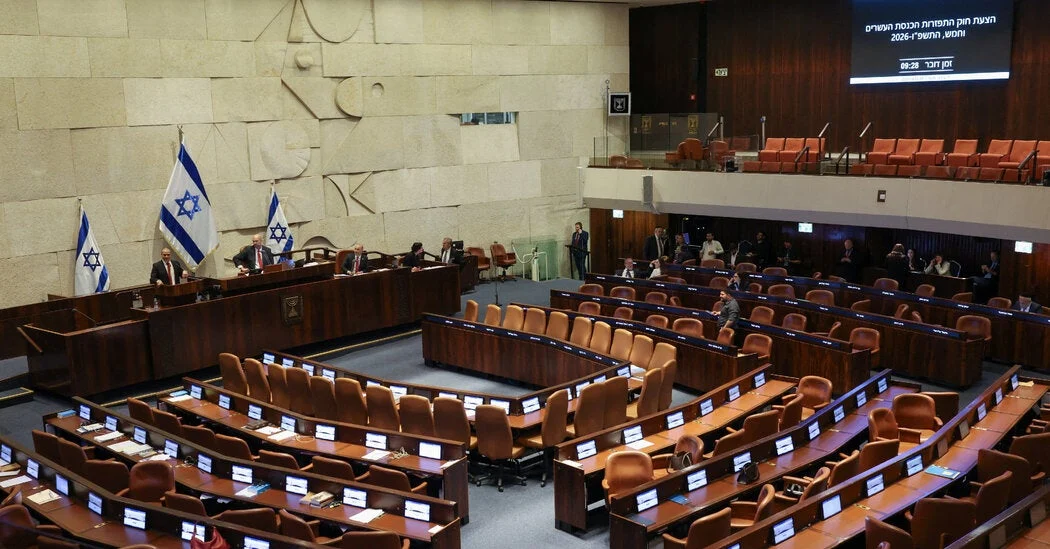
Israel’s opposition may lack the numbers needed to form a government, but it could still play a decisive role in controlling parliamentary proceedings. The situation highlights the fragmented nature of the country’s political landscape, where no single party or bloc appears poised to secure a clear majority.

This dynamic underscores the challenges facing coalition-building efforts and suggests that parliamentary maneuvering may become increasingly important, even for parties outside the prime minister’s inner circle.

Key Facts

  • Opposition may not be able to form a government.
  • Opposition could still control Parliament.
  • Political landscape remains fragmented.

Why Parliament Still Matters

Even when a party or bloc cannot form a government, parliamentary control can enable influence over legislation, committee assignments, and oversight functions. In systems where coalitions are necessary, opposition blocs often leverage procedural tools to block or amend bills, making their role critical despite not holding executive power.

The ability to affect outcomes in Parliament can also enhance a group’s negotiating position when coalition talks resume, providing leverage that extends beyond formal government participation.

What Happens Next?

With no clear winner emerging from the electoral process, attention turns to how parties will navigate coalition negotiations and whether the opposition’s potential parliamentary influence will translate into concrete policy outcomes. Observers are closely watching for signals about which parties might join a governing coalition and how the opposition intends to exercise its leverage.

Meanwhile, analysts note that prolonged uncertainty over government formation could impact public confidence and delay key policy decisions, adding urgency to ongoing political discussions.

What We Know — and What We Don’t

Verified by the source:

  • The opposition may not be able to form a government.
  • The opposition could still control Parliament.

Still unconfirmed:

  • Which parties make up the opposition.
  • Numerical breakdown of parliamentary seats.
  • Timeline for coalition negotiations.
  • Names of key political figures involved.

Why It Matters

In parliamentary democracies, the balance of power can shift rapidly, and even parties excluded from government may shape national policy through strategic parliamentary tactics. This reflects a broader pattern in which fragmented legislatures require careful negotiation and compromise across party lines, affecting everything from budget approvals to foreign policy decisions.

What To Watch

Political developments remain fluid, and further reporting will clarify the opposition’s actual capacity to influence governance. Officials have yet to comment on potential coalition configurations.

Community Verdict — Do you trust this story?
Be the first to vote on this story.