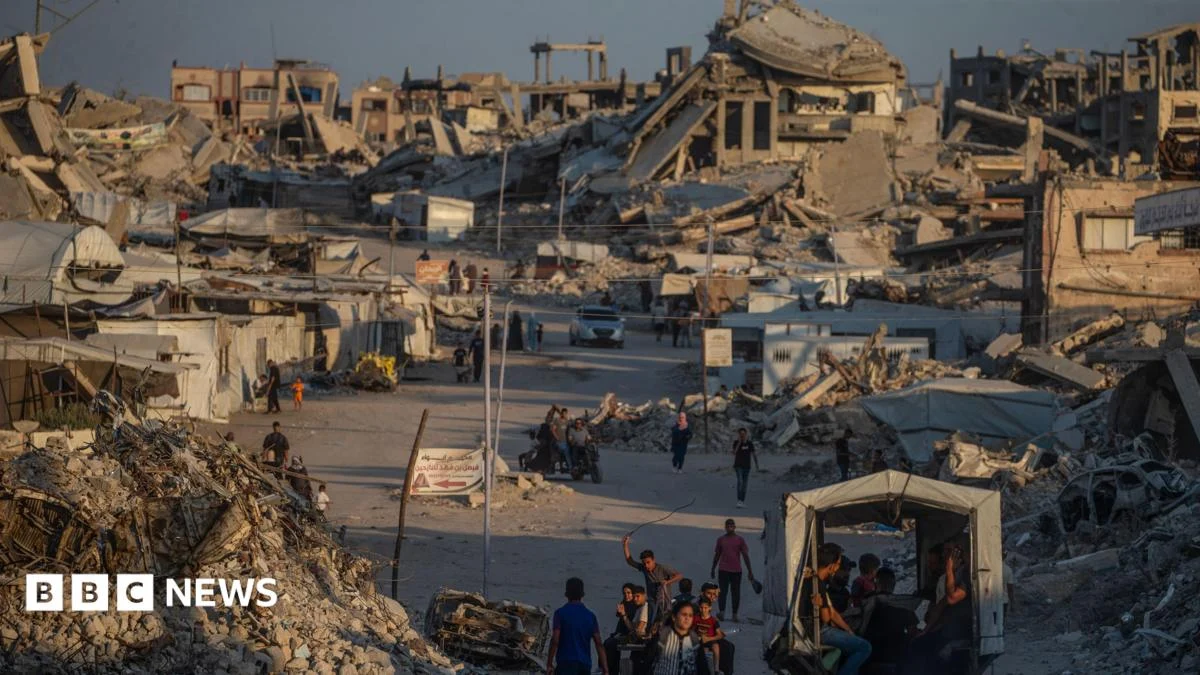
Israel has rejected a US-proposed 15-point plan for Gaza, with Prime Minister Benjamin Netanyahu stating that the military will not withdraw until Hamas is “genuinely” disarmed. The plan, reportedly backed by former President Donald Trump, aimed to outline steps for de-escalation in the region. Netanyahu’s remarks signal a firm stance on Israel’s security priorities amid ongoing tensions.
The rejection underscores the challenges in brokering a lasting ceasefire, as Israel maintains its demand for Hamas to relinquish weapons before any military pullback. The BBC reports that Netanyahu’s position aligns with Israel’s long-standing security doctrine, which prioritizes neutralizing threats from armed groups in Gaza.
Key Facts
- Israel’s Prime Minister rejected a proposed 15-point plan for Gaza.
- Netanyahu stated Israel’s military will not withdraw until Hamas is “genuinely” disarmed.
- The plan was reportedly backed by former US President Donald Trump.
What’s Behind Israel’s Stance?
Israel’s insistence on Hamas’s disarmament reflects its broader security strategy, which views the group’s military capabilities as an existential threat. Past conflicts, including the 2021 war, have reinforced Israel’s demand for guarantees against future attacks. The BBC notes that Netanyahu’s statement aligns with previous government positions, suggesting little room for compromise without concrete steps from Hamas.
What Happens Next?
The rejection of the proposed plan leaves diplomatic efforts in limbo, with no clear alternative currently on the table. Observers will watch for reactions from the US and other mediators, as well as any shifts in Hamas’s posture. The stalemate could prolong military operations in Gaza, raising humanitarian concerns.
What We Know — and What We Don’t
Verified by the source:
- Israel has formally rejected the 15-point Gaza plan.
- Netanyahu linked military withdrawal to Hamas’s disarmament.
Still unconfirmed:
- Specific details of Trump’s proposed plan.
- Whether other international actors were involved in drafting the proposal.
Why It Matters
The standoff highlights the deep divisions in Gaza peace efforts, with Israel prioritizing security over immediate diplomatic solutions. The rejection of external proposals could delay reconstruction and deepen Gaza’s humanitarian crisis, affecting civilians on both sides.
What To Watch
Further statements from Israeli and US officials may clarify next steps, while Hamas’s response will indicate whether negotiations remain viable. For more on the broader conflict, see our war & geopolitics archive.