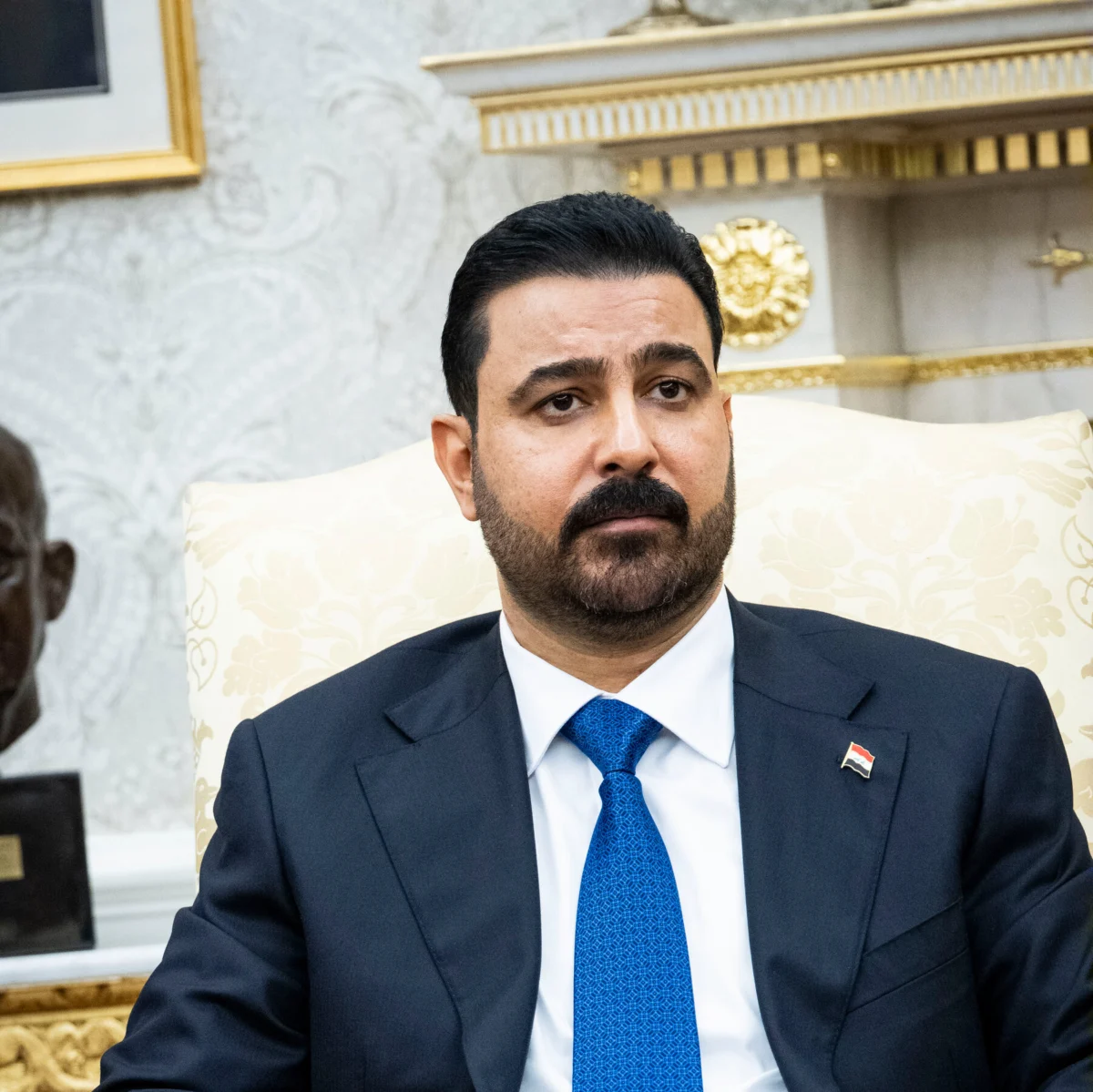
Lede: Iraq’s newly appointed Prime Minister Ali al-Zaidi has vowed to move swiftly to disarm Iran-backed militias, a goal that has eluded his predecessors despite years of political instability.
In a rare televised interview, al-Zaidi laid out an ambitious timeline for dismantling armed factions operating outside the state’s formal security apparatus, a task he acknowledged could prove difficult to deliver on.
Key Facts
- Ali al-Zaidi is described as a political neophyte.
- He hopes to succeed where previous leaders failed.
- In an interview, he outlined an ambitious timeline to disarm Iran-backed militias.
- His plan may prove hard to meet, according to reporting.
The Story
Who Is Ali al-Zaidi?
Ali al-Zaidi entered national politics with little prior experience at the highest levels, marking a departure from longtime political figures. As a relatively unknown figure, his rise reflects growing public demand for change after years of deadlock in forming a new government. His selection as Prime Minister followed months of negotiations among rival factions, both domestic and foreign-aligned. Observers note that his lack of deep institutional ties could open space for reforms, but also leave him vulnerable to entrenched interests resistant to change. Al-Zaidi frames his mission around restoring sovereignty and centralized rule, themes that resonate amid ongoing protests over services and corruption.
What Happens Next?
Disarming Iran-backed militias would require dismantling networks built during decades of conflict, including the U.S.-led invasion and sectarian civil war. These groups often double as social welfare providers in poor neighborhoods, complicating efforts to remove them without alternative support systems. Previous governments avoided confrontation due to fears of destabilization or retaliation from powerful clerics and armed commanders. Al-Zaidi’s success hinges on securing buy-in from domestic institutions and potentially gaining leverage through foreign partnerships. However, regional dynamics involving Iran and Western powers add layers of complexity, especially if attempts are seen as favoring one side over another.
How Did We Get Here?
Iraq has struggled since 2003 to rein in non-state actors who emerged during periods of invasion, insurgency, and sectarian violence. Successive governments relied on these militias for stability, inadvertently legitimizing parallel structures. Over time, concerns grew about Iranian influence via proxies embedded within Iraqi politics and defense. Public frustration peaked during waves of demonstrations starting in 2019, where citizens demanded an end to foreign interference and control by armed groups. Al-Zaidi inherited a country still divided along ethnic and sectarian lines, with weak governance mechanisms unable to enforce monopoly on violence—setting the stage for renewed push toward reintegration under state command.
What We Know — and What We Don’t
Verified by the source:
- Ali al-Zaidi is identified as a political newcomer.
- He expressed intent to disarm Iran-backed militias.
- His proposed timeline was deemed ambitious and possibly unrealistic.
Still unconfirmed:
- No specific dates or steps of implementation were provided.
- It remains unclear whether he has secured backing from key political or religious leaders.
- There are no details on how exactly militias might be disarmed or reintegrated.
Why It Matters
Attempts to dismantle Iran-backed militias touch upon core issues of national sovereignty, security sector reform, and regional influence—all central to Iraq’s future trajectory. If successful, such moves could reduce dependence on external patrons and strengthen democratic governance—but failure risks further fragmentation or escalation of internal tensions.
What To Watch
Future statements or actions from al-Zaidi’s office regarding concrete measures against militias, and whether major factions show willingness to negotiate disarmament peacefully.