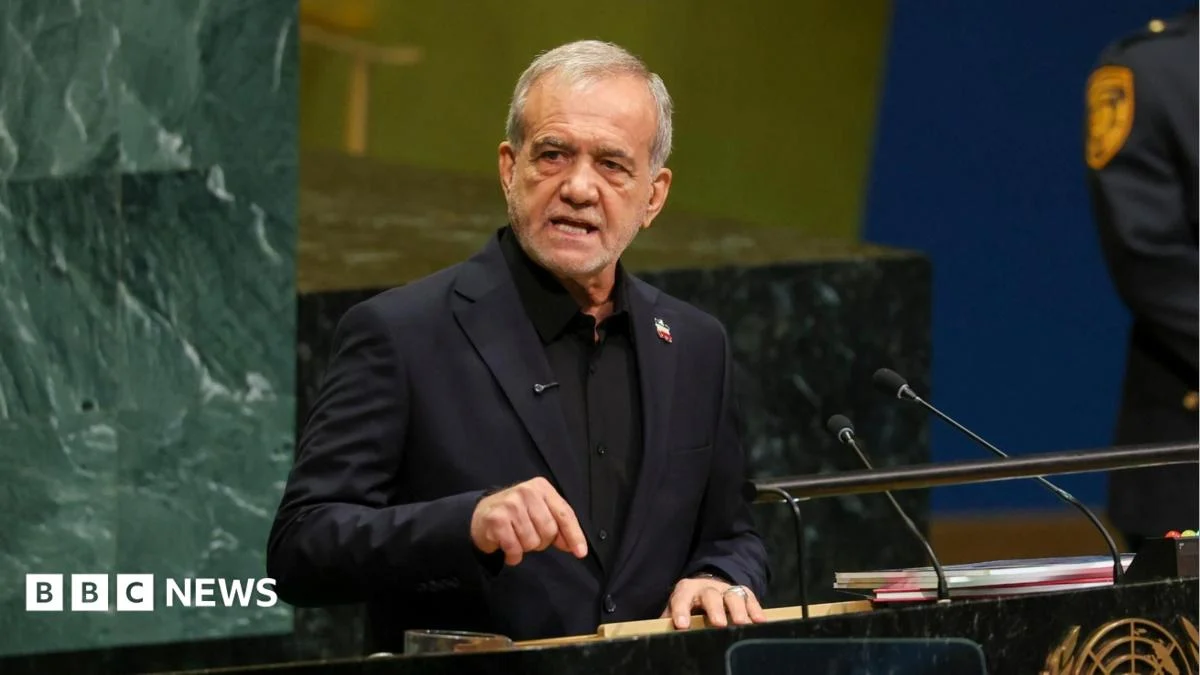
Iran’s President Masoud Pezeshkian told the United Nations that Iran will never ‘bend the knee’ to pressure from U.S. President Donald Trump, who recently threatened to ‘annihilate’ Iran if a peace deal is not agreed soon. The exchange marks a sharp escalation in already tense diplomatic rhetoric between the two nations.
Pezeshkian’s defiant speech underscores the ongoing deadlock in negotiations, with neither side showing signs of backing down. The stakes remain high as both leaders signal unwillingness to compromise on core demands.
KEY FACTS
- Iran’s president told Trump Iran will never ‘bend the knee’.
- Pezeshkian gave a defiant speech at the United Nations.
- Trump threatened to ‘annihilate’ Iran without a peace deal.
- The exchange followed ongoing diplomatic tensions.
The Exchange That Raised Stakes
The recent exchange between Iran’s President Masoud Pezeshkian and U.S. President Donald Trump highlights the deepening divide in diplomatic relations. Trump’s threat to ‘annihilate’ Iran if a peace deal is not reached adds a new layer of urgency to negotiations that have already faced significant obstacles. Meanwhile, Pezeshkian’s refusal to ‘bend the knee’ signals Iran’s readiness to stand firm, even as international pressure intensifies.
This dynamic reflects broader historical patterns of Iran-US tensions, where mutual distrust often overshadows diplomatic progress. The language used by both leaders, including references to annihilation and submission, suggests a high-risk environment where miscommunication could have serious consequences.
International observers are closely watching how these Iran-US tensions unfold, particularly given past conflicts and ongoing regional instability. The United Nations, where Pezeshkian delivered his remarks, remains a key forum for such high-stakes diplomacy.
What Happens Next?
The trajectory of Iran-US tensions now hinges on whether either side adjusts its stance in the coming days. Previous negotiations have involved indirect talks and mediated discussions, often facilitated by third-party nations. Without a clear pathway to agreement, the risk of further escalation increases, especially if verbal threats are interpreted as precursors to action.
Regional allies and global powers are also affected by these developments. Economic sanctions, military posturing, and energy market fluctuations can all result from hostile exchanges between major actors. The role of international institutions like the United Nations may become more prominent if both sides seek mediation.
Diplomatic analysts note that historical context provides little assurance of a swift resolution. Past cycles of tension and negotiation suggest that sustained engagement is required to de-escalate. Until then, Iran-US tensions are likely to dominate headlines and influence policy decisions worldwide.
WHAT WE KNOW — AND WHAT WE DON’T
Verified by the source:
- Iran’s president said Iran will never ‘bend the knee’ to Trump.
- Pezeshkian delivered a speech at the United Nations.
- Trump threatened to ‘annihilate’ Iran without a peace deal.
- The speech followed Trump’s public statement.
Still unconfirmed:
- Exact dates of the speech or threats.
- Specific terms of any ongoing peace negotiations.
- Details of Iran’s domestic response to Trump’s comments.
- Whether further diplomatic channels are active.
WHY IT MATTERS
The latest Iran-US tensions carry global implications, especially for energy markets, regional stability, and international diplomacy. Historical patterns of conflict and negotiation show that such exchanges can quickly influence broader geopolitical dynamics, affecting allies and adversaries alike.
WHAT TO WATCH
Analysts expect potential responses from regional powers and international mediators in the coming weeks. Any signs of de-escalation or renewed talks would signal a shift in approach, while continued rhetoric may heighten concerns.
The meta description: Iran’s president defied Trump’s ‘annihilate’ threat, vowing Iran will never ‘bend the knee’ amid rising tensions at the UN.