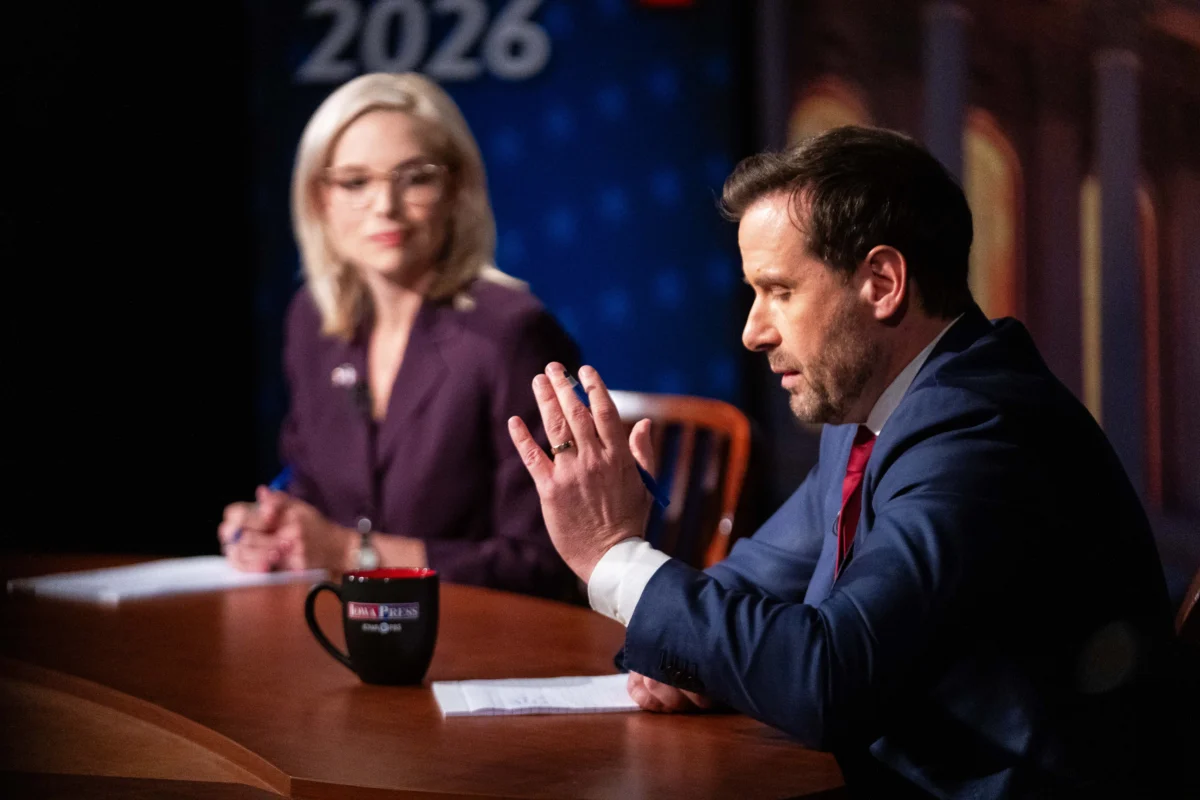
Iowa’s Senate rivals are framing their campaigns around independence from parties, each tailoring their message to appeal to a broader electorate while still acknowledging national political dynamics.
Ashley Hinson qualified her pledge to be a strong ally of former President Trump, while Josh Turek praised the president’s record on immigration enforcement at the southern border. Both candidates emphasized their ability to work across the aisle, even as they aligned themselves with key national issues.
Key Facts
- Iowa Senate candidates pitch independence from parties in their campaigns.
- Ashley Hinson qualified her support for Trump as his strongest ally.
- Josh Turek praised the president’s record on border security.
- Both candidates emphasized bipartisan cooperation despite partisan backgrounds.
What does ‘independence from parties’ mean in this race?
By pitching independence from parties, the Iowa Senate candidates are signaling that they intend to govern beyond strict party lines, appealing to voters who may be dissatisfied with partisan gridlock in Washington.
This strategy allows each candidate to distance themselves from unpopular positions held by national parties while still aligning with key issues like border security or executive leadership. It also reflects a growing trend among Midwestern candidates to prioritize state-specific concerns over national party agendas.
For Hinson, qualifying her Trump support suggests she is balancing loyalty to a controversial figure with the need to appeal to independent voters. For Turek, praising the border record ties him to a high-profile issue without fully endorsing every aspect of the administration.
Who is affected by this messaging shift?
The messaging shift affects Iowa voters, particularly independents and moderates who may be key swing voters in a competitive Senate race. These voters often prioritize problem-solving over partisan loyalty.
National parties are also watching closely, as the candidates’ success could influence how other candidates in similar races frame their own campaigns. A win for either candidate advocating independence might encourage more centrists to distance themselves from party leadership.
The tone of the race reflects broader national tensions about the direction of the country, with both candidates attempting to position themselves as pragmatic leaders who can navigate a divided political landscape.
What We Know — and What We Don’t
Verified by the source:
- Candidates are actively promoting independence from parties as a central theme.
- Hinson described herself as Trump’s strongest ally but added qualifications.
- Turek specifically referenced the president’s border enforcement record.
Still unconfirmed:
- Exact policy differences between the candidates on bipartisan issues.
- Specific polling data showing voter response to the independence message.
- Endorsements or statements from national party figures.
- Detailed timelines or future vote positions on key legislation.
Why It Matters
In a national political climate marked by polarization, Iowa’s Senate race could serve as a bellwether for how candidates adapt their messaging to win over independent voters, whose support is increasingly crucial in competitive races across the country.
What To Watch
Upcoming campaign events and debates may clarify whether independence from parties remains a dominant theme as Election Day approaches.