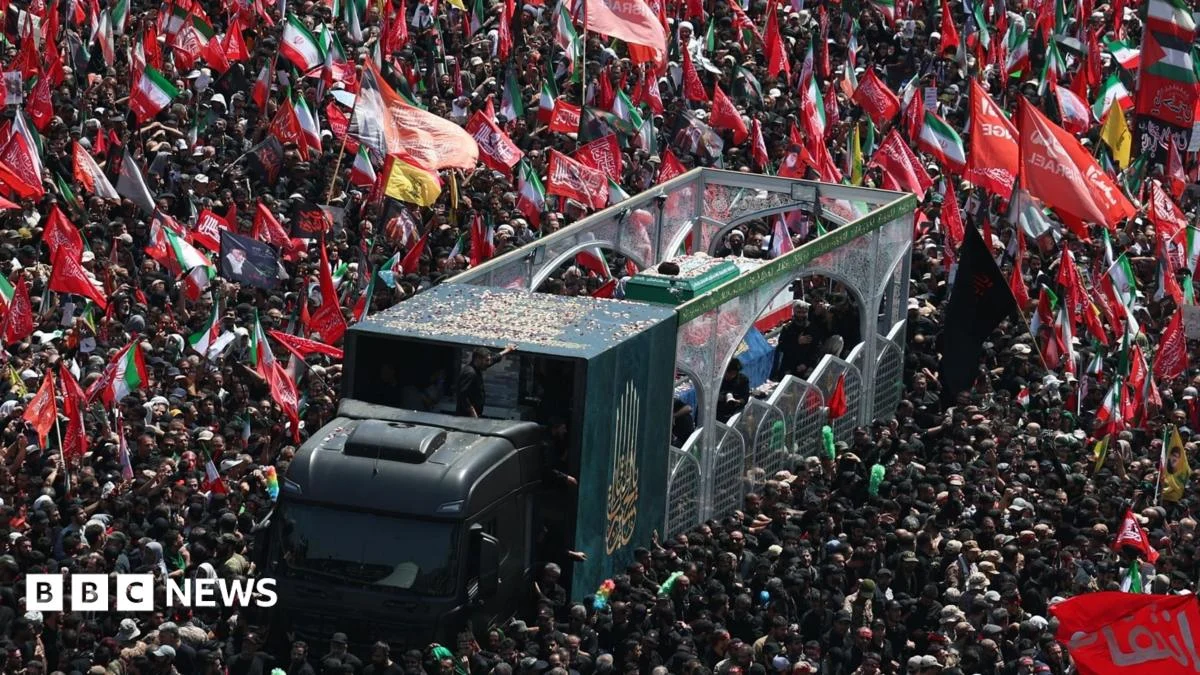
Thousands of people lined the streets of Tehran as the funeral procession for Iran’s former supreme leader moved through the city, a vivid display of public mourning and political symbolism.
Crowds were observed waving Iranian flags and holding red banners that symbolise vengeance for the former leader’s war death, underscoring the emotional intensity of the event.
Key Facts
- Huge crowds filled Tehran streets for the funeral procession of the former supreme leader.
- Participants waved Iranian flags during the procession.
- Red banners symbolising vengeance for the former leader’s war death were carried.
What happened?
The procession moved through Tehran while large numbers of citizens gathered along the route. Their presence was marked by the prominent use of national flags and red banners.
How did the public express themselves?
Waving of Iranian flags and the display of red banners were the primary visual elements reported. The banners were described as symbolising vengeance for the former leader’s war death.
What does this indicate?
The combination of national symbols and the specific colours of the banners suggests a collective sentiment tied to the former supreme leader’s legacy.
What We Know — and What We Don’t
Verified by the source:
- The funeral procession for the former supreme leader passed through Tehran.
- Large crowds gathered along the route.
- People waved Iranian flags.
- Red banners symbolising vengeance for the former leader’s war death were present.
Still unconfirmed:
- The exact number of participants.
- The identities of any officials commenting on the event.
- The broader political implications beyond the visual symbols.
Why it matters: The scale of public turnout and the symbolic use of flags and banners provide insight into how the former leader’s death is being processed socially and politically, a factor that could influence future dynamics in Iran’s governance and public discourse.
What to watch: Observers will note any official statements or policy shifts that follow the funeral, as they may clarify the significance of the public display.