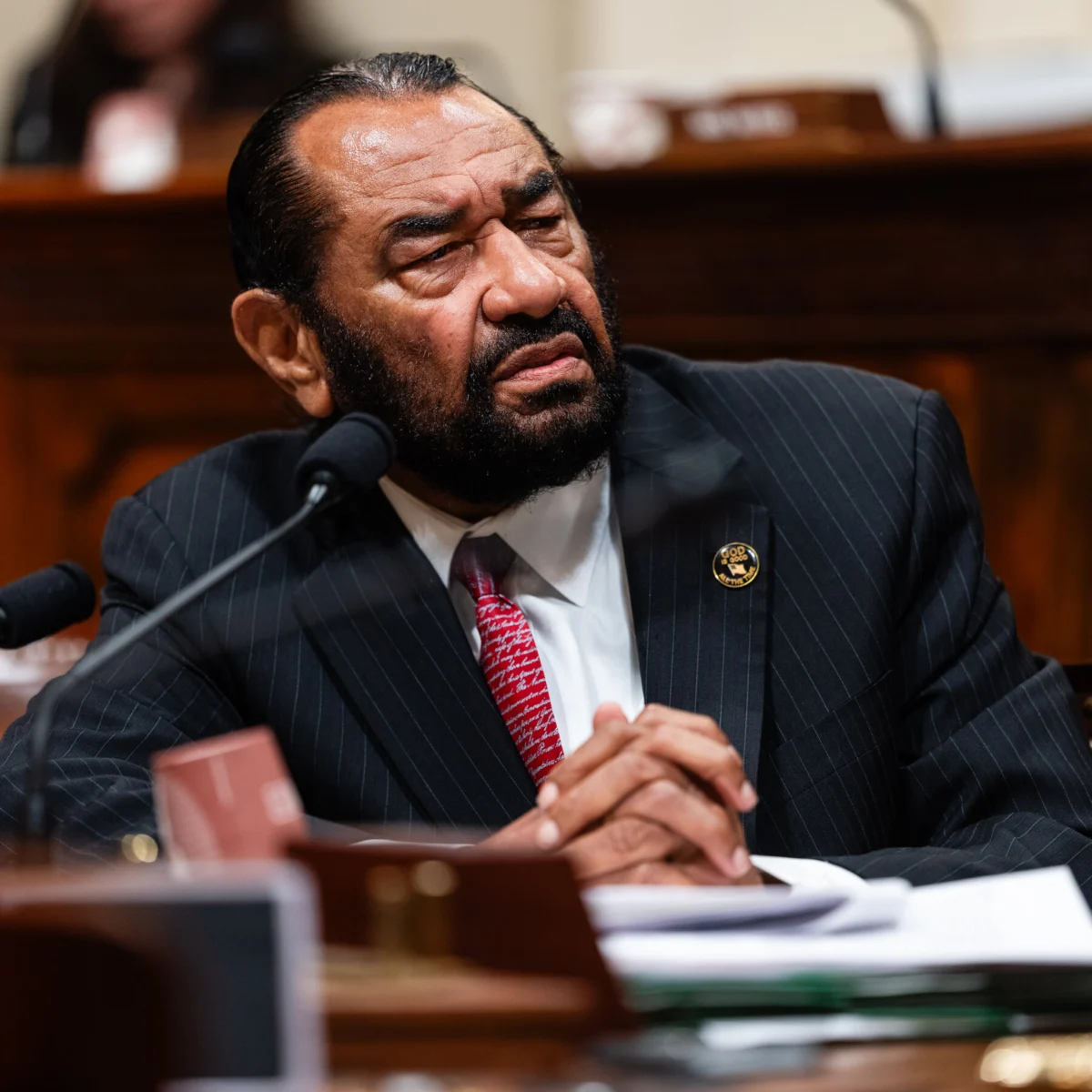
The House of Representatives rejected a Trump impeachment effort advanced by Representative Al Green, with dozens of Democrats declining to register a position on the articles of impeachment that cited the president’s immigration crackdown.
The vote underscores internal Democratic divisions and signals that the party’s leadership did not rally the caucus around the impeachment push, despite Green’s attempt to force a formal reckoning over the administration’s immigration policies. The articles of impeachment specifically referenced the president’s immigration crackdown as grounds for removal.
KEY FACTS
- The House rejected a Trump impeachment effort backed by Representative Al Green.
- Dozens of Democrats declined to register a position on the articles of impeachment.
- The articles cited President Trump’s immigration crackdown as the basis for impeachment.
- Representative Al Green was the member who introduced the articles.
- The vote reflects Democratic Party divisions over pursuing Trump impeachment.
What happens next?
After the House rejection, the immediate path forward for new Trump impeachment articles remains unclear. Representative Al Green retains the option to introduce revised articles, but without broader Democratic support, such efforts face significant obstacles. The Democratic caucus has not indicated plans for another coordinated push, and party leadership has emphasized focusing on legislative priorities instead of impeachment proceedings. Observers note that any future attempt would require stronger party unity and a compelling public case to avoid repeating the outcome of this vote.
How did we get here?
Representative Al Green introduced articles of impeachment targeting the president over his administration’s immigration crackdown, prompting a House vote where dozens of Democrats declined to take a position. The effort emerged amid ongoing political tension over immigration enforcement policies, but lacked sufficient backing from Democratic leadership to secure passage. The split within the party reflects broader debate over whether impeachment serves as an effective tool for addressing policy disagreements.
Who is affected?
The outcome affects Representative Al Green, whose impeachment initiative faced opposition even from members of his own party, as well as the broader Democratic caucus navigating internal divisions over Trump impeachment strategy. President Trump is also directly affected, though the rejected articles did not result in formal impeachment proceedings. The decision signals to advocacy groups and constituents concerned with immigration policy that legislative rather than impeachment avenues may dominate the near-term political landscape.
WHAT WE KNOW — AND WHAT WE DON’T
Verified by the source:
- The House voted on articles of impeachment introduced by Representative Al Green.
- The articles cited the president’s immigration crackdown.
- Dozens of Democrats declined to register a position on the articles.
- The impeachment bid was rejected by the House.
Still unconfirmed:
- The exact vote count or margin of defeat.
- Specific reasons cited by Democrats who declined to take a position.
- Whether additional impeachment efforts will follow.
WHY IT MATTERS
This development matters because it reveals the limits of using impeachment as a tool for policy disagreement, particularly when party leadership does not unify behind such efforts. For voters and advocacy groups tracking immigration issues, the outcome suggests that direct legislative action remains the more viable path for shaping policy, rather than formal removal proceedings.
WHAT TO WATCH
Analysts will watch whether Representative Al Green or other lawmakers attempt new Trump impeachment measures, and whether Democratic leadership moves to formalize its stance on future such efforts. The White House has not issued a public response to the vote at this time.