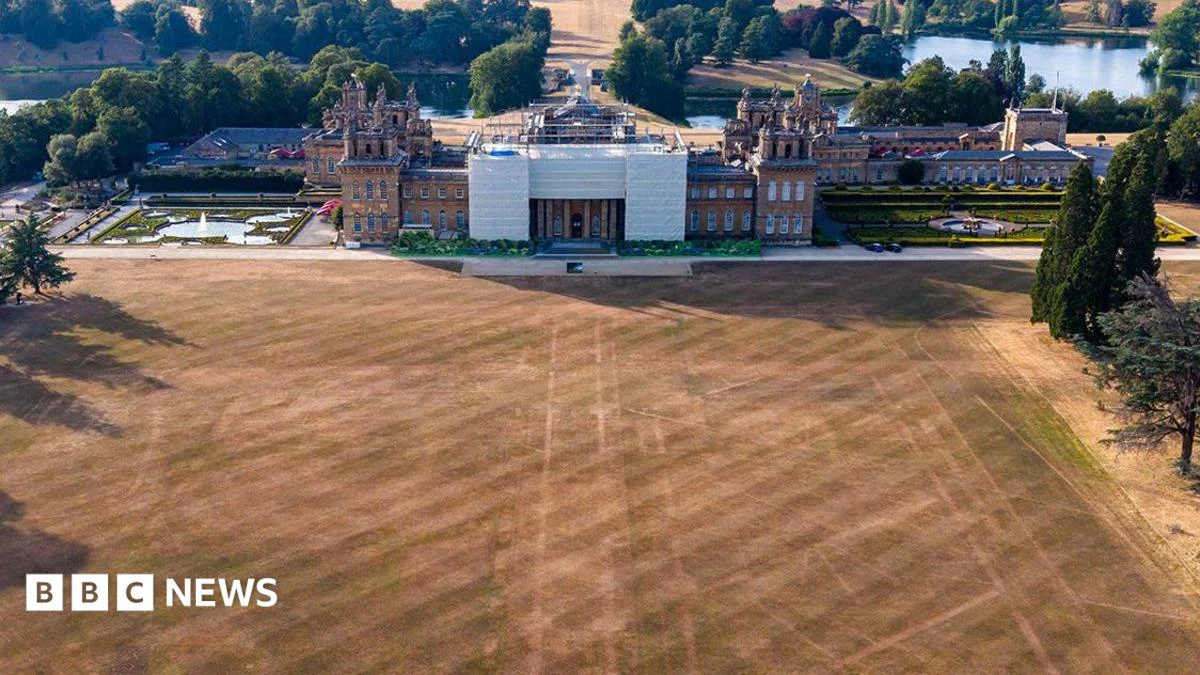
This summer’s hot weather has revealed hidden parch marks at historic sites across the UK, including Blenheim Palace. The marks, visible from the air, show the outlines of centuries-old structures that were previously obscured.
The phenomenon occurs when prolonged dry weather causes grass over buried archaeological features to dry out faster than surrounding areas, making them visible as discolored patterns. These marks often reveal ancient foundations, walls, or other structures that have long been hidden beneath the surface.
KEY FACTS
- Hot summer weather has revealed parch marks at historic sites including Blenheim Palace
- The marks show outlines of centuries-old structures
- The phenomenon occurs when grass over buried features dries faster than surrounding areas
What do parch marks reveal?
Parch marks typically indicate the presence of buried archaeological features, such as walls, foundations, or ditches. The buried materials affect how vegetation above them grows and retains moisture, creating visible patterns during dry conditions. At historic sites like Blenheim Palace, these marks help archaeologists identify previously unknown structures or verify historical records. The appearance of these marks can lead to new discoveries about a site’s layout and development over time.
How does weather affect archaeological discoveries?
Extreme weather conditions, both hot and cold, often reveal previously hidden aspects of historical sites. Droughts expose parch marks, while heavy rains can wash away topsoil to uncover artifacts. These natural processes provide archaeologists with valuable information without requiring invasive excavation. The current parch marks appearing at Blenheim Palace and other sites demonstrate how environmental conditions continue to shape our understanding of history.
WHAT WE KNOW — AND WHAT WE DON’T
Verified by the source:
- Parch marks have appeared at Blenheim Palace and other historic sites
- The marks show outlines of centuries-old structures
- The appearance is related to hot summer weather
Still unconfirmed:
- Specific structures revealed by the parch marks
- Exact dates of the revealed structures
- Whether new archaeological investigations will follow this discovery
WHY IT MATTERS
These natural revelations provide valuable insights into our cultural heritage without the need for invasive archaeological digs. They help verify historical records and can lead to new discoveries about important historical sites. As climate patterns change, such phenomena may become more frequent, offering new opportunities to study the past.
WHAT TO WATCH
Archaeologists may use drone photography to document and analyze the newly visible parch marks. The marks could lead to future targeted investigations at affected sites.