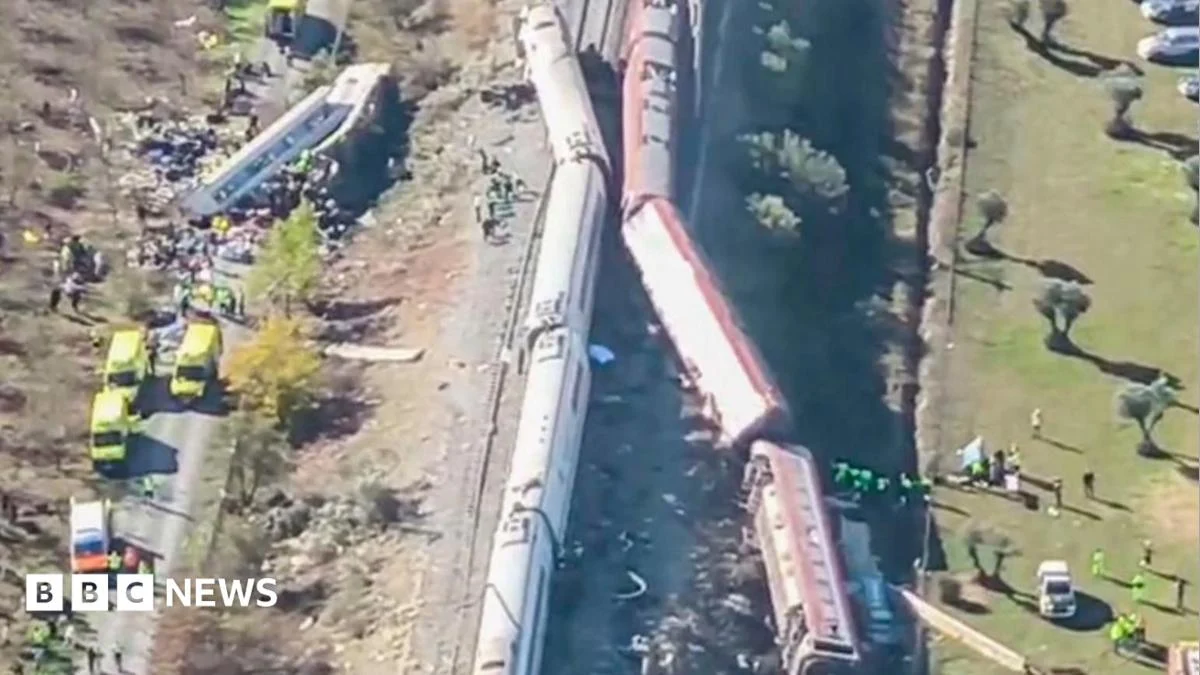
A high-speed train collision south of Madrid has left dozens of people feared dead, with reports of overturned carriages and makeshift medical tents at the crash site. According to BBC News, the incident involved two trains and is one of the deadliest rail accidents in recent Spanish history. Emergency services are responding to the scene, though no official death toll has been released at this time.
Key Facts:
- Two trains collided south of Madrid.
- Dozens of people are feared dead in the train collision.
- Overturned carriages were reported at the crash site.
- Makeshift medical tents were set up at the scene.
- The crash involved a high-speed train.
What happens next?
Spanish authorities are expected to launch a full investigation into the cause of the train collision. Recovery efforts and victim identification will likely take several days, depending on the extent of the damage at the site. The government may also face pressure to review rail safety protocols, especially involving high-speed lines.
Transport officials have not yet provided details on whether both trains were operational or if one was stationary. The exact location and time of the accident remain unconfirmed, though sources say it occurred on a major rail route serving the capital. Updates are anticipated as emergency crews continue their work.
Who is affected?
The collision has primarily affected passengers and crew aboard the two trains involved. Families of those on board are likely being contacted by emergency services, though formal notifications may be delayed until identities are confirmed. The wider public is also impacted, as the crash has disrupted rail travel in the region.
Spain operates one of Europe’s most extensive high-speed rail networks, and this train collision marks a tragic setback for the system. Hospitals across southern Madrid have been placed on alert to receive casualties, and local authorities are coordinating with national officials to manage the aftermath.
How did we get here?
Spain has invested heavily in its high-speed rail infrastructure over the past two decades, linking major cities with modern trains capable of speeds exceeding 300 km/h. While the network has generally maintained a strong safety record, rail accidents — though rare — can be catastrophic when they occur. This particular train collision underscores the risks inherent in high-speed travel and raises questions about system safeguards.
The use of makeshift medical tents at the crash site suggests that the local healthcare infrastructure was quickly overwhelmed. Such responses are common in mass-casualty events where on-site treatment is needed before victims can be transported to hospitals.
What We Know — and What We Don’t
Verified by the source:
- Two trains collided south of Madrid.
- Dozens of people are feared dead.
- Overturned carriages were seen at the crash site.
- Makeshift medical tents were set up at the scene.
- The trains involved were high-speed services.
Still unconfirmed:
- The exact number of casualties.
- The precise time and location of the crash.
- The cause of the collision.
- The names or statuses of any officials involved.
- Whether the train services have resumed or been suspended.
This train collision is significant not only because of its scale but also because it highlights the vulnerabilities of even the most advanced rail systems. High-speed rail is often promoted as a safe and efficient alternative to air and road travel, and incidents like this one challenge those perceptions. For travelers and policymakers alike, the event underscores the importance of continuous safety improvements and emergency preparedness on rail networks.
Authorities are expected to release an initial report on the train collision within the coming days. The findings could influence future safety regulations for high-speed rail lines in Spain and beyond. Until then, the focus remains on rescue and recovery efforts at the crash site.