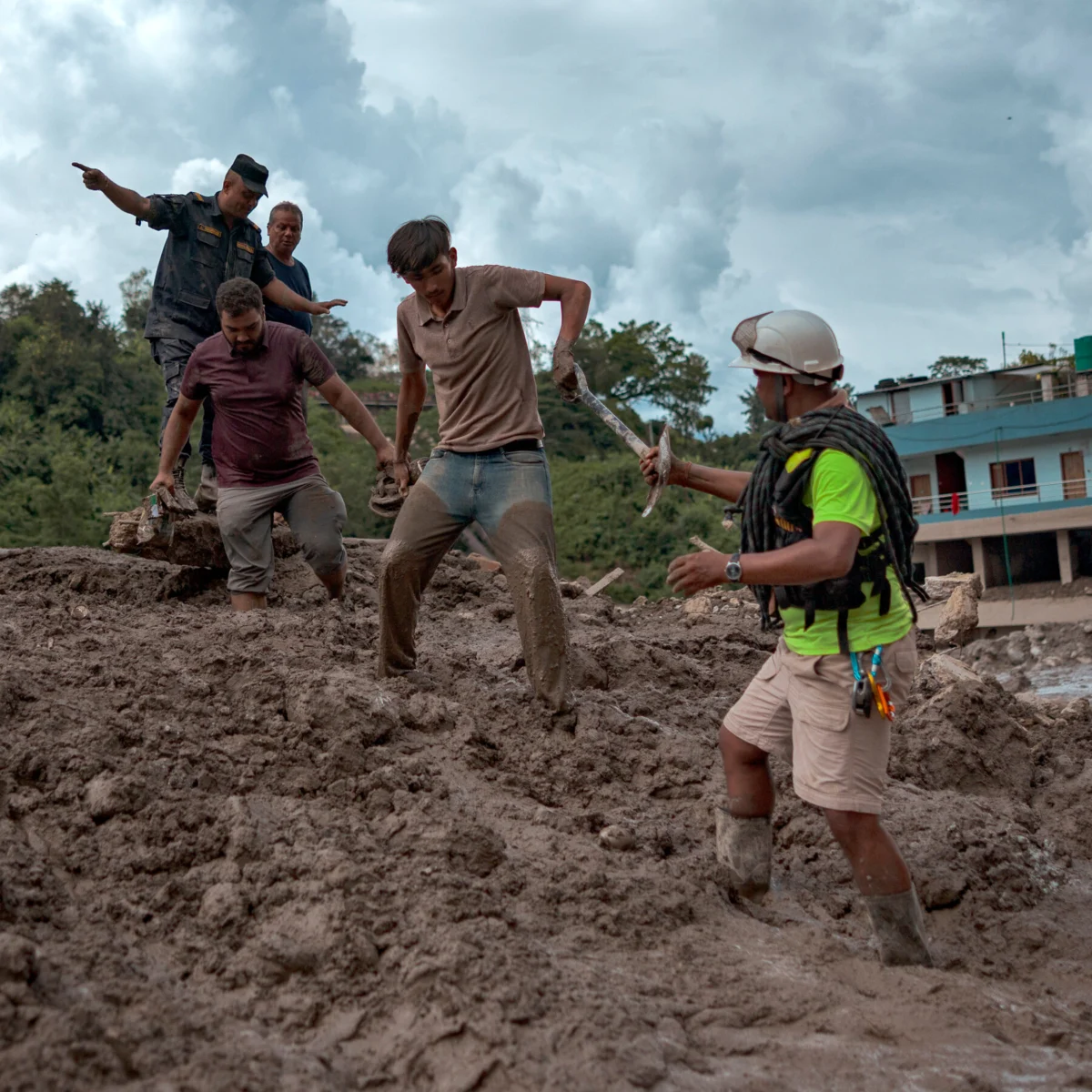
Helicopters are conducting rescue operations in Nepal after devastating flash floods killed hundreds and left more than 1,000 people missing. Survivors in remote Himalayan areas described a torrent of mud sweeping away entire villages, according to New York Times reporters who accompanied rescuers.
The floods have caused widespread destruction in Nepal and Tibet, with officials reporting significant casualties. Rescue efforts are ongoing as survivors remain stranded in hard-to-reach regions.
KEY FACTS
- Helicopters are rescuing survivors in Nepal after flash floods.
- Officials report hundreds killed in Nepal and Tibet.
- More than 1,000 people are still missing.
- New York Times reporters flew with rescuers to remote Himalayan areas.
- Survivors described a torrent of mud sweeping away villages.
WHAT HAPPENED?
Flash floods triggered by heavy rains have caused catastrophic damage in Nepal and Tibet. The floods, described as a torrent of mud by survivors, swept through villages, leaving hundreds dead and over 1,000 missing. Rescue operations are underway, with helicopters deployed to reach remote areas where survivors are stranded.
WHO IS AFFECTED?
The floods have impacted communities in Nepal and Tibet, with hundreds confirmed dead and over 1,000 still missing. Survivors in remote Himalayan villages are among the most affected, having lost homes and loved ones to the sudden disaster. Rescue teams are focusing on these isolated areas where access is limited.
WHAT WE KNOW — AND WHAT WE DON’T
Verified by the source:
- Helicopters are conducting rescue operations in Nepal.
- Hundreds have been killed in Nepal and Tibet.
- More than 1,000 people are missing.
- Survivors described a torrent of mud sweeping away villages.
Still unconfirmed:
- The exact number of casualties and missing persons.
- The cause of the flash floods beyond heavy rains.
- The extent of damage in Tibet beyond Nepal.
WHY IT MATTERS
The Nepal flood disaster highlights the vulnerability of remote communities to extreme weather events. With climate change increasing the frequency of such disasters, the need for robust emergency response systems and infrastructure is more critical than ever.
WHAT TO WATCH
Rescue operations will continue as officials assess the full extent of the damage. Updates on the number of casualties and missing persons are expected in the coming days.