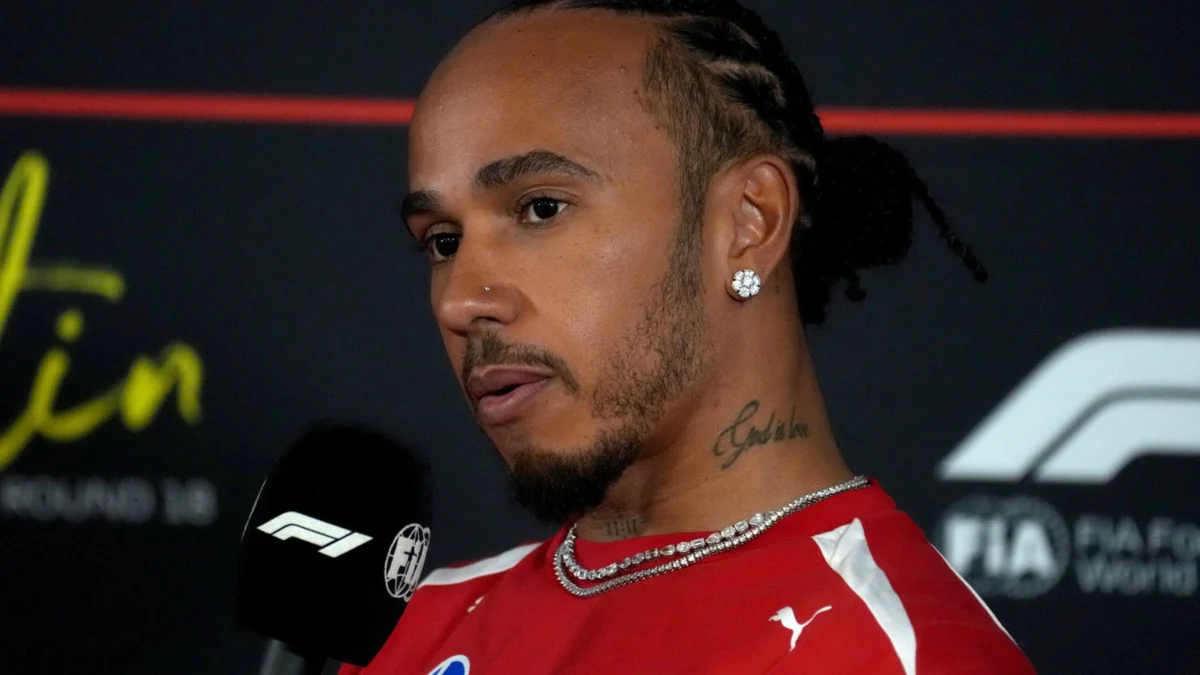
Lewis Hamilton took matters into his own hands during the Singapore Grand Prix, overriding his team’s strategy call to pit late in the race. The decision, which he later described as a mistake he owned, came after Hamilton chose to stay out on track against Ferrari’s instructions. According to SkySports | News, Hamilton admitted the move was not ideal but said it would not stop him from continuing to challenge strategic norms in future races.
Hamilton’s choice to ignore the team’s call to pit added tension to an already intense weekend for the Ferrari driver. While he acknowledged the error and committed to avoiding similar missteps, he also emphasized his willingness to push boundaries when he felt the situation warranted it. This balance between accountability and assertiveness has defined Hamilton’s approach throughout his career, and it resurfaced clearly in the aftermath of the Singapore GP strategy call controversy.
Key Facts
- Lewis Hamilton overrode Ferrari’s strategy call to pit during the Singapore Grand Prix.
- He described the decision as a mistake and said he owned up to it.
- Hamilton stated he would work to avoid repeating the mistake.
- He also said he would continue challenging strategic norms in future races.
The Story: What Happened During the Strategy Call?
During the Singapore Grand Prix, Lewis Hamilton made the unusual decision to override his team’s strategy call, choosing to remain on track rather than follow Ferrari’s instruction to pit. This moment of defiance introduced uncertainty into the closing stages of the race, as the driver took control of his own tactical path against the team’s plan.
Hamilton later reflected on the incident, acknowledging that the decision did not yield the desired result and that he took full responsibility for the outcome. He described the move as something he needed to own and learn from, signaling both accountability and introspection in equal measure.
Will Hamilton Continue Challenging Norms?
Despite the misstep, Hamilton affirmed that he will not shy away from pushing boundaries when he believes it is necessary. His stance suggests that while he respects team strategy, he remains willing to act independently when the moment demands it.
This incident highlights the ongoing tension in Formula 1 between driver autonomy and team coordination. Hamilton’s willingness to make bold calls—even if flawed—reinforces his reputation as a driver unafraid to take risks, particularly when championship implications are at stake.
What We Know — and What We Don’t
Verified by the source:
- Hamilton overrode Ferrari’s strategy call to pit in Singapore GP.
- He said the decision was a mistake he owned.
- He committed to working to avoid repeating it.
- He said he will continue challenging strategic norms.
Still unconfirmed:
- The exact timing and context of the override within the race.
- Whether Ferrari issued a formal response to Hamilton’s decision.
- Hamilton’s full in-race radio communication during the strategy call.
- The specific reasons behind Hamilton’s decision to override the team.
Why It Matters
Hamilton’s decision to override the strategy call reflects broader dynamics in Formula 1, where top drivers often seek greater influence over race tactics. As teams navigate increasingly complex strategic landscapes, moments like this underscore the balance between driver instinct and centralized team coordination.
What To Watch
Attention will turn to the upcoming United States Grand Prix, where observers may see whether Hamilton continues to challenge strategic norms or leans more heavily on team directives following the Singapore GP strategy call.