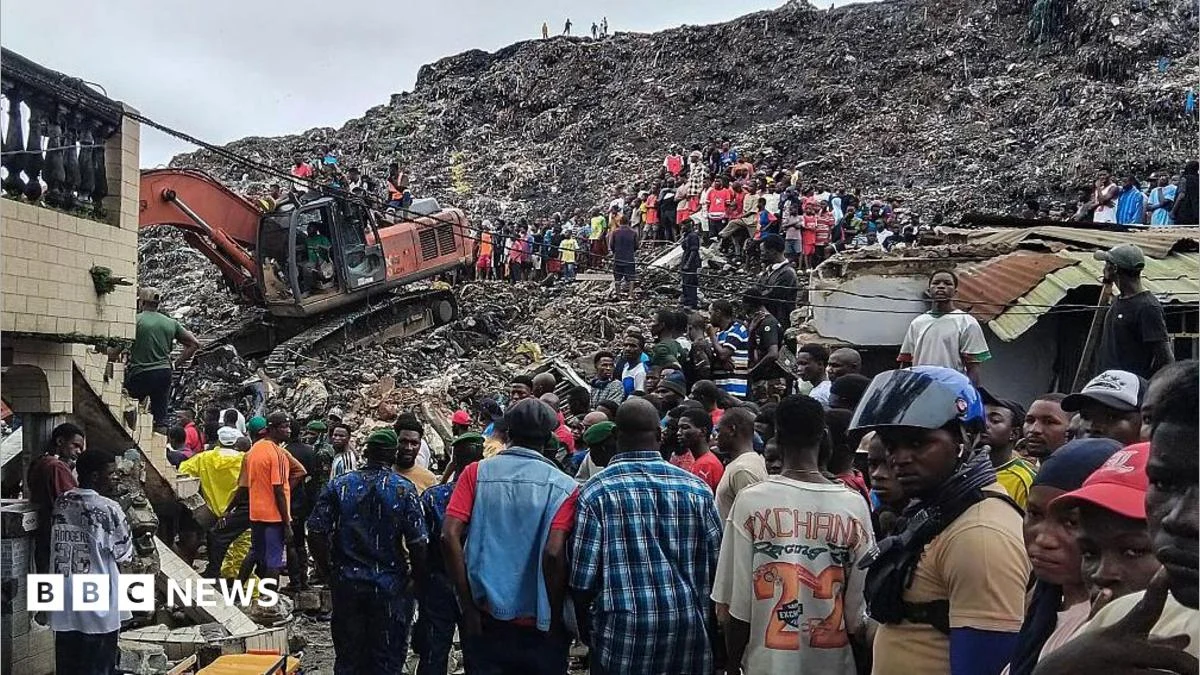
A mound of rubbish at a major landfill site in Guinea’s capital collapsed, burying several homes and killing at least 30 people, the government has reported. The incident occurred at a waste disposal site that serves the densely populated Conakry area, though exact details of the collapse remain unclear.
Landfill collapses are rare but can be devastating in urban areas where informal settlements often border waste sites. This event highlights the risks associated with inadequate waste management infrastructure in rapidly growing cities.
KEY FACTS
- A rubbish mound collapsed at a major landfill site in Guinea’s capital
- The collapse buried several homes in the area
- Government reports confirm 30 deaths from the incident
WHAT HAPPENED?
The collapse occurred at a major waste disposal site that serves Conakry, though the exact timing and immediate cause are not specified in the BBC report. Such sites in developing nations often become dangerously overburdened as urban populations expand faster than waste management infrastructure.
While landfill collapses are relatively uncommon, they can be particularly deadly when they occur near residential areas. The force of shifting waste can easily overwhelm makeshift homes that are frequently built near dumping grounds by impoverished residents.
WHO IS AFFECTED?
The collapse has directly impacted families living near the landfill site, with at least 30 confirmed fatalities. These numbers may rise as search efforts continue. Such tragedies disproportionately affect the urban poor, who often settle near waste sites due to lack of affordable housing options.
Beyond the immediate victims, the incident will likely strain Guinea’s emergency response systems and prompt questions about urban planning and waste management policies in rapidly growing African cities.
WHAT WE KNOW — AND WHAT WE DON’T
Verified by the source:
- At least 30 people died in the collapse
- Several homes were buried by the rubbish mound
- The incident occurred at a major landfill in Guinea’s capital
Still unconfirmed:
- The exact time and date of the collapse
- The total number of people potentially affected
- Current search and rescue efforts
- Official statements beyond the initial government report
WHY IT MATTERS
This tragedy underscores the growing challenges of urban waste management in developing nations, where rapid population growth often outpaces infrastructure development. As cities expand without proper planning, vulnerable communities frequently end up living in hazardous conditions near waste disposal sites.
WHAT TO WATCH
Authorities will likely conduct further investigations into the causes of the collapse and assess broader waste management policies. Emergency response efforts may continue in the coming days as the full extent of the damage becomes clear.