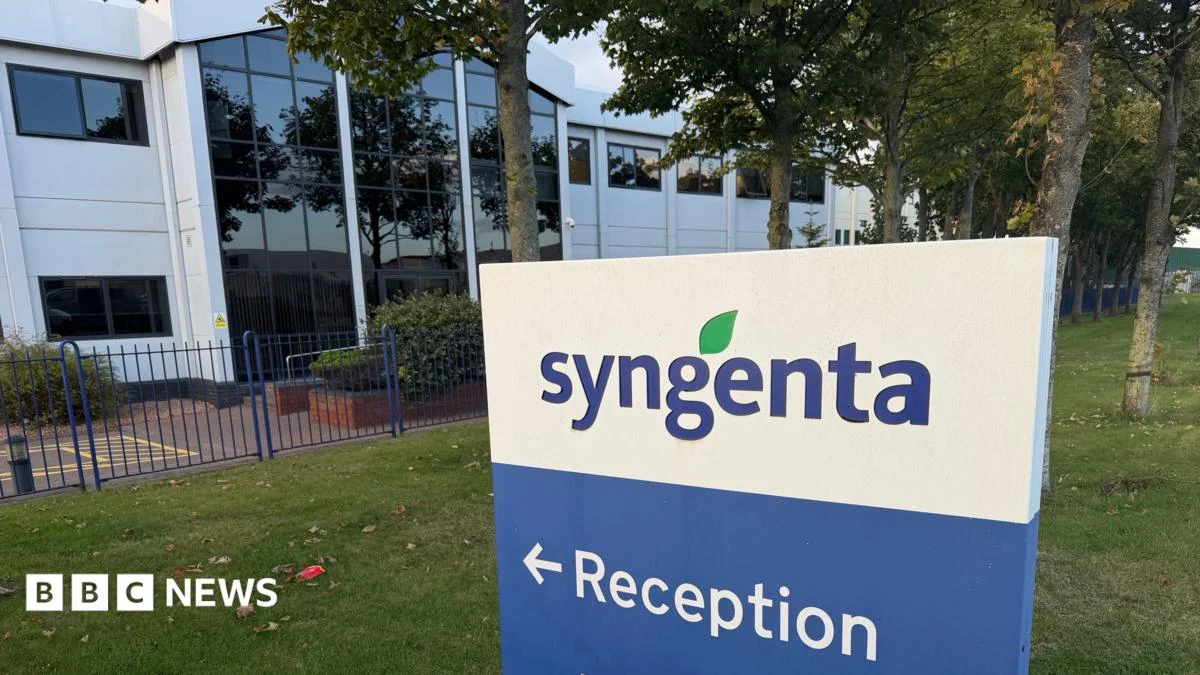
Lede
Hundreds of jobs at the Grangemouth chemical plant are under threat after Syngenta stated its operation there is no longer competitive. The company cited increasing competition from overseas producers as the primary reason for the potential job losses. BBC News first reported the statement, noting that Syngenta’s Grangemouth facility faces growing pressures from international markets.
The announcement marks a significant blow to workers at the plant, which has operated for decades as part of the UK’s chemical manufacturing sector. While Syngenta did not specify a timeline for job cuts, the company confirmed it is actively reviewing its operations in response to global market shifts.
Key Facts
- Hundreds of jobs under threat at Grangemouth chemical plant.
- Syngenta said its Grangemouth operation was no longer competitive.
- Increasing competition from overseas cited as the reason.
The Story
What happens next?
Syngenta has not provided a detailed schedule for restructuring or job reductions at the Grangemouth site. However, the company indicated that it is conducting an internal review of its operations to determine cost-saving measures. Unions and employee representatives are expected to engage in negotiations with management to explore alternatives and protect employment levels where possible. Workers at the plant remain uncertain about their futures as decisions continue to unfold behind closed doors.
While the firm did not name specific countries responsible for the rise in overseas competition, industry analysts suggest that lower production costs in parts of Asia and Eastern Europe have reshaped global supply chains in recent years. BBC News noted that such trends have placed pressure on energy-intensive industries across the UK, including chemicals and manufacturing.
Who is affected?
The potential job losses directly impact employees at the Grangemouth chemical plant, located in Scotland. These workers form part of a broader industrial workforce that supports local communities through taxation, procurement, and ancillary services. The plant has historically been a major employer in the region, making the threat of closure or downsizing particularly impactful for families and local businesses dependent on steady income streams.
Beyond individual households, suppliers and contractors connected to the facility may also face financial strain if operations scale back. Local authorities could see reduced revenue from business rates, affecting public services in the area. Community leaders have yet to issue formal responses, but past plant closures in similar regions have prompted calls for government support packages to aid transitioning workers.
How did we get here?
Global shifts in chemical production have increasingly favored countries offering cheaper labor and energy resources. Over the past decade, many European chemical plants have struggled to maintain profitability amid rising energy costs and stricter environmental regulations. Syngenta’s Grangemouth operation reportedly found itself unable to match prices offered by competitors based in regions with fewer regulatory constraints.
Experts say that without large-scale investment or policy intervention, several aging industrial sites across the UK are likely to face similar fates. Previous plant shutdowns in other sectors have led to debates over whether the government should provide subsidies or tax breaks to retain critical manufacturing capabilities. For now, attention remains focused on whether Syngenta will proceed with redundancies or seek alternative strategies to keep the Grangemouth site open.
What We Know — and What We Don’t
Verified by the source:
- Syngenta operates a chemical plant at Grangemouth.
- The operation is described as not competitive.
- Competition from overseas is increasing.
- Hundreds of jobs are potentially at risk.
Still unconfirmed:
- No specific number of affected jobs given.
- No timeline provided for potential redundancies.
- No official comment from unions or government.
- Exact countries driving overseas competition unnamed.
Why It Matters
The potential job losses at Grangemouth highlight ongoing challenges facing UK manufacturing. As companies adapt to a changing global economy, decisions like these underscore the need for policies that support domestic industry resilience. See more on [economy-markets](/category/economy-markets).
What To Watch
Union negotiations with Syngenta management are expected to begin soon. Any formal redundancy notices or restructuring plans would confirm the scale of job losses. Meanwhile, policymakers may face renewed pressure to offer support for struggling industrial sites. BBC News continues to cover developments. Explore related stories in [climate-environment](/category/climate-environment).