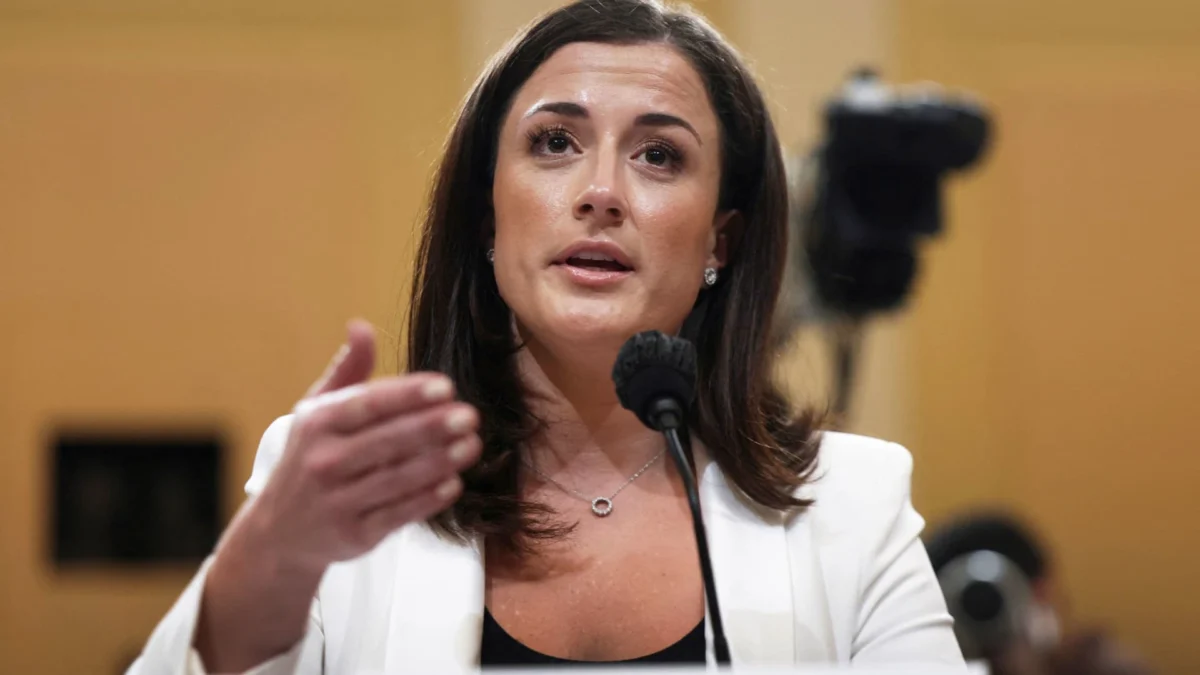
Grand jury rejects DOJ bid to indict ex-Trump WH aide Cassidy Hutchinson: Reports
A grand jury declined to return an indictment against Cassidy Hutchinson after the Department of Justice sought charges connected to her testimony before the House select committee investigating the January 6, 2021 attack on the U.S. Capitol. The decision was reported by US Top News and Analysis, which cited sources familiar with the matter.
Hutchinson testified publicly about former President Donald Trump’s conduct on the day of the Capitol riot, drawing significant political attention. The grand jury’s refusal to indict marks a setback for federal prosecutors who pursued charges tied to her account, though the precise basis for the decision remains unclear based on available reporting.
Key Facts
- A grand jury rejected a DOJ bid to indict Cassidy Hutchinson.
- Hutchinson testified to a House committee about Trump’s conduct on Jan. 6.
- Reports indicate the decision followed a DOJ attempt to bring charges.
What Happens Next?
The outcome of this grand jury proceeding leaves unresolved questions about whether the Department of Justice will seek alternate legal pathways to pursue charges against Hutchinson. Federal prosecutors have discretion to resubmit evidence to another grand jury or adjust their strategy, especially if they believe the underlying facts support an indictment. However, US Top News and Analysis did not specify whether such steps are planned or likely at this stage.
Hutchinson’s testimony before the House Select Committee to Investigate the January 6th Attack generated national attention for her claims regarding former President Trump’s actions during the Capitol breach. The House panel heard from numerous witnesses as part of its investigation, and Hutchinson’s personal observations contributed to broader public discourse about that day’s events. Now, the lack of an indictment shields her from criminal prosecution related to those statements, at least temporarily.
How Did We Get Here?
The path leading to this grand jury decision traces back to the congressional investigation into the January 6, 2021 Capitol attack. During that inquiry, Cassidy Hutchinson appeared multiple times before the House select committee, offering firsthand accounts drawn from her role as a senior aide in the Trump White House. Her testimony addressed topics including President Trump’s response to the riot and discussions around efforts to influence the certification of the 2020 presidential election results.
Following her appearances, federal investigators examined whether any aspect of her public or private communications warranted criminal charges. The Department of Justice ultimately presented evidence to a grand jury, which evaluates whether enough probable cause exists to justify an indictment. After review, the grand jury chose not to return one, halting the current phase of potential prosecution.
What We Know — and What We Don’
Verified by the source:
<n
- A grand jury declined to indict Cassidy Hutchinson.
- The Department of Justice had sought an indictment.
- Hutchinson testified to a House committee regarding Jan. 6 conduct.
Still unconfirmed:
- The specific charges the DOJ pursued.
- The reasoning behind the grand jury’s decision.
- Whether prosecutors plan to retry the case.
- Details of what evidence was presented to the grand jury.
Why It Matters
This development holds relevance for ongoing political and legal debates surrounding accountability in the wake of the January 6 attack. While the grand jury’s decision blocks one potential prosecution, it does not resolve larger questions about the scope of federal investigations or how testimony given during congressional inquiries interacts with criminal liability. Observers continue to assess how this outcome affects public trust in institutions and future accountability efforts.
What To Watch
Legal experts note that prosecutors retain the option to revisit similar matters using different strategies. Whether the Department of Justice moves forward with alternative approaches remains uncertain, pending internal deliberations not disclosed in public reports.