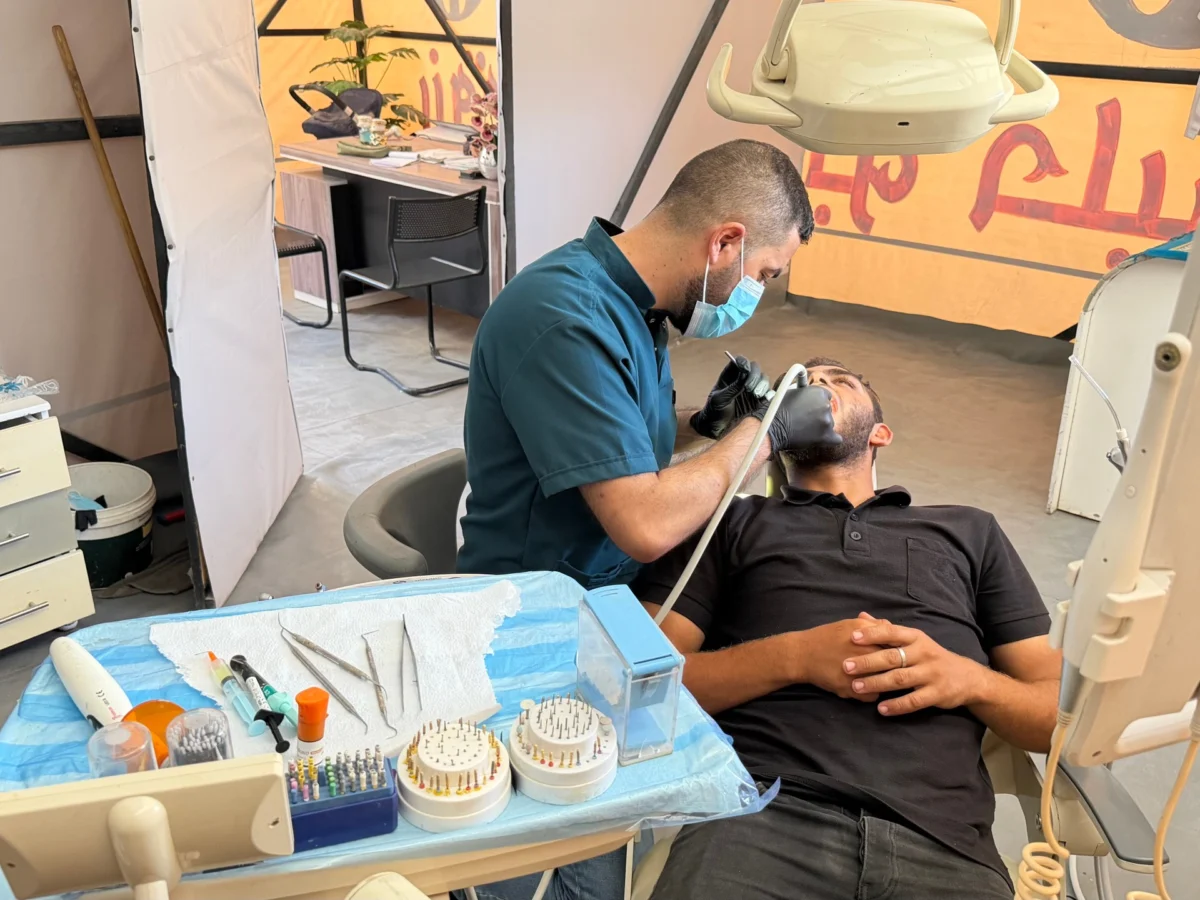
Dentists in Gaza are now reportedly compelled to perform their work in the streets. This development is attributed to a siege that has created a significant scarcity of resources and available office space within the region, making dental care a luxury for most of its population.
The situation highlights the profound challenges faced by healthcare professionals and residents alike, as essential services, including dental work, become increasingly difficult to access and provide. The reported conditions underscore a broader humanitarian concern regarding the availability of basic healthcare in war-torn regions.
KEY FACTS
- Israel’s siege on Gaza is reportedly forcing dentists to operate in the streets.
- Scarce resources in Gaza contribute to dentists working outdoors.
- Lack of office space is a factor in dentists operating in the streets.
- Dental work is described as a luxury for most people in Gaza.
The Impact on Dental Care in Gaza
The reported siege on Gaza has significantly impacted the delivery of dental services. With resources becoming scarce, the fundamental infrastructure required for proper dental care—such as specialized equipment, sterilized environments, and even basic supplies—is reportedly in short supply. This scarcity is a direct consequence of the ongoing conditions, compelling dentists to seek alternative, often rudimentary, settings for their practices. The shift to outdoor operations signals a desperate measure to continue providing care under extreme duress.
Who is affected by these conditions?
The primary group affected by these challenging conditions are the residents of Gaza. The summary indicates that dental work has become a luxury for most people in the region. This suggests that a large portion of the population either cannot afford, or cannot access, necessary dental treatments. The inability of dentists to operate in traditional, well-equipped offices directly translates to a reduction in the quality and availability of care for ordinary citizens, potentially leading to worsening oral health issues across the community. Furthermore, the dentists themselves are significantly affected, forced to practice under less-than-ideal and potentially unhygienic circumstances.
Resource Depletion and Its Consequences
The lack of resources and office space are critical factors contributing to the current predicament for Gaza dentists. The siege has reportedly restricted the flow of essential goods and materials, which would naturally include medical supplies and equipment necessary for dental offices. Concurrently, the availability of suitable indoor spaces for professional practice has diminished, pushing dental professionals out into public areas. This environmental shift for dental procedures introduces considerable risks, including exposure to unsanitary conditions and a lack of privacy for patients, further complicating an already dire healthcare situation in the besieged territory. The entire community experiences the ripple effect of these health challenges.
WHAT WE KNOW / WHAT WE DON’T
Verified by the source:
- Israel’s siege on Gaza is linked to dentists operating in the streets.
- Scarce resources are contributing to the situation for dentists in Gaza.
- A lack of office space is a factor in dentists operating in the streets.
- Dental work is considered a luxury for most people in Gaza.
Still unconfirmed:
- The exact number of dentists operating in the streets.
- Specific details regarding the types of dental procedures being performed outdoors.
- The full extent of resource scarcity affecting dental supplies and equipment.
- The precise date when these street operations began.
WHY IT MATTERS
The reported situation in Gaza matters significantly as it highlights a profound humanitarian crisis where essential healthcare services are severely compromised. When dental care becomes a luxury and professionals are forced to operate in suboptimal conditions, it signals a breakdown in public health infrastructure, impacting the well-being and quality of life for a large population.
WHAT TO WATCH
Continued monitoring of the humanitarian situation in Gaza will be crucial to understand any changes in the availability of healthcare resources and facilities.