Skip to content
LIVE
WAR & GEOPOLITICS Brazilian Candidate ‘Plinio Trump’ Loses Election With 161 Votes — 80% verified      TOP STORIES US Grants Aurora Exemption for Self-Driving Truck Safety Feature — 86% verified      TRADING & CRYPTO Bitmine to Halt ETH Purchases After Reaching 5% Stake, Says Tom Lee — 76% verified      ECONOMY & MARKETS Inflation Fears Rise as Fed Survey Shows Highest 12-Month Outlook Since May 2023 — 81% verified      WAR & GEOPOLITICS Symbol of Spain’s Housing Crisis Dies at 87 After Eviction — 80% verified      ECONOMY & MARKETS Fuel prices added to Google Maps as petrol and diesel costs soar — 80% verified      WAR & GEOPOLITICS Gaza Residents Rebuild Lives Nearly a Year After Conflict — 80% verified      TOP STORIES Russia Rejects Second Plague Case Report as False Information — 86% verified      ECONOMY & MARKETS Used Car Prices Expected to Drop Further in Q3 Amid Fuel-Efficient Demand — 80% verified      WAR & GEOPOLITICS Right-wing Surge Could Give Flávio Bolsonaro Power His Father Never Had — 80% verified      WAR & GEOPOLITICS Brazilian Candidate ‘Plinio Trump’ Loses Election With 161 Votes — 80% verified      TOP STORIES US Grants Aurora Exemption for Self-Driving Truck Safety Feature — 86% verified      TRADING & CRYPTO Bitmine to Halt ETH Purchases After Reaching 5% Stake, Says Tom Lee — 76% verified      ECONOMY & MARKETS Inflation Fears Rise as Fed Survey Shows Highest 12-Month Outlook Since May 2023 — 81% verified      WAR & GEOPOLITICS Symbol of Spain’s Housing Crisis Dies at 87 After Eviction — 80% verified      ECONOMY & MARKETS Fuel prices added to Google Maps as petrol and diesel costs soar — 80% verified      WAR & GEOPOLITICS Gaza Residents Rebuild Lives Nearly a Year After Conflict — 80% verified      TOP STORIES Russia Rejects Second Plague Case Report as False Information — 86% verified      ECONOMY & MARKETS Used Car Prices Expected to Drop Further in Q3 Amid Fuel-Efficient Demand — 80% verified      WAR & GEOPOLITICS Right-wing Surge Could Give Flávio Bolsonaro Power His Father Never Had — 80% verified     
Thursday, October 8, 2026
Updated 3 minutes ago
AI-Verified Global News Intelligence
AI MONITORING ACTIVE
11,247 articles published
War & Geopolitics 80% VERIFIED

Gaza Residents Rebuild Lives Nearly a Year After Conflict

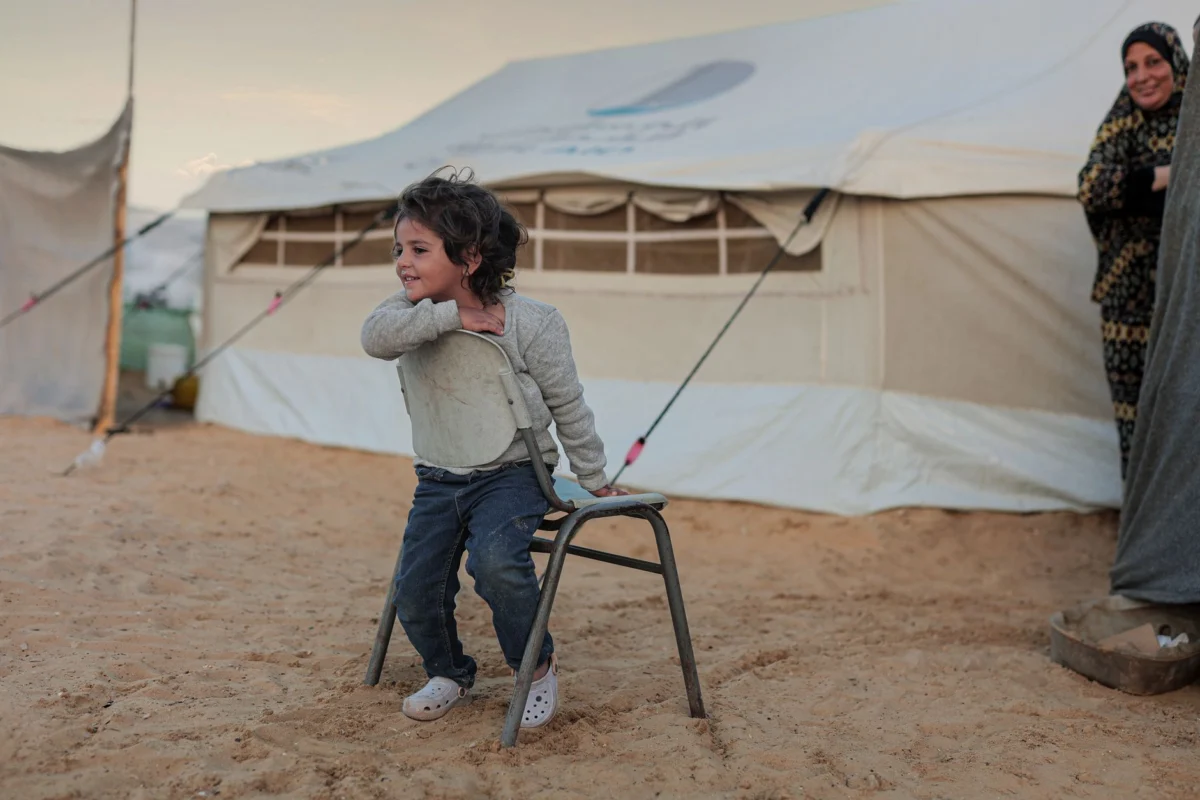
Photographer documents day-to-day realities for those trying to recover and rebuild nearly a year after fighting paused.
War & Geopolitics · October 8, 2026 · 38 minutes ago · 3 min read · AI Summary · NYT > World News
80 / 100
AI Credibility Assessment
High Credibility
AI VERIFIED 0/3 claims verified 1 sources cited
Source Corroboration 30%
Source Tier Quality 70%
Claim Verification 40%
Source Recency 90%

Single-source article based solely on a New York Times video piece; limited independent verification possible.

Nearly a year after Israel and Hamas agreed to end the war in Gaza, a New York Times photographer is documenting how residents are coping and rebuilding their lives. The images and reporting capture ordinary moments amid ongoing challenges, showing daily routines, small steps toward recovery, and the persistent difficulties of displacement and reconstruction. For many, normalcy remains fragile, shaped by damaged infrastructure, limited services, and uncertainty about the future.

Life in Gaza has settled into a tentative rhythm, with residents adapting to conditions that remain difficult but stable compared with the immediate aftermath of the fighting. A New York Times photographer records these scenes, offering a window into how people organize work, manage household needs, and attempt to restore a sense of routine.

Key Facts

  • Life in Gaza is being documented by a New York Times photographer nearly a year after a ceasefire.
  • Nearly a year has passed since Israel and Hamas agreed to end the war in Gaza.
  • Residents are working to rebuild their lives and cope with ongoing conditions.
  • The photographer’s work shows how people are adapting and recovering day to day.
  • Documenting Daily Realities

    A New York Times photographer, Saher Alghorra, is recording scenes across Gaza that illustrate the pace and texture of post-conflict recovery. The visual reporting focuses on everyday activities, from markets and workshops to family gatherings, rather than on political statements or large-scale events. These images aim to convey the human dimension of life in Gaza now, highlighting both continuity and change.

    What Happens Next for Rebuilding Efforts?

    The trajectory of life in Gaza will depend heavily on the availability of basic services such as water, electricity, and healthcare, as well as on the speed of infrastructure repairs and the return of displaced residents to their homes. International attention and aid continue to play a role in supporting reconstruction, though priorities and funding remain uncertain. For now, residents are finding ways to move forward despite limited resources.

    Why It Matters

    Understanding life in Gaza helps readers grasp the long-term consequences of conflict and the quiet perseverance required to rebuild communities. Visual journalism plays a vital role in making those realities visible to global audiences.

    What We Know — and What We Don’t

    Verified by the source:

    • A New York Times photographer, Saher Alghorra, is documenting life in Gaza.
    • Israel and Hamas agreed to end the war in Gaza nearly a year ago.
    • Residents are coping and working to rebuild their lives.

    Still unconfirmed:

    • The specific conditions in neighborhoods outside those photographed.
    • Exact timelines for major reconstruction projects.
    • Broader political developments affecting future stability.

    What to Watch: Whether improved access to basic services will accelerate rebuilding, and whether daily life for residents continues to stabilize over the coming months.

    Community Verdict — Do you trust this story?
    Be the first to vote on this story.