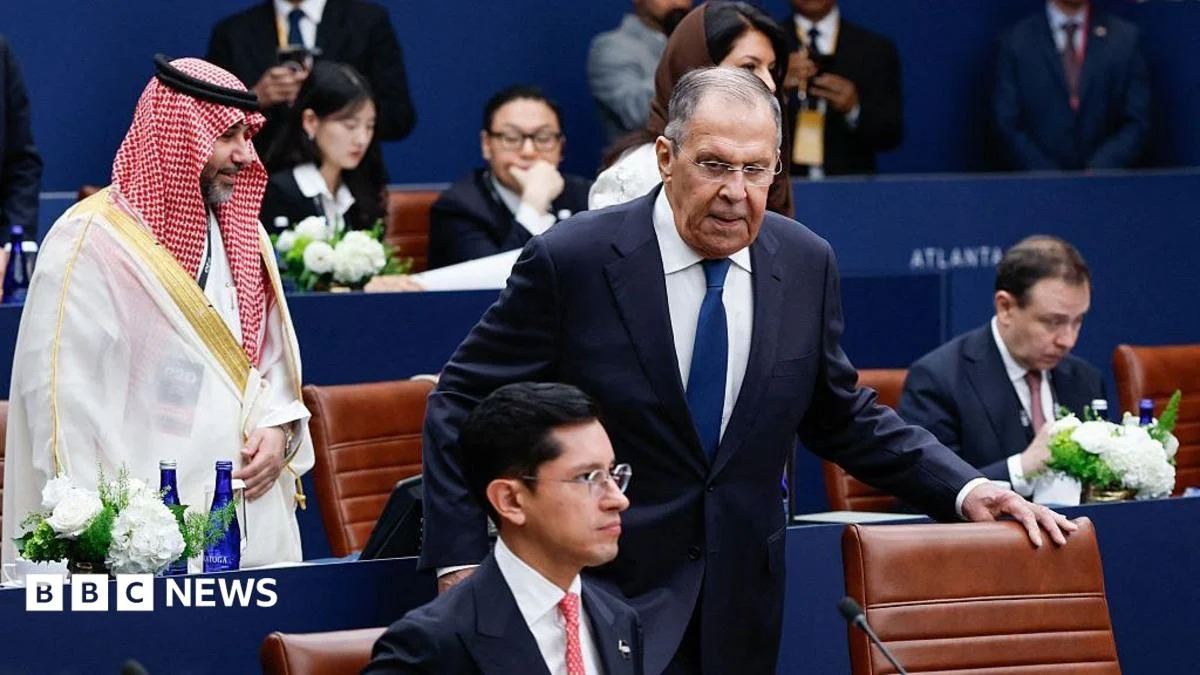
The G20 summit’s traditional ‘family photo’ was cancelled after European foreign ministers refused to be photographed alongside Russian Foreign Minister Sergei Lavrov. The boycott reflects broader diplomatic tensions over Russia’s actions in Ukraine, which have strained relations between Moscow and much of the Western world.
The decision to cancel the photo came during the G20 foreign ministers’ meeting, underscoring how the ongoing conflict continues to disrupt international diplomatic gatherings. European ministers made their stance clear by physically separating themselves from Lavrov during the event in Atlanta.
KEY FACTS
- G20 ‘family photo’ cancelled due to protests over Russian minister presence
- European foreign ministers refused to be pictured with Sergei Lavrov
- The summit was held in Atlanta
The G20 Family Photo Tradition
The G20 family photo is a longstanding tradition at international summits, symbolizing unity and cooperation among member nations. When leaders or ministers gather for such group photographs, they typically stand together to demonstrate collective engagement on global issues.
Cancelling the photo sends a powerful signal of dissent. In this case, the absence of European ministers from the image indicates a coordinated diplomatic stance. Rather than simply declining to participate, their refusal to share the frame with Lavrov amplifies the message of isolation directed at Russia over its wartime conduct.
This incident illustrates how geopolitical tensions can infiltrate even ceremonial aspects of diplomacy. The photo cancellation serves as a visual and symbolic rebuke, reinforcing international disapproval without necessarily altering formal policy positions.
How Did We Get Here?
The roots of the diplomatic rift trace back to Russia‘s full-scale invasion of Ukraine. Since that time, Western nations—including many within the G20 framework—have imposed sanctions and restricted high-level diplomatic contact with Russian officials.
At previous G20 meetings, similar tensions flared but were often managed through careful choreography or selective engagement. This time, European foreign ministers chose a more visible form of protest by withdrawing from the photo altogether. Their action aligns with broader trends in Western foreign policy aimed at isolating Russia diplomatically.
While the United States and other non-European G20 members may take varying approaches, the photo cancellation highlights divergent strategies in responding to global conflicts. It also shows how symbolic gestures can become flashpoints in their own right.
WHAT WE KNOW AND WHAT WE DON’T
Verified by the source:
- The G20 family photo was cancelled following protests over the presence of the Russian minister
- European foreign ministers refused to be pictured with Sergei Lavrov
- The summit took place in Atlanta
Still unconfirmed:
- Whether all European ministers participated in the boycott uniformly
- Official statements or responses from Russia regarding the cancellation
- Details about whether any alternative arrangements were attempted before cancellation
WHY IT MATTERS
The cancellation of the G20 family photo underscores how deeply the war in Ukraine has reshaped diplomatic norms. Symbolic acts like these influence public perception and diplomatic relationships, setting precedents for future international interactions.
WHAT TO WATCH
Observers will watch whether this diplomatic standoff affects upcoming G20 proceedings or leads to further measures against Russia. Any official response from Moscow could escalate tensions or prompt new rounds of sanctions.
Meta description: The G20 family photo was cancelled after European foreign ministers refused to be pictured with Russian Foreign Minister Sergei Lavrov at the Atlanta summit.