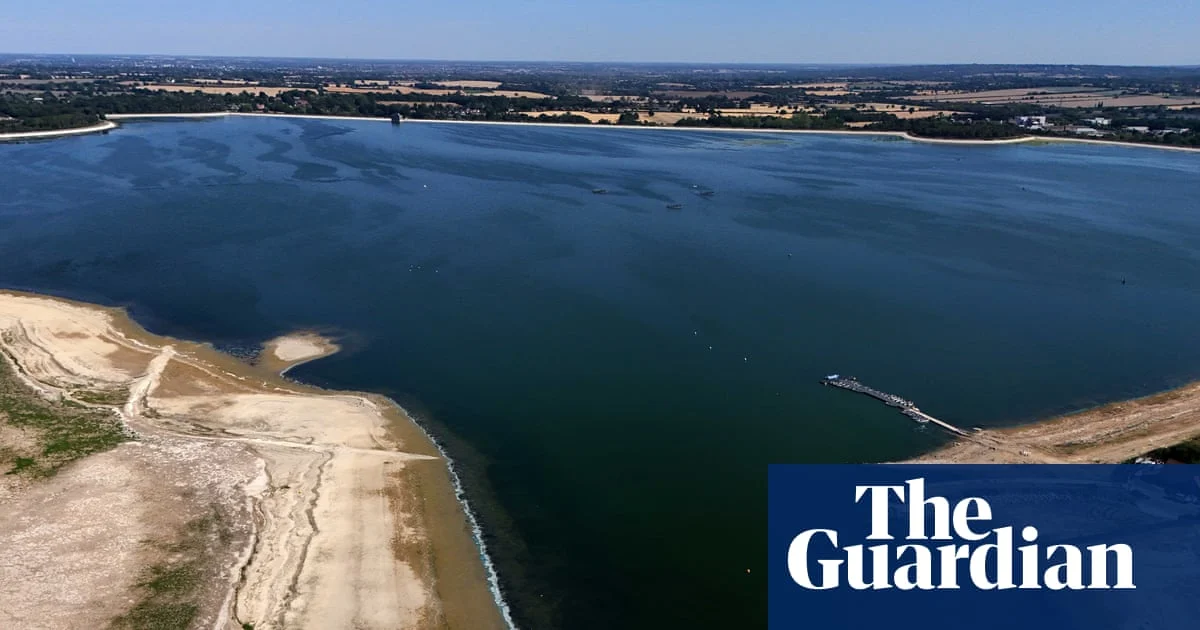
Five key reservoirs across England and Wales are reported to be exceptionally low as drought conditions persist amid extreme heat and scant rainfall. The situation raises concerns about the resilience of public water supplies heading into the autumn.
Officials warn that if the dry spell continues through autumn, there could be real trouble for water availability, while much of Europe has already faced repeated heatwaves tied to the climate crisis. Almost three-quarters of England and the whole of Wales are now classified as drought-affected.
The low reservoir levels highlight the pressure on water resources as temperatures stay high and rainfall remains scarce.
KEY FACTS:
- Five key reservoirs in England and Wales are described as ‘exceptionally low’.
- Extreme heat and lack of rain threaten public water supply.
- Officials warn of ‘real trouble’ if autumn remains dry.
- Most of Europe has endured back-to-back heatwaves linked to the climate crisis this summer.
- Almost three-quarters of England and the whole of Wales are now in drought.
How did we get here?
The source notes that most of Europe has endured back-to‑back heatwaves driven by the climate crisis this summer. Those extreme temperatures, combined with markedly low rainfall, have pushed water reserves down across the region. In England and Wales, the combination of heat and dry conditions has led to almost three‑quarters of England and the entirety of Wales being classified as drought‑affected. Reservoirs, which store water for public supply, depend on seasonal rainfall and cooler temperatures to refill; when those inputs are missing, levels fall rapidly.
The summary states that five key reservoirs are now “exceptionally low,” a designation that signals stress on the system. The pressure on public water supply comes from both the reduced inflow and increased demand during hot weather. While the source does not detail specific management actions, it notes that the drought is likely to continue into the autumn if conditions do not change.
What happens next?
Officials warn of “real trouble” if the autumn remains dry, indicating that water availability could deteriorate further without significant rain. The source suggests that the outlook hinges on whether rainfall returns to replenish reservoirs and ease the strain on supplies. Should the dry pattern persist, authorities may need to consider measures such as water‑use restrictions or alternative sourcing to protect essential services.
Because the source does not specify exact timelines or upcoming policy decisions, the next steps remain uncertain. Continued monitoring of reservoir levels, weather forecasts, and official statements will be essential to understand how the situation evolves. The broader European context of repeated heatwaves also suggests that similar pressures could appear elsewhere in the coming months.
WHAT WE KNOW — AND WHAT WE DON’T:
Verified by the source:
- Five key reservoirs in England and Wales are described as ‘exceptionally low’.
- Extreme heat and lack of rain threaten public water supply.
- Officials warn of ‘real trouble’ if autumn remains dry.
- Most of Europe has endured back‑to‑back heatwaves linked to the climate crisis this summer.
- Almost three‑quarters of England and the whole of Wales are now in drought.
Still unconfirmed:
- Exact timeline for reservoir recovery.
- Specific water‑restriction measures that may be introduced.
- Potential impact on agriculture and industry.
- Whether autumn rainfall will reach average levels.
WHY IT MATTERS:
Low reservoir levels directly affect the reliability of drinking water for millions of people and can lead to usage restrictions, higher costs, and strain on ecosystems. The situation illustrates how climate‑driven heatwaves and reduced rainfall challenge water security, underscoring the need for long‑term planning and adaptive management to protect supplies against future droughts.
WHAT TO WATCH:
Future rainfall measurements and reservoir level updates will show whether conditions improve or worsen. Official statements on any water‑use measures will also indicate the response to the ongoing drought.