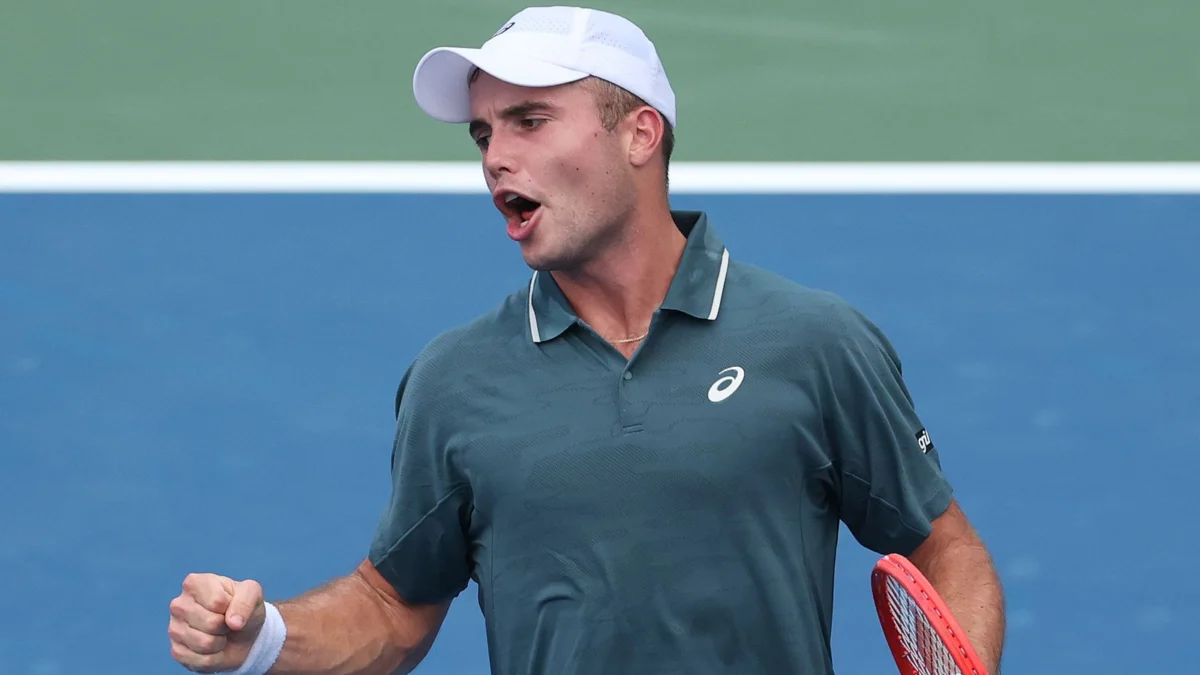
Jacob Fearnley retired with an injury during the first set of his match against Arthur Fery at the Vienna Open, ending the contest in Fery’s favour. The match concluded with Fery leading 5-1 in the opening set, securing his place in the second round.
Fearnley’s early exit means he will not progress beyond the first round at the Vienna Open, while Fery moves forward in the draw. The retirement was due to injury, which automatically grants Fery the win regardless of the scoreline.
Key Facts
- Fearnley retired due to injury
- Fery led 5-1 in the first set
- Fery advanced to the second round
- Match took place at the Vienna Open
- Fearnley did not progress past the first round
What Happened in Vienna?
Arthur Fery defeated Jacob Fearnley after the latter retired injured during the first set. The score stood at 5-1 in Fery’s favour when Fearnley withdrew, handing Fery a spot in the second round of the Vienna Open. Tennis rules allow players to retire if injury prevents them from continuing, which results in an automatic win for their opponent.
Injuries during competition are not uncommon in professional tennis, often forcing players to make quick decisions about whether to continue. When a player retires, the tournament officials record the result based on the current scoreline at the time of withdrawal. In this case, Fearnley’s early retirement meant that despite the lopsided score, the match outcome was settled swiftly.
The Vienna Open is part of the ATP Tour and attracts players from around the world. Matches like this highlight the physical demands placed on competitors and how injuries can dramatically alter the course of a tournament. For Fery, advancing to the next round offers an opportunity to gain momentum and prize money, while Fearnley will need to focus on recovery before his next event.
Who Is Affected by This Outcome?
Arthur Fery benefits directly from Jacob Fearnley’s retirement, moving into the second round at the Vienna Open. As a fellow British player, Fery now has the chance to build on this win in upcoming matches. Fearnley, meanwhile, faces a period of recovery and will miss out on potential earnings and ranking points from this tournament.
Other players in the draw may also be impacted, as changes in scheduling or seeding could shift depending on who advances. Tournament organizers must adjust brackets accordingly whenever a player withdraws, ensuring the integrity of the competition remains intact. Spectators and fans following the event will see updated lineups reflecting these adjustments throughout the week.
The situation underscores how individual circumstances—such as injury—can influence not only one player’s journey but also the broader dynamics within a tournament structure. Whether Fearnley returns later in the season remains uncertain, though medical timeouts and retirements are standard procedures designed to protect athlete welfare above all else.
What We Know — and What We Don’t
Verified by the source:
- Jacob Fearnley retired due to injury
- Arthur Fery led 5-1 in the first set
- Fery advanced to the second round at the Vienna Open
- The match occurred during the Vienna Open tennis tournament
Still unconfirmed:
- The exact date or time of the match
- The nature or severity of Fearnley’s injury
- Comments from either player or their coaching teams
- Fery’s schedule or match details in the second round
- Any impact on Fearnley’s future tournaments
Why It Matters
Retirements due to injury are a regular occurrence in tennis, but they carry significant consequences for both players involved. For the advancing player, it presents an unexpected opportunity, while for the retiring player, it interrupts their competitive rhythm and raises questions about fitness and preparation. These moments remind audiences of the unpredictable nature of sport and the human cost behind every serve and volley.
Understanding how injuries affect match outcomes helps fans appreciate the physical challenges faced by professional tennis players competing across multiple surfaces and climates each year.
What To Watch
Updates on Jacob Fearnley’s injury status and recovery timeline may emerge soon, given his withdrawal from the Vienna Open. Meanwhile, attention turns to Arthur Fery’s performance in the second round, where he’ll look to capitalize on his unforced advancement.