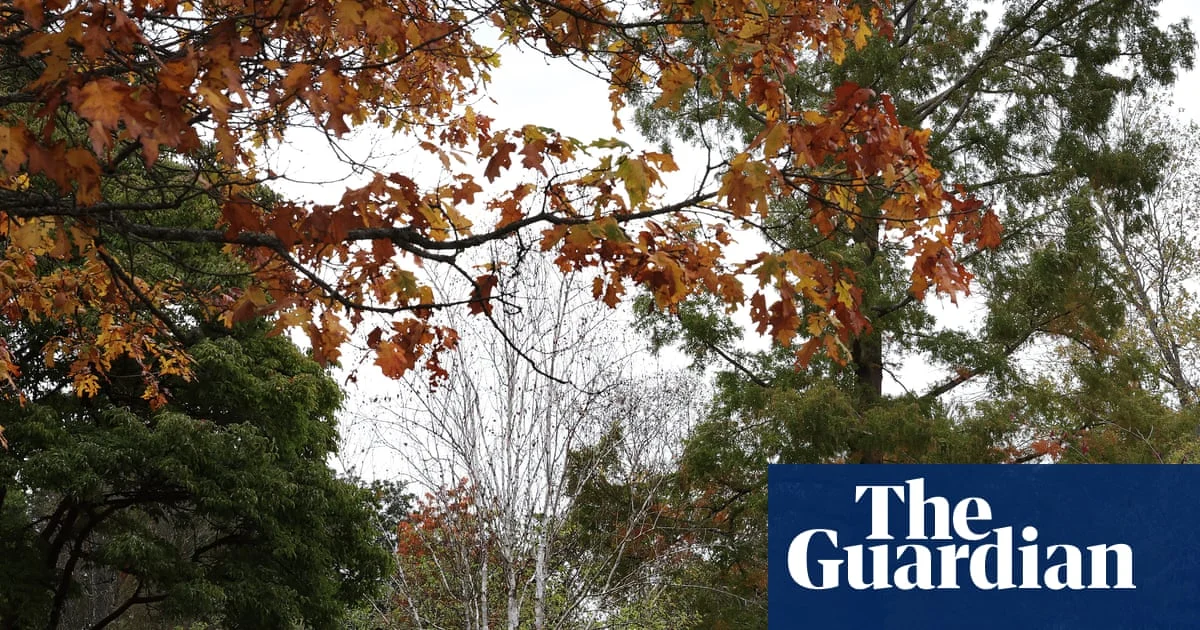
A “false autumn” is affecting British trees after an unusually hot, dry summer, leaving many plants stressed and forcing them to shed leaves earlier than normal. Trees such as birch, which typically display vibrant yellow foliage in autumn, have already lost their leaves due to drought conditions. The Royal Horticultural Society confirms the pattern is widespread. Among a display of copper, red, and purple leaves at Wisley Garden in Surrey, a single naked birch tree stood out as representative of a broader problem; the leaves had already fallen, leaving the tree bare.
## Key Facts
– Trees across England are dropping leaves early after a scorching summer.
– Drought stress is causing premature leaf loss, known as a “false autumn”.
– Birch trees, which usually turn yellow, are already bare due to heat stress.
– The Royal Horticultural Society confirmed observations at Wisley Garden in Surrey.
– Autumn colour displays will be less vibrant because trees lost leaves before pigments fully developed.
## What causes the false autumn?
A false autumn occurs when environmental stress causes trees to enter senescence, or aging, ahead of natural triggers like cooler temperatures. When soil moisture is low and temperatures rise, trees respond by closing their stomata to conserve water. While this helps with survival, it also halts photosynthesis and accelerates leaf drop. The phenomenon mirrors what happens in true autumn, but occurs months early. The Guardian reports that prolonged heat and dryness during the summer left many trees unable to recover, depleting reserves needed for both leaf retention and autumn pigmentation. Without enough stored energy, trees shut down prematurely rather than transitioning gradually into their usual colourful phase.
## Who is affected by the early leaf drop?
Several common British tree species are showing signs of stress, particularly those sensitive to drought such as birch, oak, and beech. Public spaces, private gardens, and botanical institutions including Wisple Garden in Surrey have reported notable bare patches. Horticulturists observe that ornamental varieties once relied upon for autumn interest are among the most impacted. Visitors walking through parks may notice fewer bursts of yellow or red than in previous years. Agricultural experts warn that repeated cycles of extreme heat and drought weaken root systems over time, increasing long-term vulnerability even if seasons normalize.
## What happens next?
Experts expect trees to recover slowly, especially if rainfall returns in adequate amounts. However, continued warming trends projected through late 2025 suggest more fluctuations in seasonal timing could follow. Monitoring efforts by gardening societies will continue throughout autumn to assess extent of damage across regions.