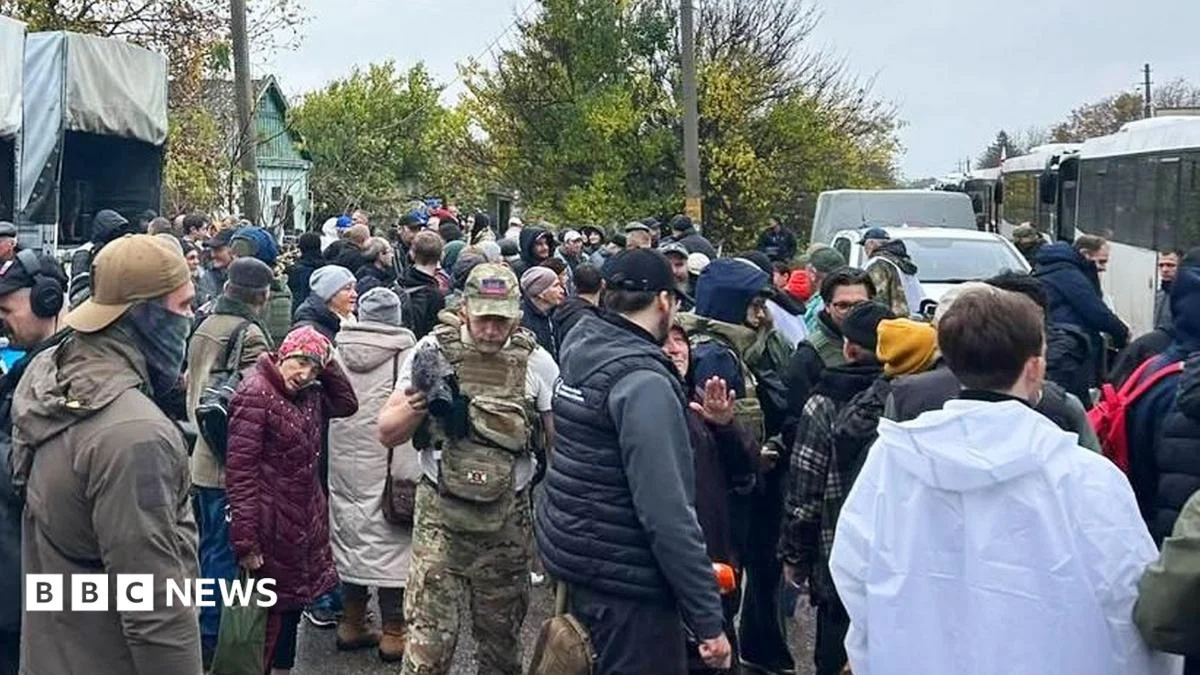
Residents are leaving the Russian-occupied town of Oleshky after an evacuation corridor opened, allowing civilians to exit the frontline area. The corridor provides a rare opportunity for those wishing to flee to do so safely. However, several hundred people have chosen to stay despite deteriorating living conditions.
Oleshky, located in the Kherson region of southern Ukraine, remains under Russian control and has been a focal point of ongoing combat. The opening of an evacuation corridor suggests a temporary pause in hostilities or a tactical shift by occupying forces.
Key Facts
- Evacuation corridor opened in Russian-occupied Oleshky.
- Several hundred residents have chosen to remain in the town.
- Town lacks gas, electricity, and running water.
Why the Evacuation Corridor Matters
The establishment of an evacuation corridor in Oleshky follows a pattern seen in other contested areas of Ukraine where humanitarian access is periodically negotiated. These corridors typically require coordination between opposing sides and often depend on UN or Red Cross involvement to ensure safe passage. Their availability can fluctuate based on battlefield dynamics and political agreements.
In Oleshky, the lack of basic utilities — gas, electricity, and running water — has made daily life extremely difficult for those unable or unwilling to leave. The decision by several hundred residents to stay reflects a mix of personal ties to the area, fear of traveling through conflict zones, or limited options elsewhere. Humanitarian agencies have repeatedly warned that civilians remaining in active combat zones face increasing risks to their safety and well-being.
What Happens Next for Oleshky Residents?
The future of Oleshky remains uncertain. While the evacuation corridor currently allows residents to depart, its duration depends on shifting military realities and diplomatic negotiations. Those who stay must contend with worsening infrastructure collapse and potential escalations in fighting.
The Ukrainian government has previously urged civilians in occupied territories to evacuate when possible, citing security concerns. International observers often highlight the psychological toll of displacement, noting that forced or reluctant evacuations frequently leave lasting trauma. For now, the corridor represents a narrow window of opportunity for those seeking to escape.
What We Know — and What We Don’t
Verified by the source:
- An evacuation corridor has opened in Oleshky.
- Several hundred residents have remained in the town.
- The town lacks gas, electricity, and running water.
Still unconfirmed:
- Casualties or injuries among residents.
- Exact number of people using the corridor.
- Duration or security guarantees of the corridor.
- Reasons why residents chose to stay.
Why It Matters
The situation in Oleshky underscores the complex challenges civilians face during active conflict. Evacuation corridors offer critical lifelines but also reflect the broader humanitarian crisis unfolding across occupied regions of Ukraine.
For international observers and policymakers, each decision point — whether to evacuate or remain — highlights the urgent need for protected humanitarian access and long-term recovery planning for post-conflict regions.
What To Watch
Further developments will depend on whether the evacuation corridor remains open and how many additional residents choose to leave Oleshky in the coming days.