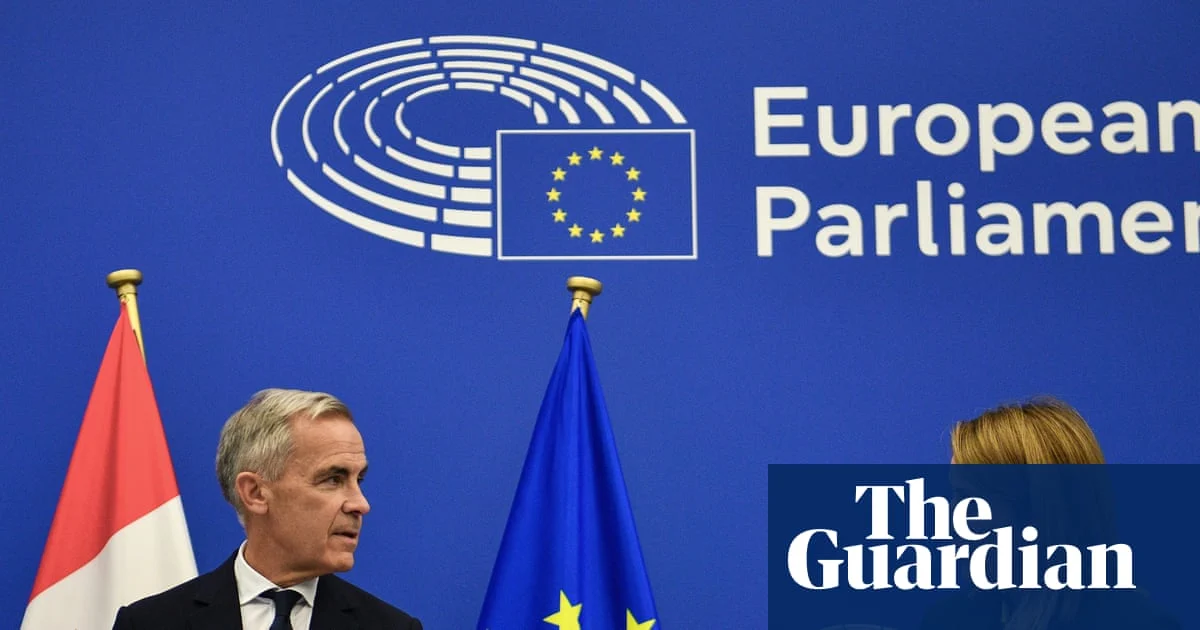
The European Union has stepped back from its earlier proposal to launch formal talks with Canada on becoming an associate member, opting instead for a watered-down pledge of closer partnership. The change came just as an EU-Canada summit began in Montreal, replacing the term “associate member” with language affirming an “ever closer association of Canada to the EU, short of full membership itself.”
The revised wording reflects divisions among EU member states, though the summary does not identify which governments disagreed or why.
Key Facts
- The EU backed away from offering Canada “associate member” talks.
- A joint summit statement now offers only an “ever closer association of Canada to the EU.”
- The summit in Montreal was scheduled to run Thursday and Friday.
What happened to the associate membership offer?
The shift in language occurred as EU leaders gathered for their summit with Canadian officials in Montreal. According to World news | The Guardian, disagreements among member states prompted the dilution of the joint statement’s wording. The original draft had raised expectations of launching formal negotiations on an associate membership path, but those plans were abandoned before the first day of meetings concluded.
Associate membership would typically imply a deeper political and economic partnership than the existing Comprehensive Economic and Trade Agreement (CETA), though still short of full EU accession. No timeline or procedural details were provided for how such a process might move forward.
Who is affected by this change in EU-Canada relations?
Both Canadian and European policymakers now face recalibrated expectations. The revised statement signals that while ties will deepen in some form, there will be no immediate institutional framework for Canada to pursue expanded status within EU structures. Businesses, lawmakers, and citizens on both sides had awaited clarity on future cooperation channels.
This development also underscores internal fractures within the EU bloc over strategic partnerships beyond Europe’s borders. Member states differ on engagement priorities, particularly regarding transatlantic alignment versus regional autonomy.
What We Know
Verified by the source:
- The EU removed references to starting “associate member” talks with Canada.
- The final statement refers instead to an “ever closer association.”
- The summit took place in Montreal over two days.
- Draft language was revised due to inter-member state disagreements.
Still unconfirmed:
- Which specific EU countries opposed the associate member language.
- Whether Canada requested or expected associate membership negotiations.
- Any concrete next steps toward implementing even the softened association pledge.
Why it matters
The recalibration matters because it signals how geopolitical realities can reshape long-standing diplomatic efforts. As global alliances evolve, so too must the frameworks guiding cross-Atlantic collaboration.
What to watch
Observers should monitor whether subsequent bilateral dialogues produce actionable agreements aligned with the new tone set in Montreal.
EU-Canada relations remain at a crossroads following the scaled-back summit outcome.