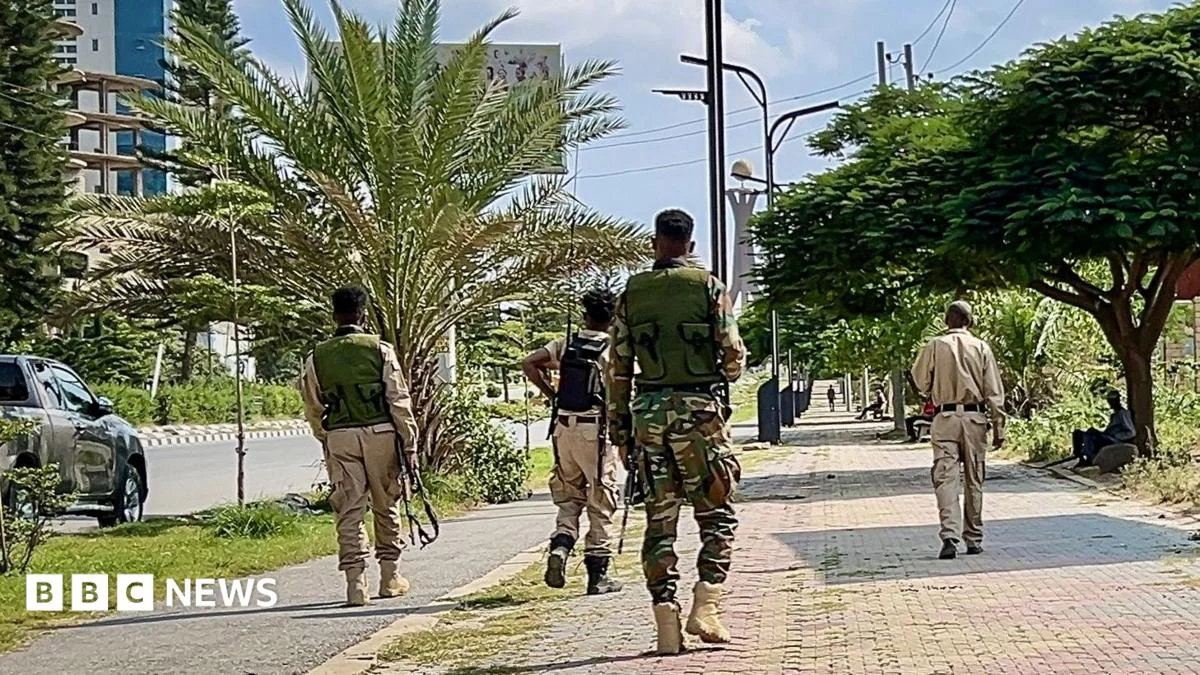
Ethiopia and Tigray traded accusations of launching new military offensives, escalating fears of renewed hostilities between the federal government and the Tigray People’s Liberation Front. The developments followed reports of recent drone strikes and local authorities seizing control of Tigray’s airports, according to BBC News.
The exchange of accusations signals a potential breakdown in the uneasy peace that followed the end of the devastating 2020-2021 conflict in northern Ethiopia. Neither side provided detailed evidence publicly, and the specifics of troop movements or attack locations remain unclear. BBC News reported the airport seizures alongside the broader pattern of mutual blame.
Key Facts
- Ethiopia and Tigray accuse each other of launching offensives.
- Local authorities reportedly seized airports in Tigray.
- Reports mention recent drone strikes in the region.
- The accusations fuel fears of a new war.
- Source: BBC News
The Story
What happens next?
The situation remains fluid, with no clear indication of whether the reported offensive will develop into large-scale fighting. The airport seizures, if confirmed, suggest an effort by one side to control movement and communication infrastructure in the region. Drone activity, if verified, would mark a significant evolution in the tactical landscape compared to earlier phases of the conflict.
Historical context matters here. The previous conflict, which began in November 2020, resulted in thousands of deaths and displaced millions of people. A peace agreement was reached in November 2022, mediated by the African Union. Since then, sporadic tensions have persisted, though nothing on the scale of the full-scale war.
The international community has largely remained silent on these latest developments. Regional bodies such as the African Union have not yet issued statements. Neighboring countries are watching closely, given the potential for refugee flows and cross-border instability. Humanitarian organizations are also likely monitoring the situation, though access to affected areas remains limited.
Who is affected?
Civilians in northern Ethiopia bear the brunt of any renewed fighting. The region continues to face severe humanitarian challenges, including food insecurity and limited access to healthcare. Schools remain closed in many areas, and infrastructure damage from the previous conflict has not been fully repaired.
The airport seizures, if true, could disrupt aid delivery and commercial flights. Airports serve as critical lifelines in a region where road networks are damaged or mined. Controlling these facilities would give whichever side holds them considerable leverage over logistics and mobility.
Ethnic tensions extend beyond Tigray. Other groups in the region have been affected by spillover violence and political instability. The federal government’s relationship with various regional entities remains fragile, and any escalation could draw in allied or opposing forces.
How did we get here?
The roots of the current tension trace back to long-simmering political disagreements between the Tigray People’s Liberation Front and Ethiopia’s central government. After the 2018 peace agreement ending decades of civil war, the TPLF became a key coalition partner. However, relations deteriorated over electoral disputes and accusations of marginalization.
The 2020 conflict ended with a unilateral ceasefire declared by the Ethiopian government. A peace accord followed in 2022, but implementation has been uneven. Disputes over disarmament, transitional justice, and the restoration of regional autonomy remain unresolved. These underlying issues likely contribute to the current cycle of accusations and counter-accusations.
Regional actors have played varying roles. Eritrea’s involvement in the earlier conflict remains controversial, and its current stance is unknown. Egypt and Sudan have stakes in Ethiopian stability due to shared borders and water security concerns related to the Grand Ethiopian Renaissance Dam.
What We Know — and What We Don’t
Verified by the source:
- Ethiopia and Tigray exchanged accusations of launching offensives.
- Local authorities reportedly seized airports in Tigray.
- Drone strike reports were mentioned by BBC News.
Still unconfirmed:
- Exact timing and locations of alleged drone strikes.
- Which side currently controls the airports.
- Number of casualties or injuries, if any.
- Official responses from Ethiopian or Tigrayan government.
Why It Matters
Renewed violence in northern Ethiopia threatens to unravel a fragile peace that took years to achieve. The region is still recovering from one of Africa’s deadliest recent conflicts, with deep humanitarian needs. Any escalation risks displacing more civilians, disrupting aid efforts, and destabilizing a strategically important part of the Horn of Africa.
What To Watch
Further statements from Ethiopian or Tigrayan officials could clarify or escalate the situation. The response of regional mediators, particularly the African Union, may determine whether tensions subside or intensify.
Ethiopia and Tigray traded accusations of launching offensives, with local authorities reportedly seizing airports following drone strike reports, BBC News said.
Related coverage: War & Geopolitics | Politics