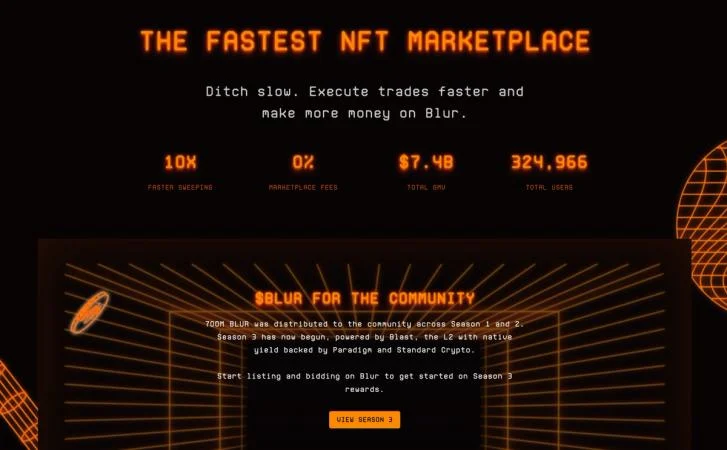
Blur, the largest Ethereum NFT marketplace at its peak, will shut down on Nov. 12 after monthly trading volumes collapsed from around $1.43 billion to under $7 million, a drop of roughly 99%.
The platform’s closure follows a sharp contraction in the broader NFT market, which surged during 2021 and 2022 before cooling significantly in 2023 and beyond. Blur’s shutdown also comes ten days after the announced closure of its sister project, Blast, suggesting coordinated strain across related NFT infrastructure.
Key Facts
- Blur to close its website on Nov. 12.
- Monthly trading fell from about $1.43 billion to under $7 million.
- Decline represents a roughly 99% collapse from peak volume.
- Shutdown follows sister project Blast’s own announced closure.
- Blur was once the largest Ethereum NFT marketplace.
What happens next for Blur users?
After Nov. 12, Blur’s website will no longer be accessible, and users are expected to migrate to alternative NFT marketplaces. The platform had briefly overtaken competitors like OpenSea in 2023 by offering aggressive token incentives and lower fees, but those advantages faded as trading activity declined. With the NFT market still far below its highs, traders increasingly lack the liquidity and demand that once made Blur dominant.
How did Blur become the top NFT marketplace?
Blur rose rapidly in 2023 by appealing directly to professional NFT traders, offering a faster interface and rewards programs that encouraged flipping. At its peak, the platform processed roughly $1.43 billion in monthly volume, briefly making it the largest Ethereum-based NFT marketplace by volume. That success depended heavily on speculative trading activity, which has since evaporated as broader crypto markets cooled and retail interest in NFTs waned.
Why did volumes collapse so quickly?
The drop from billions to millions of dollars in monthly trading reflects a broader pullback in the NFT sector. Once-celebrated projects lost value, fewer new buyers entered the market, and trading bots that helped sustain volume disappeared. Blur’s own incentive programs became unsustainable, and the platform appears unable to maintain operations without the transaction fees that rising volume once generated. The timing alongside Blast’s shutdown suggests shared challenges across affiliated NFT projects.
What We Know — and What We Don’t
Verified by the source:
- Blur will close its website on Nov. 12.
- Monthly trading fell from about $1.43 billion to under $7 million.
- The decline represents a roughly 99% drop from peak volume.
- The shutdown follows the announced closure of sister project Blast.
Still unconfirmed:
- Exact reasons Blur could not sustain operations beyond volume decline.
- Whether user funds or data will remain accessible after shutdown.
- Specific timeline or circumstances behind Blast’s closure.
- Whether Blast and Blur shutdowns reflect a coordinated effort or separate decisions.
Why it matters
The Blur shutdown underscores how dependent NFT marketplaces are on sustained speculative activity. When volume collapses, even dominant platforms can become unviable, signaling deeper shifts in how digital collectibles trade and which intermediaries survive.
For participants in the trading-crypto space, Blur’s exit illustrates the risks of platforms built around incentive programs rather than stable utility, and highlights the ongoing volatility in the tech-driven NFT market.
What to watch
Observers will watch whether Blast’s closure timeline and Blur’s final days reveal further coordination, and whether remaining NFT marketplaces can absorb displaced users.
Meta description: Blur, the largest Ethereum NFT marketplace at its peak, will shut down on Nov. 12 after monthly volumes fell nearly 99% from the 2023 high.